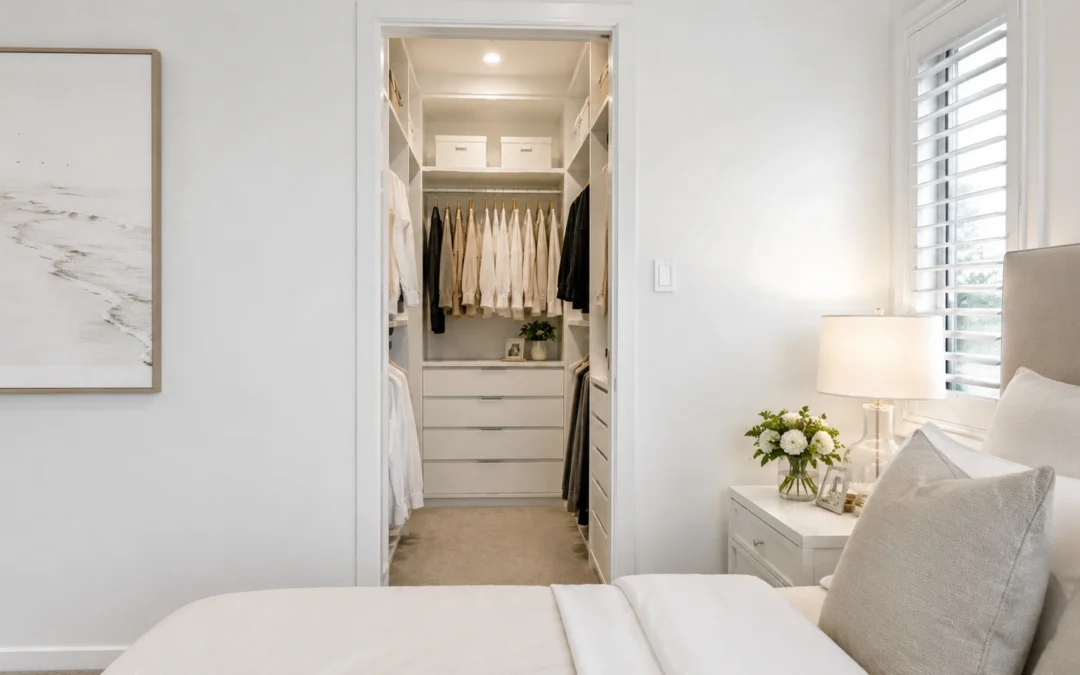
A wardrobe fitout is the process of fitting the interior of a wardrobe space with purpose-built shelving, hanging rails, drawers, and storage components tailored to how you actually use it. Done well, it transforms a bare cavity or cluttered robe into an organised system that works every single day.
Why Your Storage Setup Is Probably Letting You Down
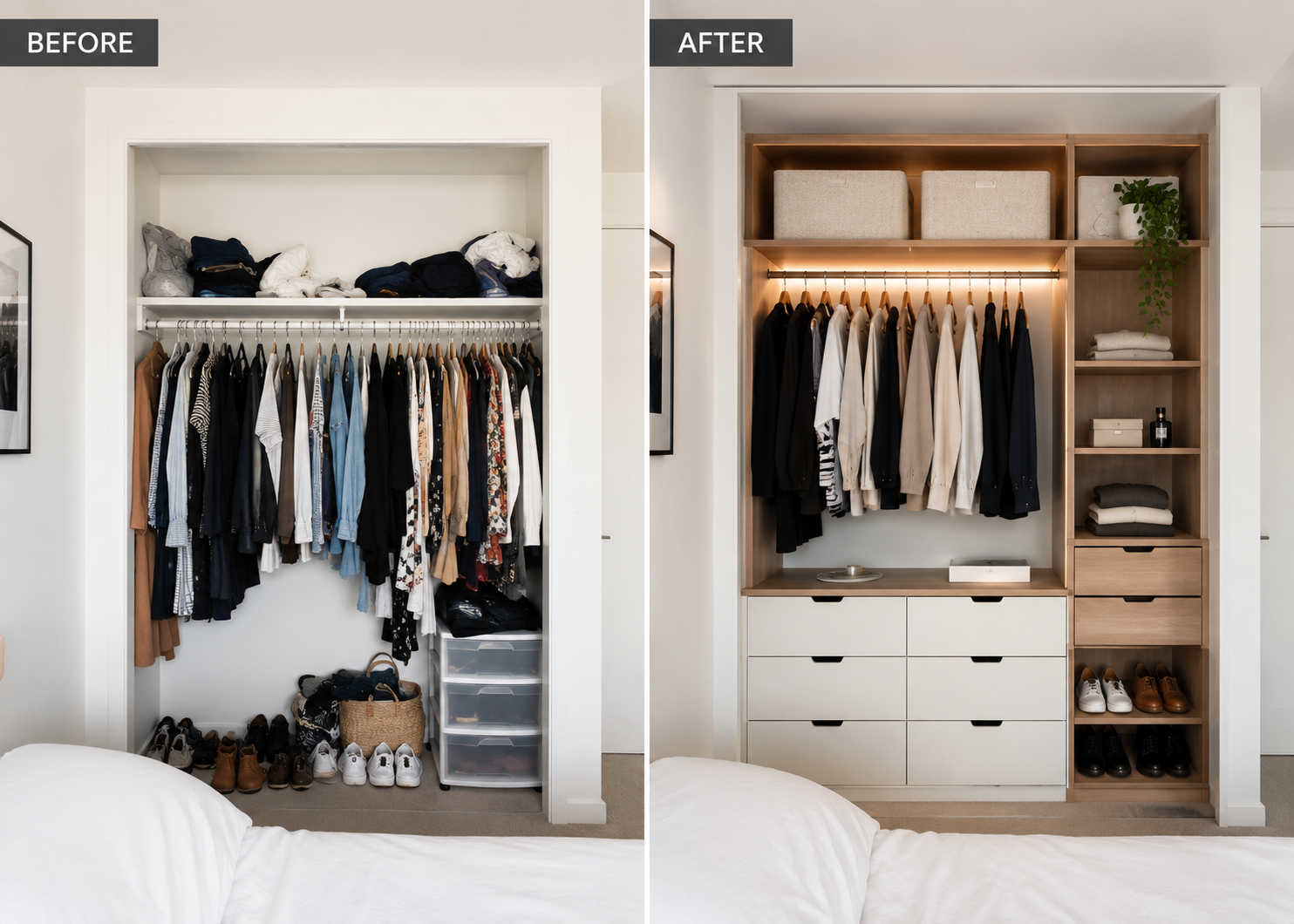
Most Australians are living with wardrobes that were never designed with their actual belongings in mind. Builder-grade robes typically include a single hanging rail and maybe one shelf. That is fine for a guest bedroom, but it falls well short of what a main bedroom needs.
Research consistently shows that a significant proportion of clothing in the average household goes unworn simply because it cannot be seen or accessed easily. When items are buried, doubled up on hangers, or crammed onto shelves without clear zones, you default to the same small rotation of clothes you can grab quickly. A thoughtful wardrobe fitout solves this by creating dedicated zones for different categories, making everything visible and accessible.
Beyond daily frustration, disorganised storage has a real cost. Clothes get damaged, you forget what you own and buy duplicates, and the visual clutter of a messy robe can affect how you feel starting the day.
What a Wardrobe Fitout Actually Includes
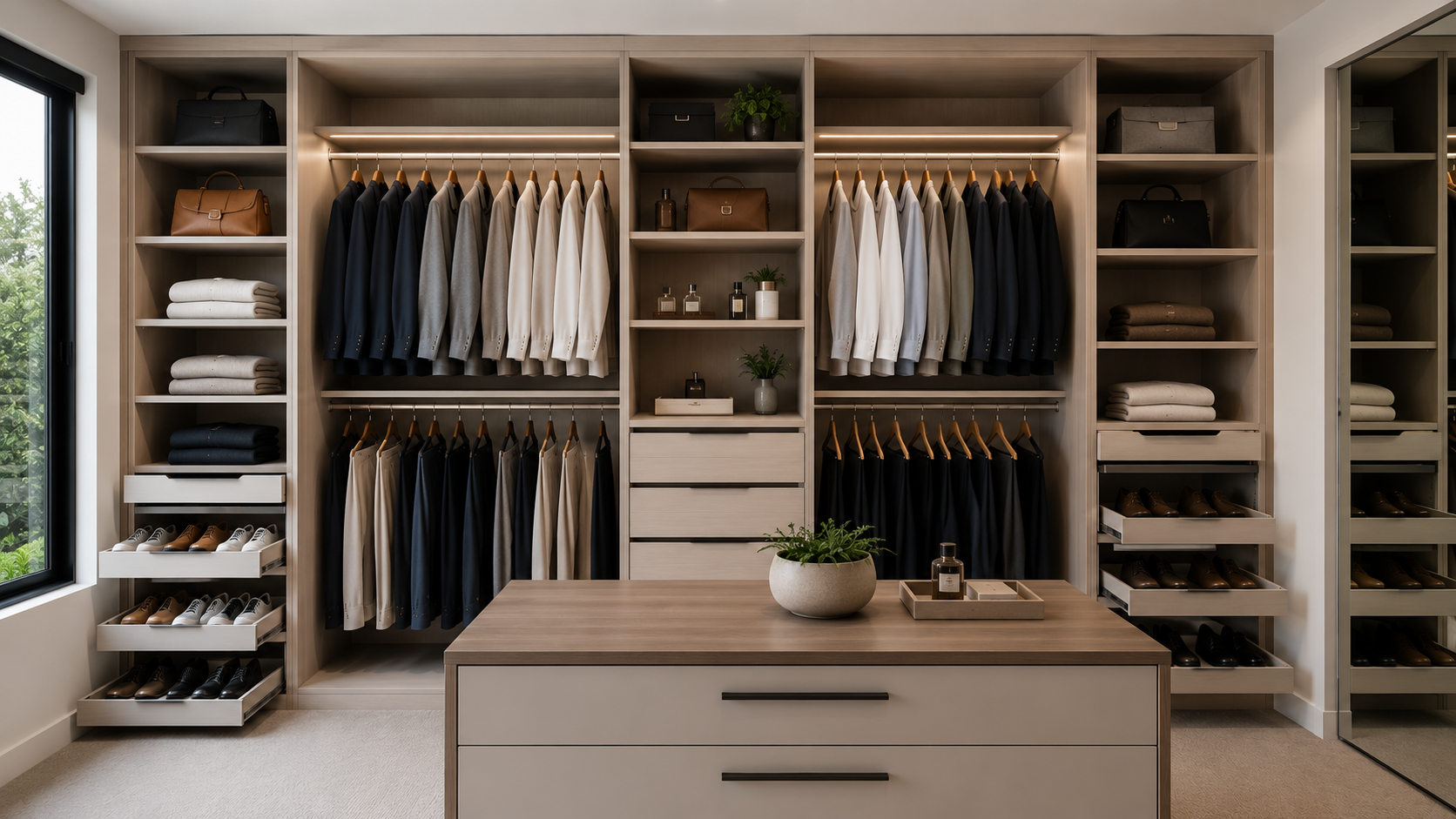
A fitout refers specifically to the internal fittings, not the external doors or the wardrobe carcass itself. Depending on the brief and the budget, a fitout can include:
- Hanging sections: Short hang for shirts, jackets, and folded trousers; long hang for dresses, coats, and suits
- Fixed and adjustable shelves: For folded items, bags, and accessories
- Drawers: For underwear, activewear, and items that do not hang well
- Shoe storage: Angled shelves, pull-out racks, or display shelving
- LED lighting: Strip lights or sensor-activated downlights inside the cavity
- Accessories: Belt racks, tie rails, pull-out baskets, and jewellery trays
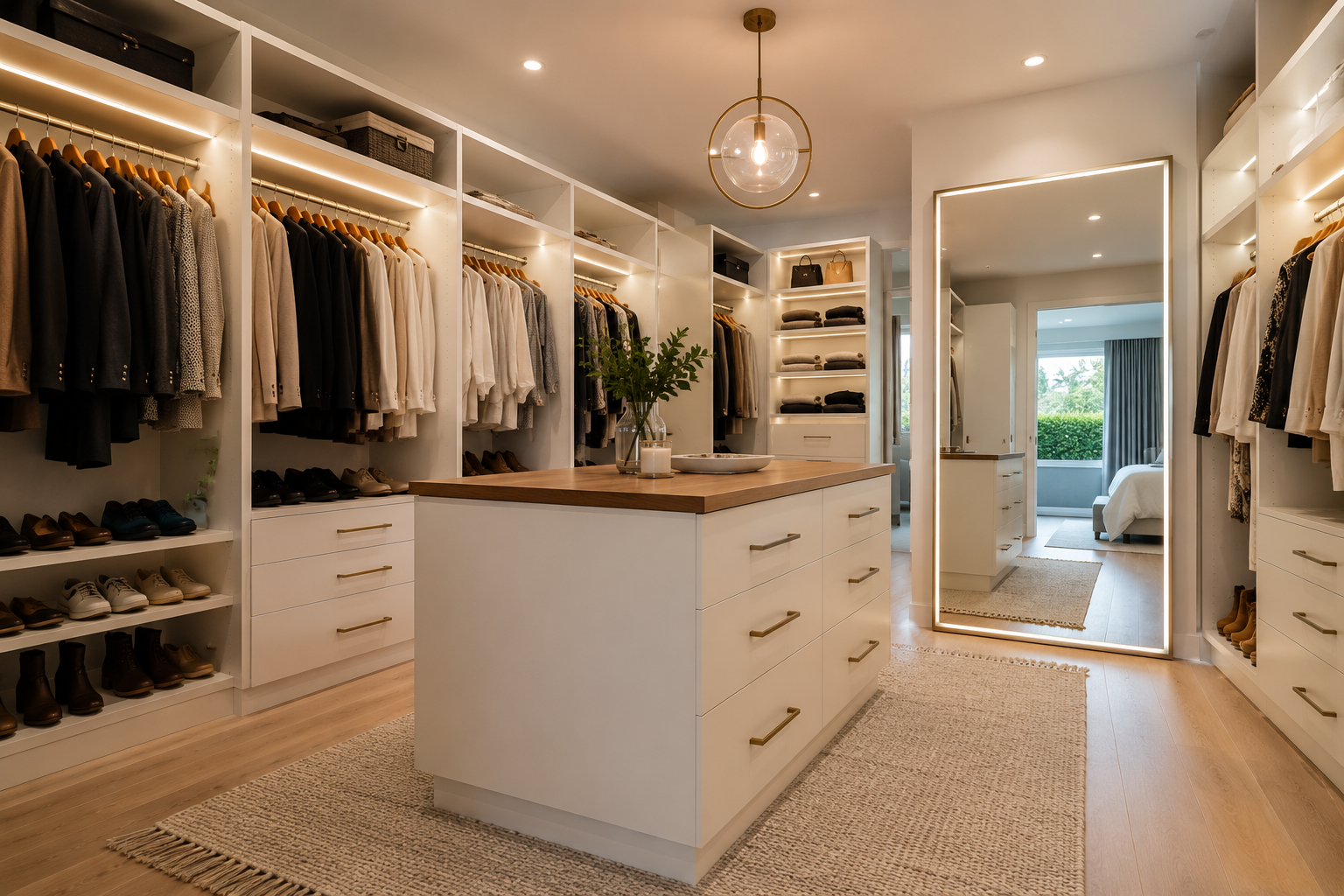
The configuration you choose depends on who uses the wardrobe, what they wear most often, and the dimensions of the space. A fitout for a 1.8-metre sliding robe looks very different from a walk in robe fit out designed for a master suite with three metres of wall space on each side.
Specific Considerations for Wardrobe Planning
Melbourne’s housing stock is diverse, from Victorian terraces in Fitzroy and Collingwood with tiny original bedrooms, to new builds in Pakenham and Truganina with generous walk-in robes built into the floor plan. Each scenario presents different challenges.
Older homes often have non-standard wall angles, uneven floors, and alcoves that make off-the-shelf systems a poor fit. Custom-built fitouts handle these quirks far better than modular flat-pack options from large furniture retailers.
Newer homes often come with large wardrobe cavities that are essentially empty boxes. Builders leave this as a blank canvas because fitout preferences are personal, but it also means the buyer inherits a robe that is barely functional until they invest in proper internal fittings.
Melbourne’s climate is also worth considering. With four distinct seasons, most households need to store both summer and winter wardrobes. Adequate shelf depth (typically 500 to 600 mm) and high-level storage for seasonal items reduces the need to rotate clothes between rooms or use under-bed storage.
According to Healthdirect Australia, an organised home environment can also support mental wellbeing, reducing stress associated with clutter. That connection between physical organisation and daily mood is one reason wardrobe fitouts are increasingly treated as a quality-of-life investment rather than a luxury.
Comparing Fitout Options: Custom vs Modular vs DIY
| Option | Typical Cost (AUD) | Best For | Limitations |
|---|---|---|---|
| DIY flat-pack | A$500 – A$1,500 | Renters, small robes | Limited configurations, lower durability |
| Modular systems | A$1,500 – A$4,000 | Standard-sized spaces | May not suit non-standard dimensions |
| Semi-custom | A$3,000 – A$7,000 | Most homeowners | Some design constraints |
| Fully custom | A$6,000 – A$20,000+ | Walk-in robes, luxury builds | Higher cost, longer lead time |
Costs vary based on materials (melamine, MDF, solid timber, or polymer), hardware quality, and the complexity of the layout. A basic reach-in fitout for a single bedroom will sit at the lower end of the range. A fully configured master walk-in robe with lighting, an island unit, and integrated mirrors will move toward the top.
When comparing quotes, check whether installation is included, what warranty applies to materials and workmanship, and whether the designer offers a 3D render before production begins. Most reputable Melbourne fitout companies will include an in-home measure and design consultation as part of the process.
The Australian Competition and Consumer Commission provides guidance on what to expect from trade services contracts, including what constitutes acceptable workmanship and your rights if work does not meet the agreed standard.
Things to Know
- Wardrobe fitouts are generally not included in standard home renovation depreciation claims unless the property is an investment, so check with a tax professional.
- Melamine is the most common and cost-effective material. Moisture-resistant melamine is worth specifying for robes in bathrooms or high-humidity areas.
- Allow at least 500 mm of long-hang space per person for coats and dresses, and plan for growth in your wardrobe over time.
- LED lighting inside a wardrobe is not just aesthetic. It genuinely makes clothes easier to identify and reduces the chance of picking up mismatched items in poor light.
- If you are renovating a property to sell, a well-presented fitout in the master bedroom consistently rates highly with buyers at Melbourne open homes, according to real estate agents across the inner suburbs.
The Bottom Line on Wardrobe Fitout
A wardrobe fitout is one of the higher-return practical upgrades you can make to a Melbourne home. It improves daily function, reduces household clutter, and makes a measurable difference to how the master bedroom presents during a sale. Whether you are fitting out a compact bedroom in Carlton or a generous walk-in robe in the outer suburbs, the principle is the same: design for what you actually own, not for a generic idea of what a wardrobe should look like.
Your next step is that audit. Pull everything out, sort it, count it, and then speak with a specialist who can translate that information into a fitout that works for you from day one.
Frequently Asked Questions
Q: How long does a wardrobe fitout take to install?
Most residential fitouts are installed in a single day, though larger walk-in robes with complex configurations may take two days.
Once manufacturing is complete, the installation process itself is typically straightforward. Lead times for custom fitouts in Melbourne generally run between two and six weeks from confirmed order to installation day.
Q: Can a wardrobe fitout be moved if I relocate?
Some modular fitout systems can be partially dismantled and reinstalled, but fully custom-built units are generally designed for a fixed space.
If you are renting or plan to move within a few years, a modular system is worth considering. For owners planning a long-term stay, a fixed custom fitout offers superior results and durability.
.
Q: Do wardrobe fitouts add value to a Melbourne home?
A well-executed fitout in the master bedroom can improve buyer perception and support a stronger sale price, particularly in Melbourne’s competitive inner-ring market.
According to realestate.com.au, storage is consistently one of the top priorities buyers name during property inspections. A professionally fitted robe signals quality and reduces the mental load buyers associate with moving in.
Q: What is the difference between a wardrobe fitout and a built-in wardrobe?
A built-in wardrobe refers to the overall structure integrated into the wall, while a wardrobe fitout refers specifically to the internal components fitted inside it.
You can have a built-in wardrobe with no meaningful fitout, which is common in builder-grade homes, or you can retrofit a fitout into an existing built-in cavity without touching the external doors or frame.
Q: Are there sustainable material options for wardrobe fitouts?
Yes, several Melbourne suppliers offer boards made from recycled timber fibres, low-VOC finishes, and sustainably sourced materials.
The Forest Stewardship Council Australia certifies timber and board products that meet responsible sourcing standards. Asking your fitout supplier whether their materials carry FSC certification is a straightforward way to make a more sustainable choice.