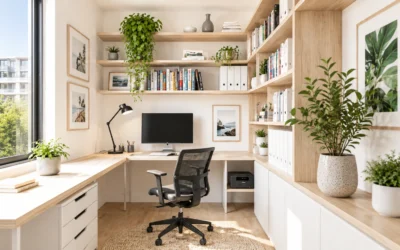
Wardrobe internals are the shelves, rails, drawers, dividers, and accessories fitted inside a wardrobe cavity that determine how well your storage actually functions. Getting the internal layout right from the start saves you from reorganising a cluttered wardrobe every few months and makes the most of every centimetre of available space.
Key Takeaways
- Wardrobe internals include hanging rails, shelves, drawers, shoe racks, and accessories like pull-downs and tie racks, each serving a specific storage purpose.
- A well-planned internal layout is shaped by your clothing volume, lifestyle, and the physical dimensions of your wardrobe cavity.
- Soft-close mechanisms, internal lighting, and modular components are increasingly standard in Melbourne custom wardrobe builds.
- Material choice for hardware, whether steel, aluminium, or zinc alloy, affects both longevity and the overall finish of your wardrobe.
- Custom-designed internals consistently outperform flat-pack systems in space efficiency, particularly in apartments and townhouses.
- Working with a local Melbourne cabinet maker gives you access to design expertise and ensures components are sized precisely to your space.
Why Wardrobe Internals Matter More Than the Door
Most people spend more time choosing a wardrobe door finish than thinking about what goes inside, yet the internals are what you interact with every single day. A beautifully finished sliding door means little if the space behind it is a single hanging rail with one shelf above it and dead space below.
According to the global furniture hardware market, the wardrobe and storage segment is growing at a 6.90% compound annual growth rate, making it one of the fastest-growing categories in home furnishings. That growth is driven by consumers who are increasingly demanding storage that does more within a smaller footprint, a trend that is very visible across Melbourne’s apartment and townhouse market.
More than 63% of apartment owners now prefer modular wardrobe systems because they improve storage efficiency without consuming additional floor area. In Melbourne, where inner-city apartments often have compact bedrooms, this preference is not just a trend but a practical necessity.
The difference between a thoughtful internal layout and a generic one often comes down to how closely the design reflects the way you actually use your wardrobe, not a one-size-fits-all template.
The Core Components of Wardrobe Internals
Understanding what is available helps you make better decisions before committing to a design. The main internal components fall into a few clear categories.
Hanging Rails and Pull-Downs
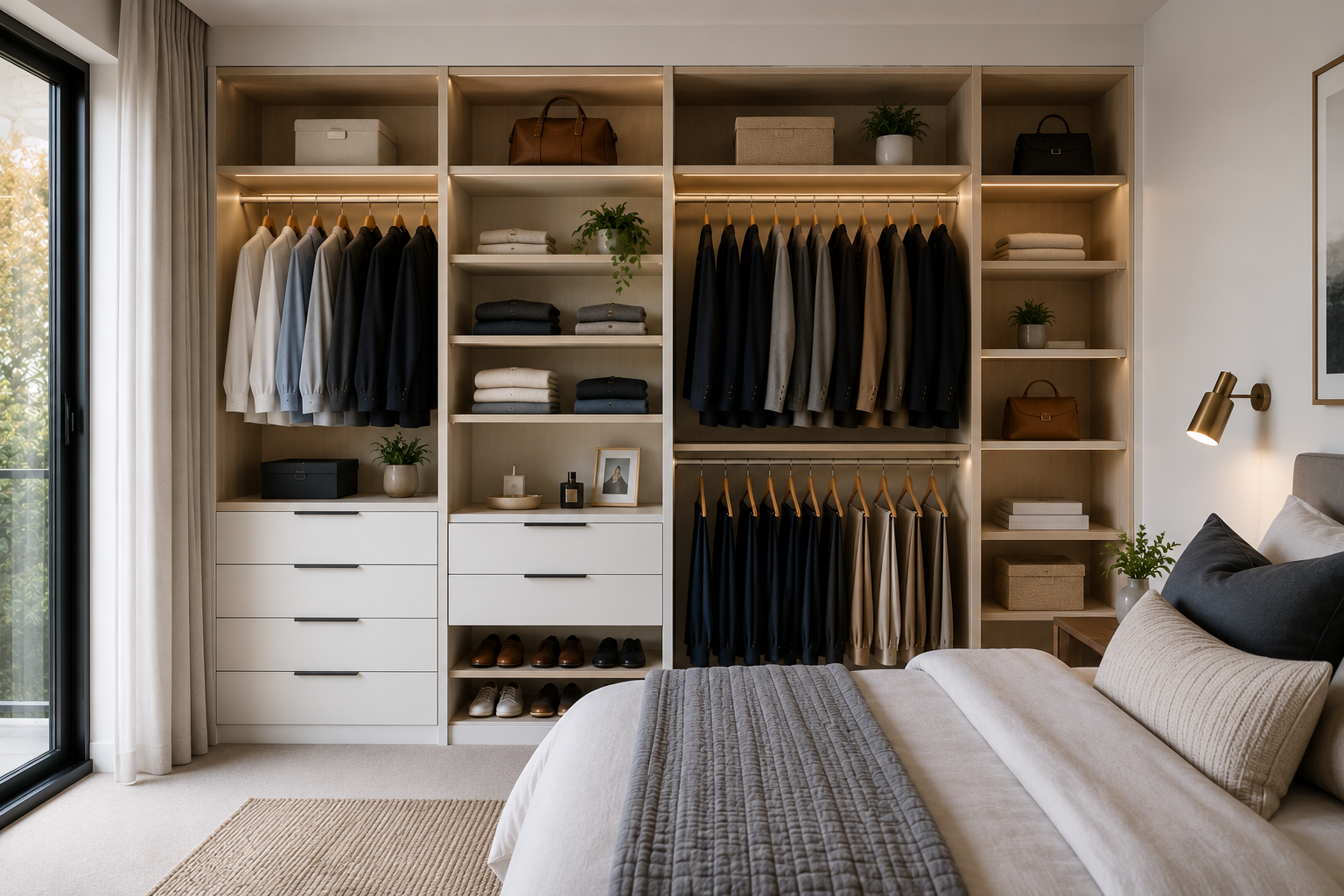
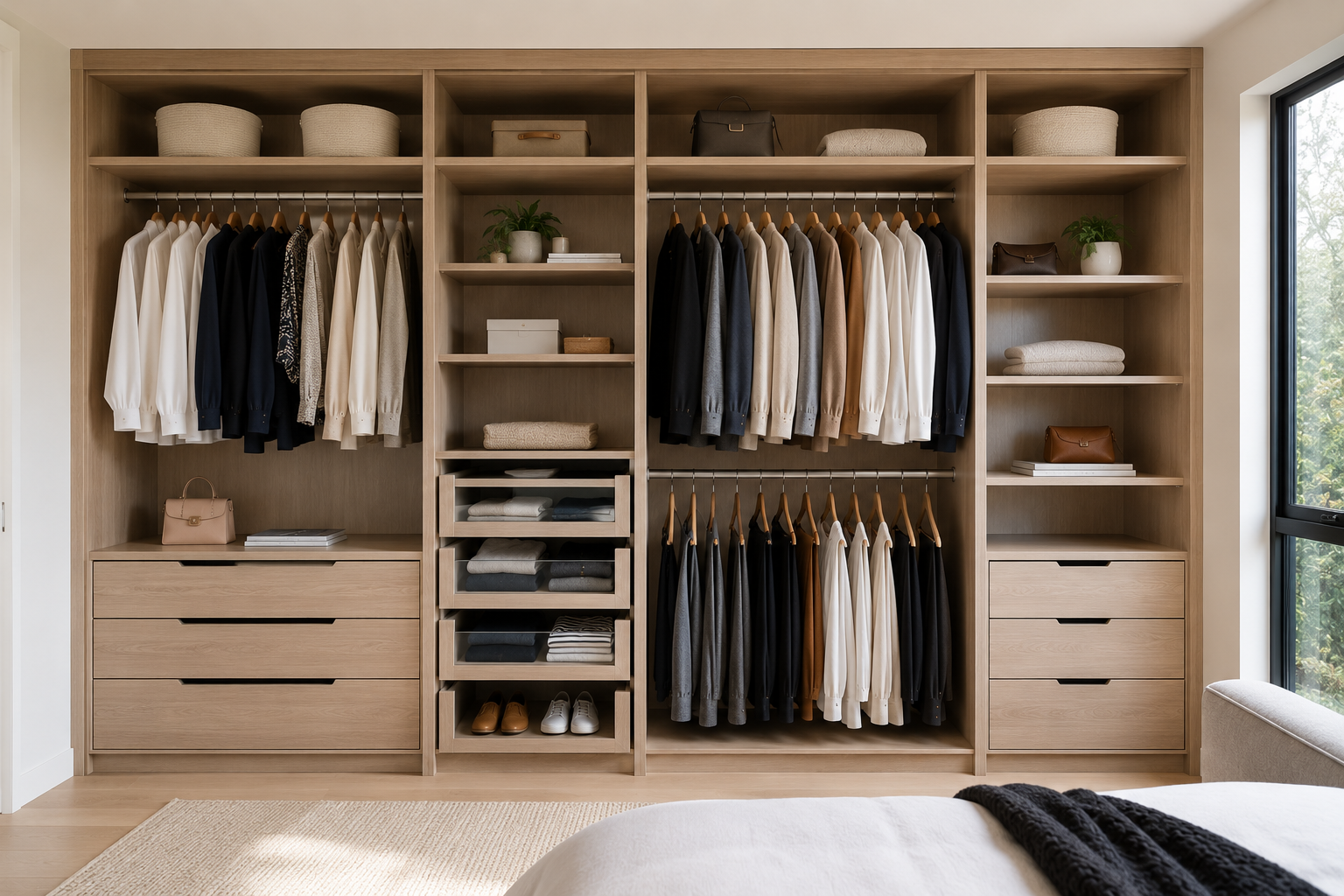
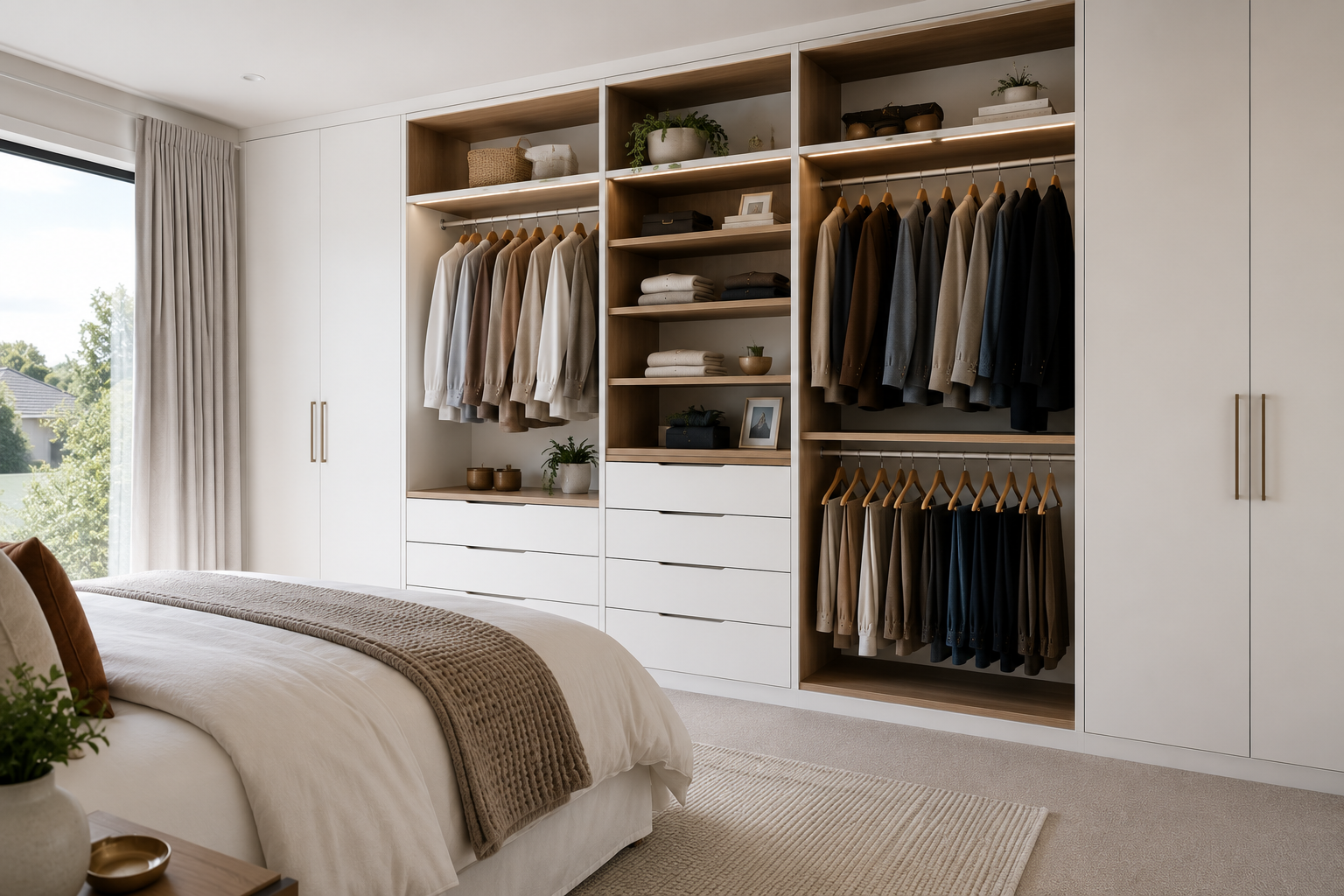
Hanging rails are the starting point for most wardrobes. The key decisions are height, length, and how much of your wardrobe should be devoted to hanging versus shelving. Standard single-hang height accommodates full-length garments like dresses and suits, while double-hang splits the same vertical space to hang shorter items like shirts and jackets on two levels, effectively doubling your hanging capacity.
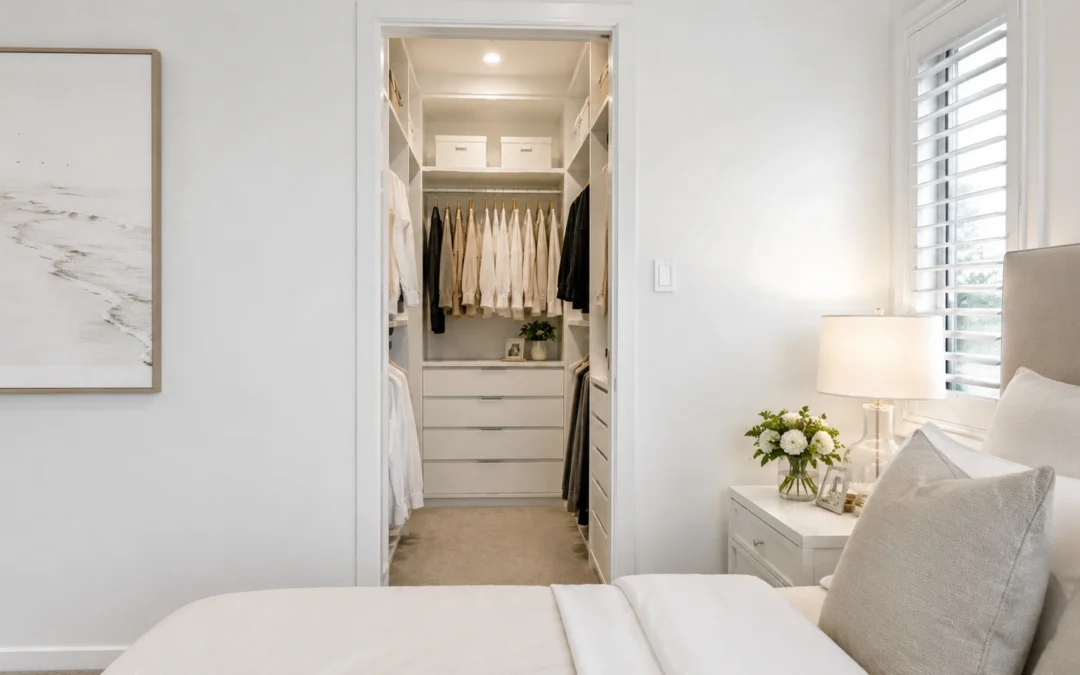
Pull-down rails are a popular addition in taller wardrobes, bringing high-mounted rails down to a reachable height without requiring a step stool. They are particularly practical for walk in wardrobe configurations where ceiling height and wall length give you more flexibility to incorporate multiple rail systems.
Shelves and Drawers
Adjustable shelves are the most versatile internal component because they can be repositioned as your storage needs change. Fixed shelves offer more structural stability and are well-suited to zones where the shelf height never needs to change, such as above a hanging rail or below a folded-linen stack.
Internal drawers are among the most requested components in Melbourne custom wardrobe builds. They work best for folded clothing, underwear, accessories, and anything you do not want to hang. Soft-close technology, now integrated into approximately 72% of wardrobe and kitchen applications globally, reduces noise and extends the life of drawer mechanisms significantly.
Shoe Racks, Tie Racks, and Accessory Holders
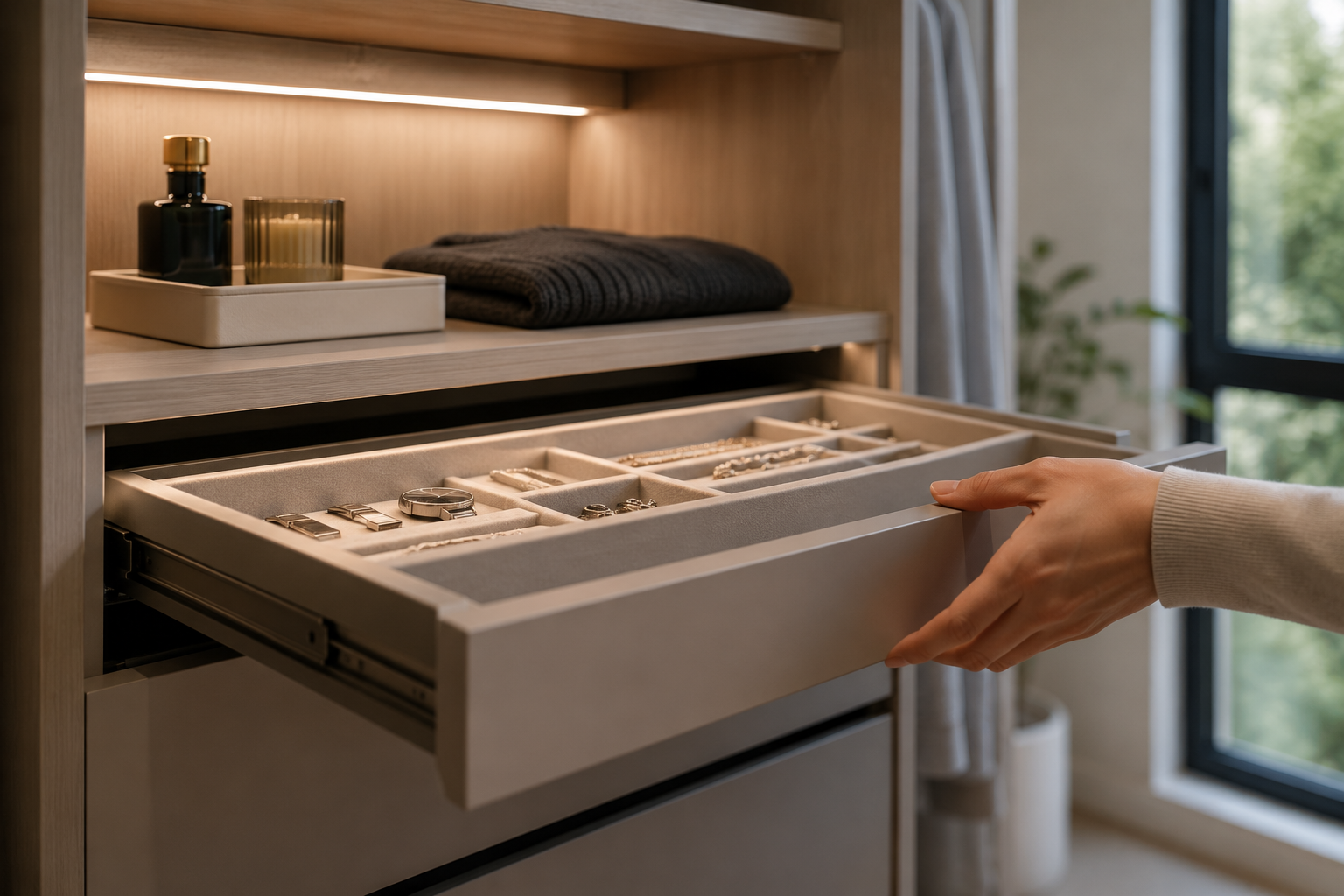
Shoe storage is one of the most commonly underplanned areas in a wardrobe. Angled shoe shelves, flat shoe shelves, and pull-out shoe racks all serve different purposes depending on the volume and type of footwear you own. Tie racks, belt holders, and jewellery trays sit at the finer end of the internal accessories spectrum but make an outsized difference to how organised and enjoyable your wardrobe feels to use.
Internal mirrors, integrated LED lighting, and velvet-lined accessory trays are now standard offerings from quality Melbourne cabinet makers, reflecting the broader shift towards wardrobes that feel considered rather than purely functional.
Materials and Hardware: What to Look For
The hardware inside your wardrobe carries real weight, literally and figuratively. Steel-based hardware accounts for roughly 48% of global wardrobe fittings, with aluminium at 27% and zinc alloys at 19%. For everyday Australian conditions, steel and aluminium are the preferred choices because both resist the humidity and temperature variation that can affect wardrobe components over time.
According to healthdirect.gov.au, good home organisation, including accessible bedroom storage, supports daily routine and reduces household stress. While that connection might seem indirect, anyone who has wrestled with a jammed wardrobe drawer during a busy morning will understand it immediately.
Standardised hardware components are now used by more than 72% of global furniture manufacturers to reduce assembly time by around 30% and improve durability by 40%. Working with a Melbourne cabinet maker like Almara Cabinets (reachable at (03) 9000 0371) means you get components that meet these standards while being sized precisely to your wardrobe cavity rather than adapted from a generic kit.
Planning Your Internal Layout: A Practical Approach
Before finalising any design, assess the following four areas honestly.
- Clothing volume and type: Count your hanging garments, folded items, and shoes separately. This gives you a realistic baseline for how much of each storage type you need.
- Wardrobe dimensions: Height, width, and depth all affect which components are practical. A 550mm-deep wardrobe cannot accommodate a full-depth internal drawer without careful planning.
- Access and workflow: Think about which items you reach for daily versus seasonally. Daily-use items belong at eye level and within arm’s reach.
- Future flexibility: Adjustable shelving and modular components allow the interior to evolve as your needs change, which matters particularly if you are planning wardrobes for a family home over a long period.
Around 49% of consumers now select customised hardware designs to match their interior themes, according to ABS household expenditure data trends. In Melbourne’s renovation market, that figure likely runs higher, given the emphasis on cohesive interior design across the city’s established suburbs.
Things to Know
- Standard hanging rail height for full-length garments is around 1800mm from the floor, but this varies based on your wardrobe cavity height and personal garment length.
- Shoe racks installed at an angle (around 15 to 20 degrees) save up to 30% more space than flat shelves for the same number of pairs.
- Internal LED lighting is low-voltage and energy-efficient, making it a practical addition rather than a luxury for most Melbourne builds.
- Pull-out trouser racks are often overlooked but dramatically reduce creasing compared to folding or hanging trousers over a rail.
- Soft-close mechanisms are measurably quieter, operating below 25 decibels, which matters in shared living spaces and open-plan homes.
The Bottom Line on Wardrobe Internals
Getting your wardrobe internals right is one of the highest-return decisions you can make during a home renovation or new build. The difference between a wardrobe that genuinely works and one that simply stores things often comes down to planning the internal layout around your specific habits, garment types, and available space.
For Melbourne homeowners, working with a local specialist like Almara Cabinets means your design is grounded in real expertise, built to precise measurements, and fitted with quality hardware. Call (03) 9000 0371 to start planning a wardrobe that makes your mornings easier.
Frequently Asked Questions
Q: How much does a custom wardrobe internal fitout cost in Melbourne?
Costs vary depending on the size, materials, and components selected, but a custom internal fitout typically starts from A$1,500 and can reach A$8,000 or more for walk-in configurations.
A standard built-in wardrobe with rails, adjustable shelves, and a few drawers sits at the lower end of that range. Adding soft-close mechanisms, internal lighting, and specialised accessories moves the price upward. Getting a detailed quote from a Melbourne cabinet maker ensures you know exactly what is included.
Q: What is the best internal layout for a small bedroom wardrobe?
Double-hang rail sections combined with adjustable shelving and one or two internal drawers give the best storage return in a compact cavity.
Avoid dedicating too much width to single-hang if your garments do not require it. Modular systems allow you to reconfigure later without replacing the entire fitout.
.
Q: Can wardrobe internals be added to an existing wardrobe shell?
Yes, most wardrobe cavities can be retrofitted with new internal components provided the shell dimensions are compatible with standard fittings.
A cabinet maker will assess the existing structure and recommend components that fit without major modification. This approach is often more cost-effective than a full replacement.
Q: How long does it take to have custom wardrobe internals installed in Melbourne?
Most custom wardrobe internal installations in Melbourne are completed within one to two days once components are manufactured, with lead times ranging from two to six weeks depending on the supplier’s schedule.
Almara Cabinets can provide a more precise timeline during the initial consultation based on your specific design and their current production capacity.
Q: Are soft-close drawers worth the added cost for wardrobe internals?
Yes, soft-close drawers are worth the investment because they reduce wear on the mechanism, lower noise, and improve the perceived quality of the entire wardrobe.
The price difference between standard and soft-close hardware has narrowed considerably as the technology has become more mainstream. For a wardrobe you plan to use for ten or more years, soft-close is a practical upgrade.