Living room wall units are one of the most effective ways to combine smart storage with strong visual impact in a single piece of furniture. When planned well, they transform an ordinary lounge into a space that feels considered, organised, and genuinely beautiful.
Key Takeaways
- Wall units work best when designed around your room’s exact dimensions and daily habits, not the other way around.
- Mixing open shelving with closed cabinets creates visual balance while hiding everyday clutter.
- Material choice, from timber veneer to engineered wood, affects both the look and long-term durability of your unit.
- Modular systems offer flexibility, while custom built-ins suit awkward walls or specific layout needs.
- Built-in cable management and integrated lighting are worth planning from the start, not adding later.
- Melbourne-based Almara Cabinets offers free design consultations, measure, and quotes for living room storage solutions.
Why the Lounge Room Wall Unit Has Made a Comeback
For a while, the living room wall unit felt dated, something you’d find in a 1980s brick veneer home, heavy and dark. But the design world has caught up with what practical homeowners already knew: vertical wall space is underused, and a well-designed lounge room wall units solves both storage and style in one move.
According to the Australian Bureau of Statistics, Australian households are accumulating more possessions while living in homes with increasingly compact floor plans. That tension between stuff and space is exactly where a wall unit earns its place.
What’s driving the renewed interest is a shift in how these units look. Minimalist floating profiles, integrated lighting, and slim-profile joinery have replaced the bulky cabinetry of the past. Library-inspired designs with open shelving and ladder rails are also returning, particularly in open-concept homes where the lounge flows into the dining or kitchen area.
If you are comparing options, reading up on wall shelf units 101 how to choose the right floating storage for your space is a strong starting point before committing to a full unit.
Design Principles That Actually Work in an Australian Living Room
Good design for a living room feature wall is rarely about following trends blindly. It is about solving your specific problems with a solution that looks intentional. Here are the principles that hold up across styles and budgets.
Mix Open and Closed Storage
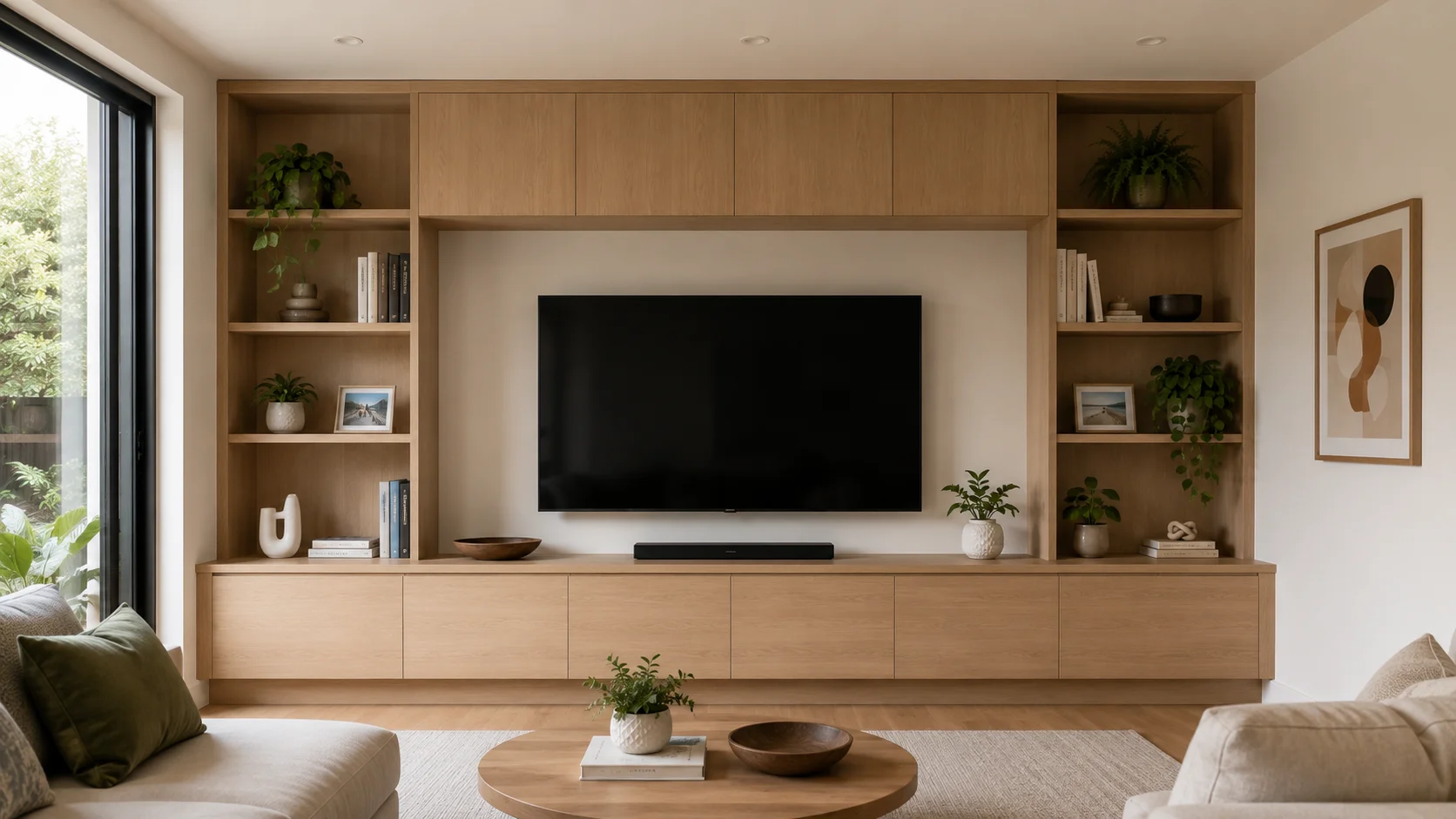
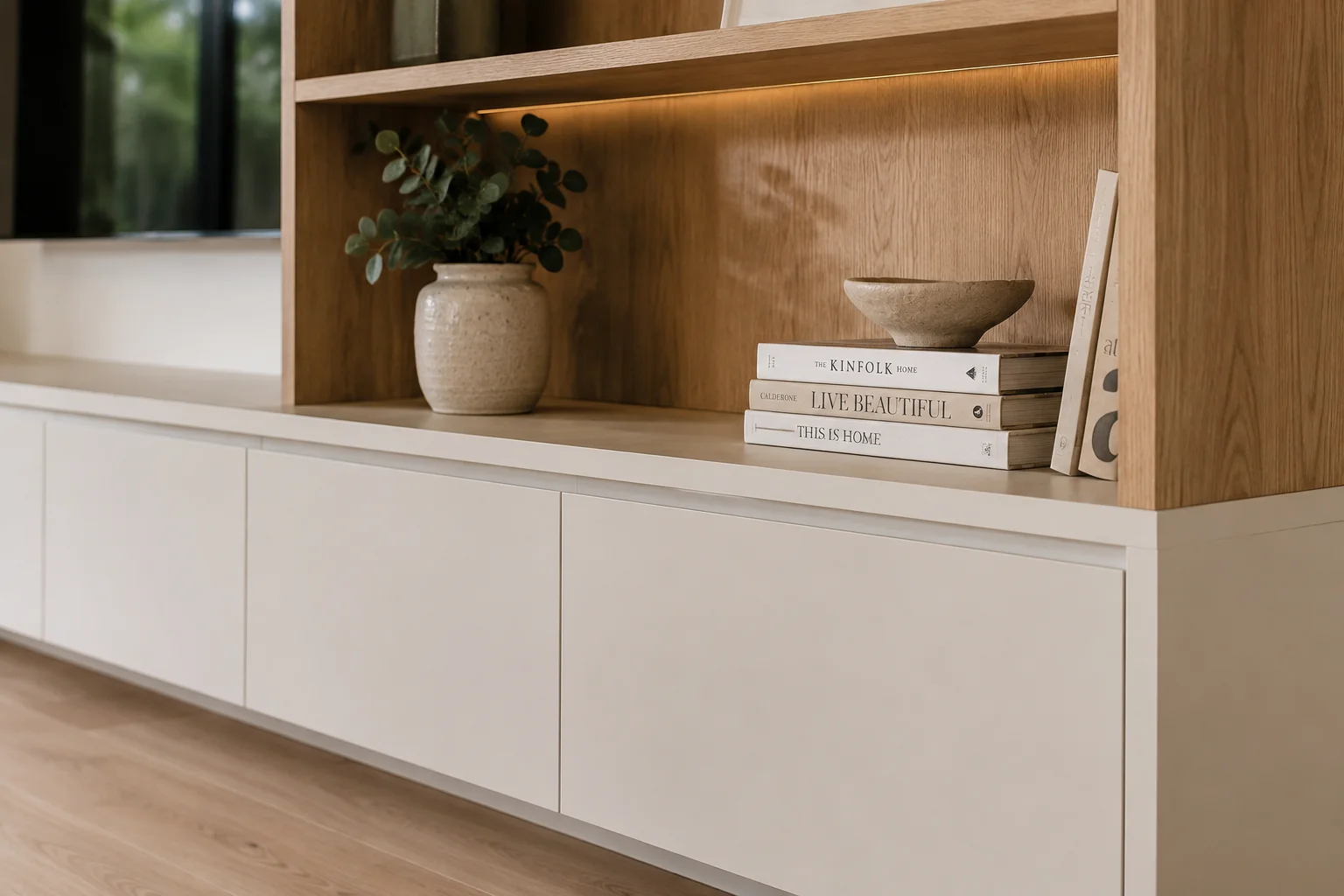
The most versatile wall units combine open shelves with closed cabinets. Open sections hold books, plants, framed photos, or travel mementos. Closed cabinets hide remotes, cables, board games, and anything else you want out of sight. The ratio matters: too much open shelving looks chaotic; too much closed cabinetry looks heavy. A rough 60/40 split in favour of closed storage tends to work well in most living rooms.
Treat the TV Wall as an Integrated Feature
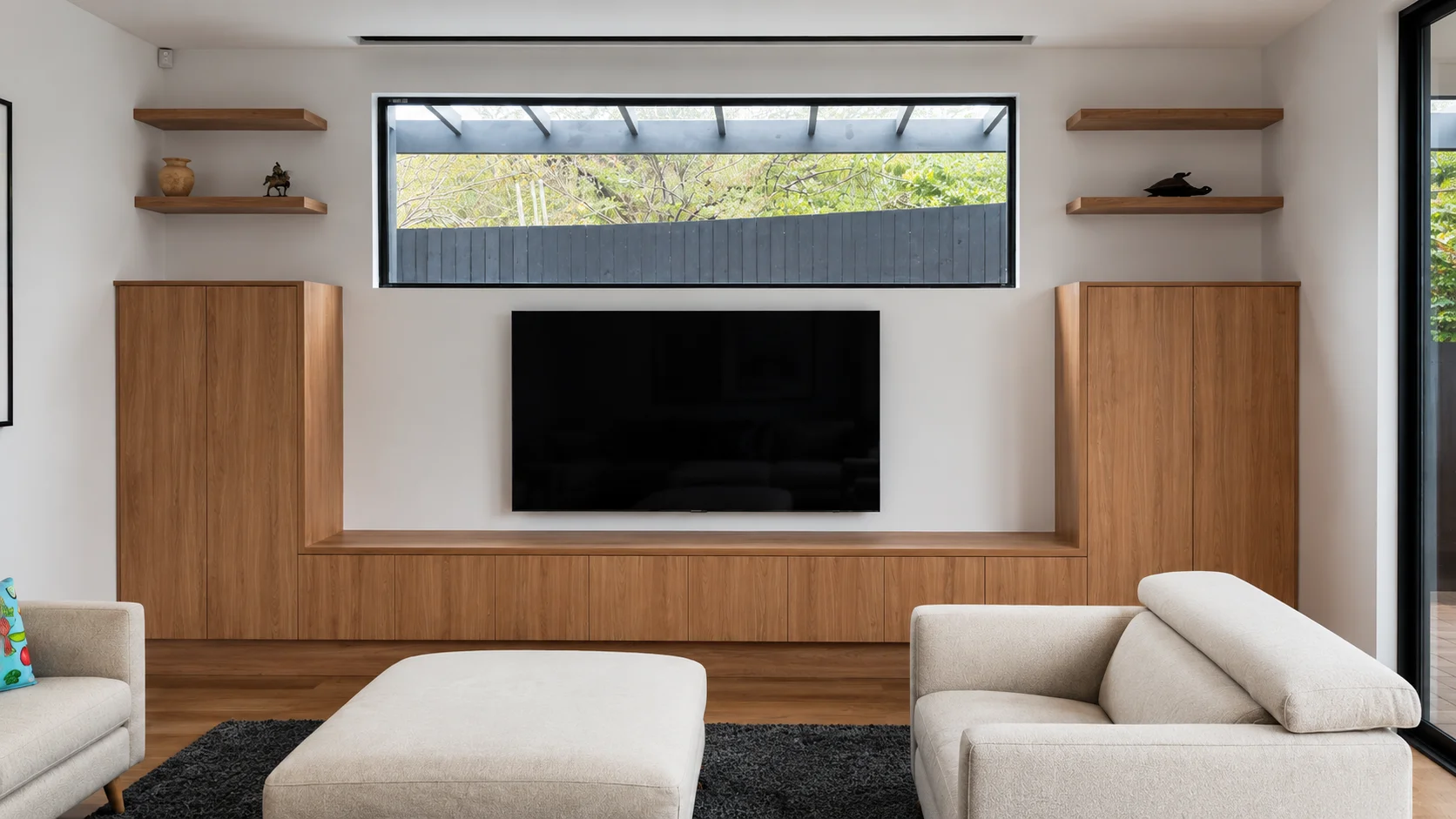
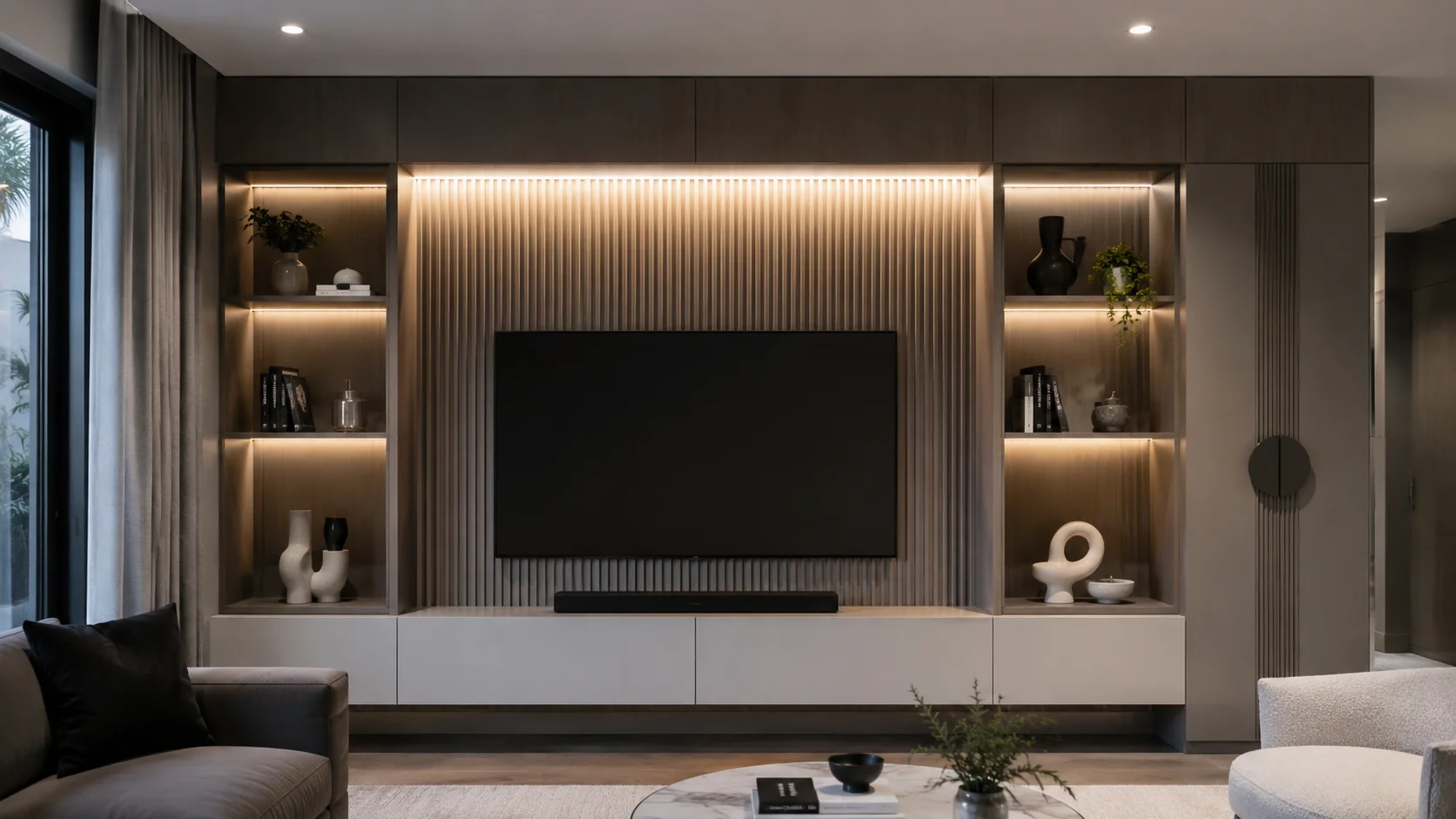
The sitting room wall unit has largely replaced the standalone TV cabinet in contemporary Australian homes. Building the screen into a full-width wall unit frames it properly, hides the cabling, and gives you space above and beside the TV for meaningful decoration rather than bare plasterboard. Plan the TV position first, then design the shelving around it.
Use Layering for Visual Interest
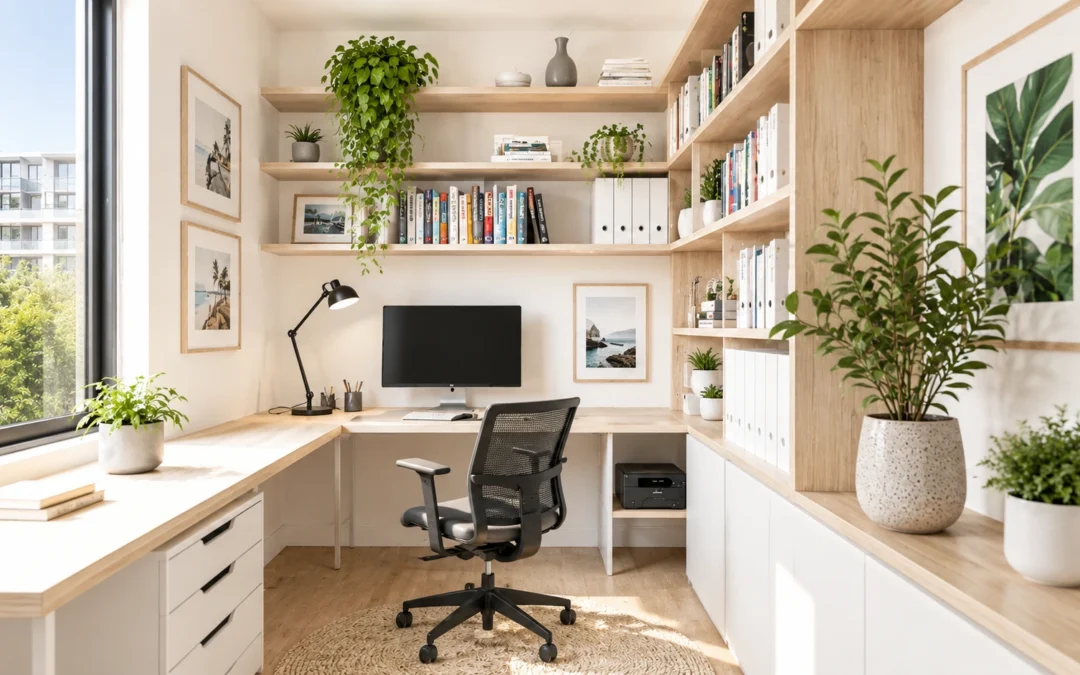
Styling open shelves with only books looks flat. Layer horizontal and vertical books, add a ceramic piece or a trailing plant, vary the heights of objects, and leave some breathing room. This approach gives the unit depth without requiring expensive accessories.
Materials, Finishes, and What to Expect from Each
Choosing the right material for your living room wall units affects how they age, how they feel in the room, and how much maintenance they require.
| Material | Durability | Look | Approx. Cost Range (AUD) |
|---|---|---|---|
| Solid timber | Very high | Warm, classic | A$3,000 and above |
| Timber veneer (MDF core) | High | Premium without the weight | A$2,000 to A$5,000+ |
| Engineered wood (melamine) | Moderate | Clean, modern | A$800 to A$2,500 |
| Metal and glass combination | High | Industrial or contemporary | A$1,500 to A$4,000+ |
| Custom cabinetry (built-in) | Very high | Fully tailored | A$5,000 to A$14,000+ |
According to Houzz Australia, timber finishes remain the most popular choice for Australian living rooms, with matte and satin finishes preferred over high gloss in current design trends. If sustainability matters to you, look for FSC-certified timber or low-VOC finishes, which reduce off-gassing in enclosed spaces.
Modular vs. Custom Built-In: Which Is Right for Your Space?
This is the question most Melbourne homeowners face when planning a living room media wall. Both approaches have genuine merit.
Modular systems are flexible, relatively affordable, and can move with you if you rent or plan to sell. Brands available through Australian furniture retailers give you a reasonable starting point at lower cost. The downside is that standard dimensions rarely suit an Australian home’s non-standard wall widths and ceiling heights, leaving awkward gaps or requiring filler panels that look like an afterthought.
Custom built-ins solve that problem entirely. They are designed to your room’s exact measurements, sit flush with the ceiling and adjacent walls, and can incorporate features like integrated lighting, hidden cable runs, and built-in charging stations. The investment is higher, but the result is a wall unit that looks like it was always meant to be there.
Smart Features Worth Planning From the Start
Modern living room wall units increasingly incorporate functionality that goes beyond shelves and doors. Features worth discussing with your designer before the unit is built include:
- Cable management channels routed inside the unit behind the TV and along vertical panels
- Integrated LED strip lighting or individual puck lights inside open shelves
- Adjustable shelf pins so heights can change as your needs shift
- Deep lower cabinets with soft-close hinges for media equipment or gaming consoles
- Pull-out drawers rather than shelves for items you access frequently
The CHOICE consumer organisation recommends checking weight ratings for shelves before loading them with heavy items like vinyl record collections or full rows of hardcover books, as undersized supports can bow or fail over time.
Things to Know
- Wall units that reach the ceiling make ceilings feel higher, not lower, when the proportions are right.
- Dark finishes work well in south-facing rooms that get limited direct sunlight; lighter finishes open up north-facing spaces.
- Installing blocking behind plasterboard before painting is far cheaper than retrofitting it later for heavy wall-mounted units.
- Asymmetrical designs, taller on one side than the other, often feel more dynamic than perfectly balanced configurations.
- Shelving depth matters: 300 mm suits books and décor, while 450 mm or deeper is needed for AV equipment and storage boxes.
The Bottom Line on Living Room Wall Units
A well-designed living room wall unit does more than hold your things. It anchors the room, reflects your taste, and makes daily life easier by putting everything in its place. Whether you choose a modular system or commission a fully custom-built-in, the planning phase is where great outcomes begin.
Ready to Plan Your Living Room Wall Unit?
Contact the Almara Cabinets team directly at (03) 9070 5265 or contact us online to book a free design consultation, measure, and quote. Bring your room dimensions, a rough idea of what you need to store, and any images that inspire you. The team will handle the rest.
Frequently Asked Questions
Q: How much do custom living room wall units cost in Melbourne?
Custom wall units in Melbourne typically range from A$2,000 for simple modular installs to A$14,000 or more for full floor-to-ceiling built-ins.
The final cost depends on materials, size, complexity of features like integrated lighting or cable management, and the finish selected. A detailed quote from a local cabinetmaker gives you the most accurate figure for your space.
Q: What is the best material for a living room wall unit?
Timber veneer over an MDF core offers the best balance of premium appearance, durability, and cost for most Australian living rooms.
Solid timber is longer-lasting but heavier and more expensive. Melamine-coated engineered wood suits tighter budgets and works well in contemporary, minimalist spaces.
.
Q: How do I style open shelves so they don't look cluttered?
Layer books with objects of varying height, leave 20 to 30 per cent of each shelf empty, and limit your colour palette to two or three tones.
Grouping items in odd numbers (threes or fives) tends to look more natural than even pairings. A trailing plant or two adds life without taking much space.
Q: Can a wall unit work in a small living room?
Yes, and in a small lounge room a wall unit often works better than multiple freestanding pieces because it keeps the floor clear and draws the eye upward.
Choosing a floor-to-ceiling design in a light finish maximises storage without making the room feel heavy. Floating lower sections also give the illusion of more floor space.
Q: Do I need council approval for a built-in wall unit in Victoria?
In most cases, no council approval is needed for non-structural built-in cabinetry in Victoria, but it is worth confirming with your local council if the work involves electrical wiring.
According to Consumer Affairs Victoria, domestic building work above a certain value requires a registered builder, so confirm your cabinetmaker’s registration if your project involves significant structural or electrical integration.