Key Takeaways
- Always match shelf depth to its intended use: deeper for practical storage, slimmer for purely decorative displays.
- Solid hardwood and high-quality MDF outperform hollow-core vinyl-wrapped shelves for long-term load bearing.
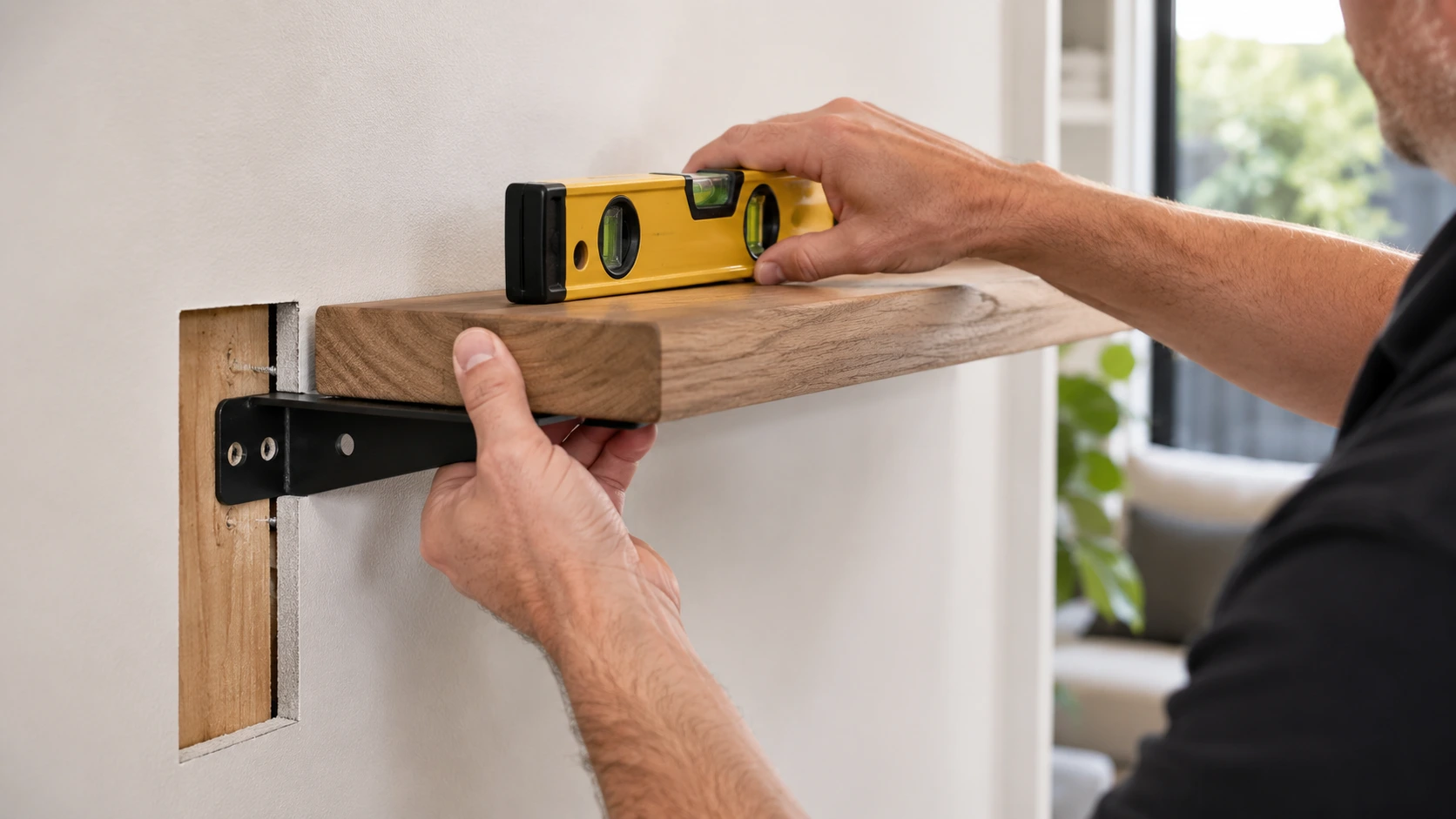
- Mount into at least one wall stud; drywall anchors alone are not sufficient for shelves holding more than picture frames.
- Size your shelves to 60-80% of the furniture width below them to keep wall proportions balanced.
- 2026 trends favour thicker shelf profiles, modular wall systems, and integrated lighting over thin pale-wood styles.
- A free design consultation from a qualified cabinetmaker can save you from costly installation mistakes.
Why Wall Shelf Units Deserve Separate Consideration From TV Units
It is tempting to treat wall-mounted shelving as a natural extension of a TV unit, but the two categories solve different problems. A TV unit is anchored to one function and one location. A wall-mounted shelving unit, by contrast, is a flexible storage and display system that can serve a living room, home office, hallway, or bedroom with equal effectiveness.
The core appeal is vertical space use. Most Australian homes leave the top two-thirds of every wall completely bare, and floating shelves reclaim that real estate without consuming a single square metre of floor space. In smaller Melbourne apartments, that distinction matters enormously.
When you browse wall units on a dedicated cabinetry site, you will notice that the product range separates shelving systems from entertainment units for exactly this reason. Shelving is its own furniture category with its own design logic.
Material Quality Is the Detail Most Buyers Overlook
The single biggest variable separating a shelf that lasts a decade from one that bows within a year is the core material, not the surface finish. Most shelves sold through online marketplaces are hollow-core boards wrapped in vinyl film. They photograph well, but they are engineered for appearance rather than load-bearing performance.
Here is a straightforward breakdown of the four main shelf materials:
| Material | Typical Load Capacity | Durability | Best Use |
|---|---|---|---|
| Solid hardwood (e.g. oak, jarrah) | 18-27 kg per shelf | Excellent | Heavy books, kitchen storage |
| High-density MDF | 10-15 kg per shelf | Good | Décor, light storage |
| Particleboard (standard) | 5-9 kg per shelf | Fair | Display only |
| Hollow-core vinyl wrap | Under 5 kg per shelf | Poor | Decorative items |
Solid hardwood remains the strongest option. A 76 cm solid oak shelf mounted correctly into wall studs can hold between 18 and 27 kg safely. According to Healthdirect Australia’s home safety guidance, improperly loaded wall fixtures are a recognised household hazard, particularly in homes with children.
MDF and particleboard shelves are also subject to what engineers describe as “creep”, a slow permanent bowing under constant load that occurs even when the shelf is well within its rated weight. If you plan to store anything heavier than a few lightweight ornaments, invest in solid timber or a quality cabinet-grade MDF with a minimum 18 mm thickness.
Installation: Where Most DIY Projects Go Wrong
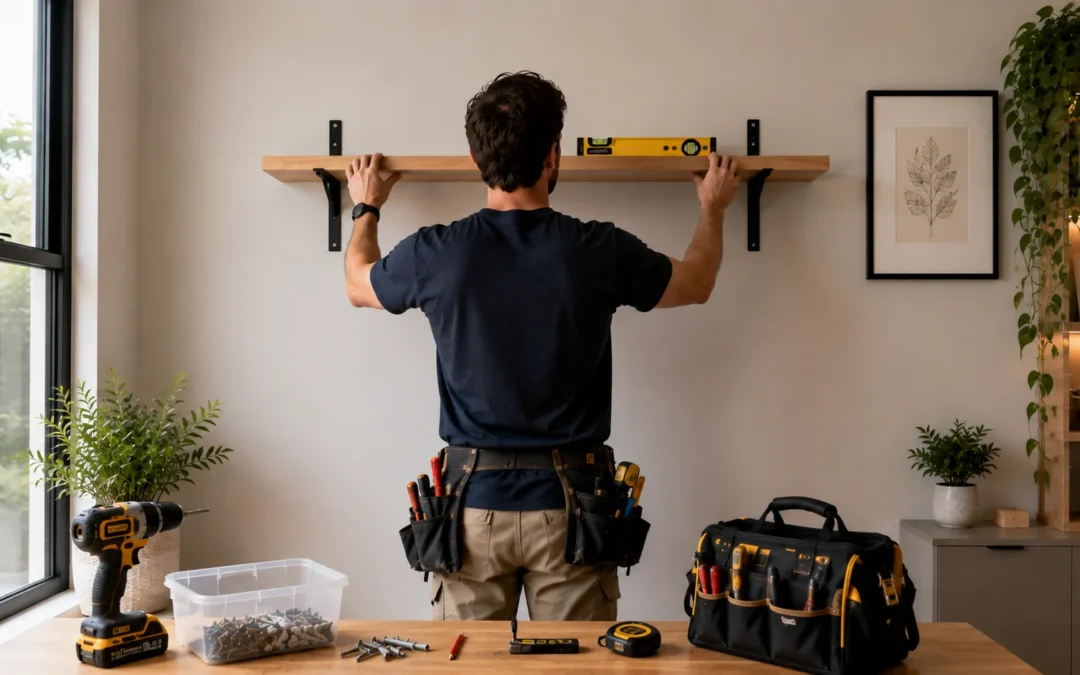
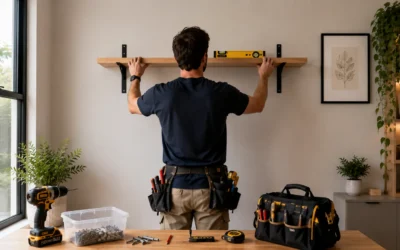
Installation quality directly determines how safe and long-lasting your wall shelf units will be. The rule is straightforward: always anchor into at least one wall stud. Drywall anchors can provide supplemental support for very light loads, but they should never be the sole fixing point for a shelf that will hold books, kitchenware, or decorative objects with any real weight.
Standard floating shelves in Australian homes typically have a safe working load of between 9 and 16 kg depending on the material and fixing method. Exceeding that rating is one of the most common causes of shelf failure, and the consequences range from cosmetic damage to a serious safety incident.
The Australian Building Codes Board sets standards for residential fixtures, and while homeowners are not always aware of these in relation to shelving, professional cabinetmakers work within these guidelines as a baseline for every installation.
Sizing and Placement: Getting the Proportions Right
Proportion is the difference between a shelf arrangement that looks intentional and one that looks like an afterthought. As a practical starting point, shelves hung above a sofa or console table should span roughly 60-80% of the furniture width below them. This proportion keeps the wall visually anchored without making the space feel crowded.
For room-by-room guidance:
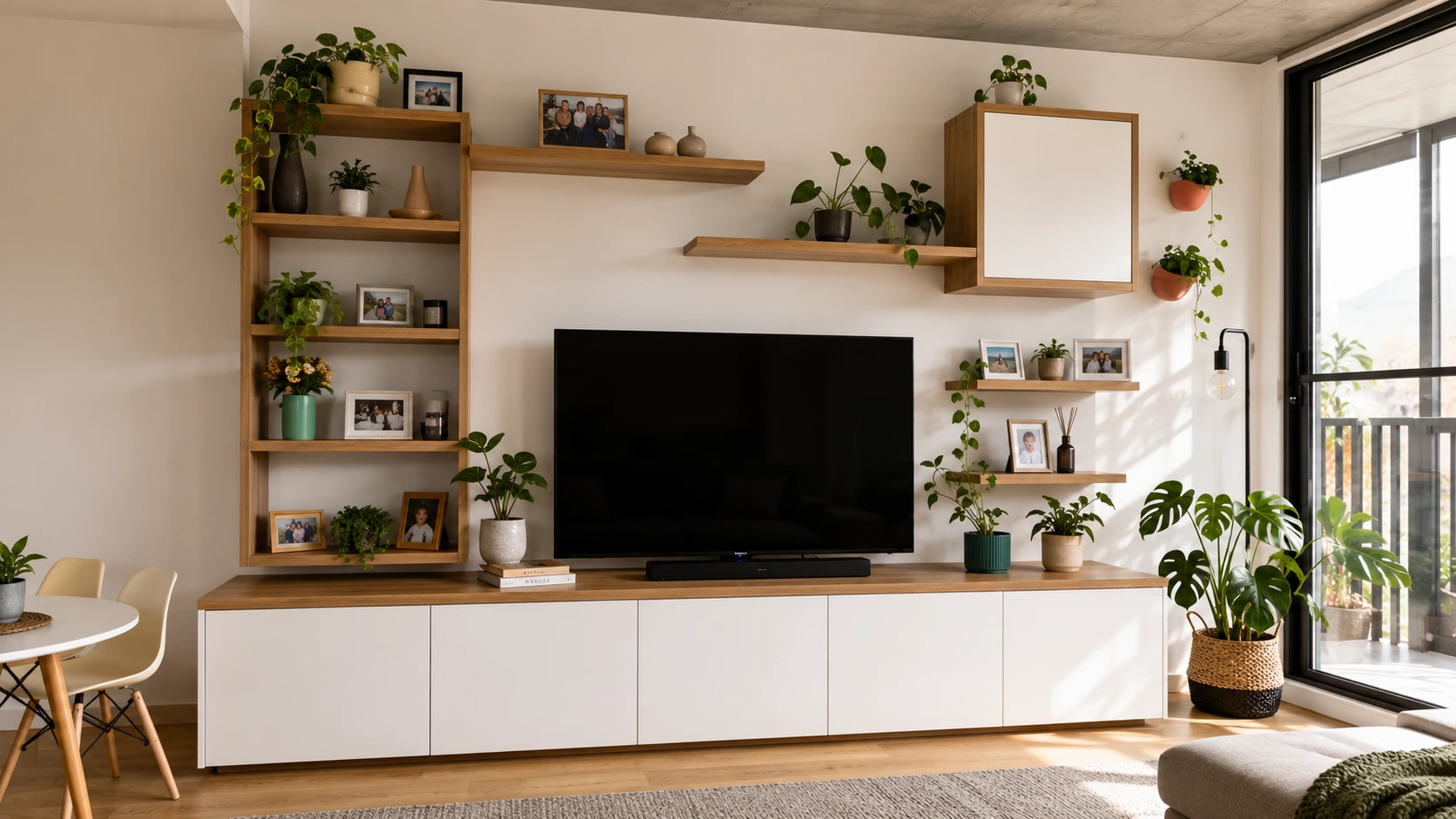
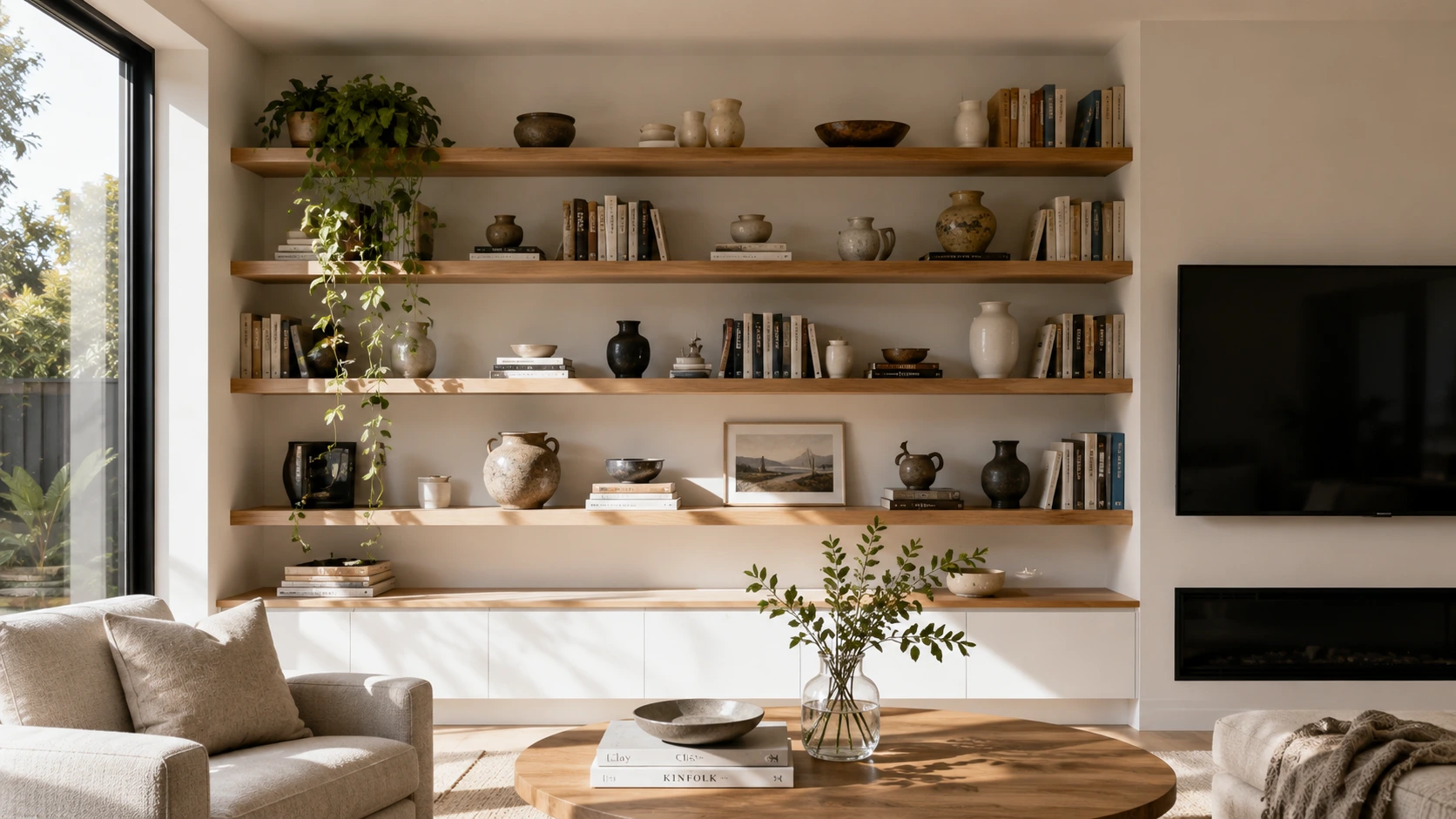
- Living room: Use a modular shelf system across a feature wall. Leave breathing room between objects, and limit display items to three to five per shelf.
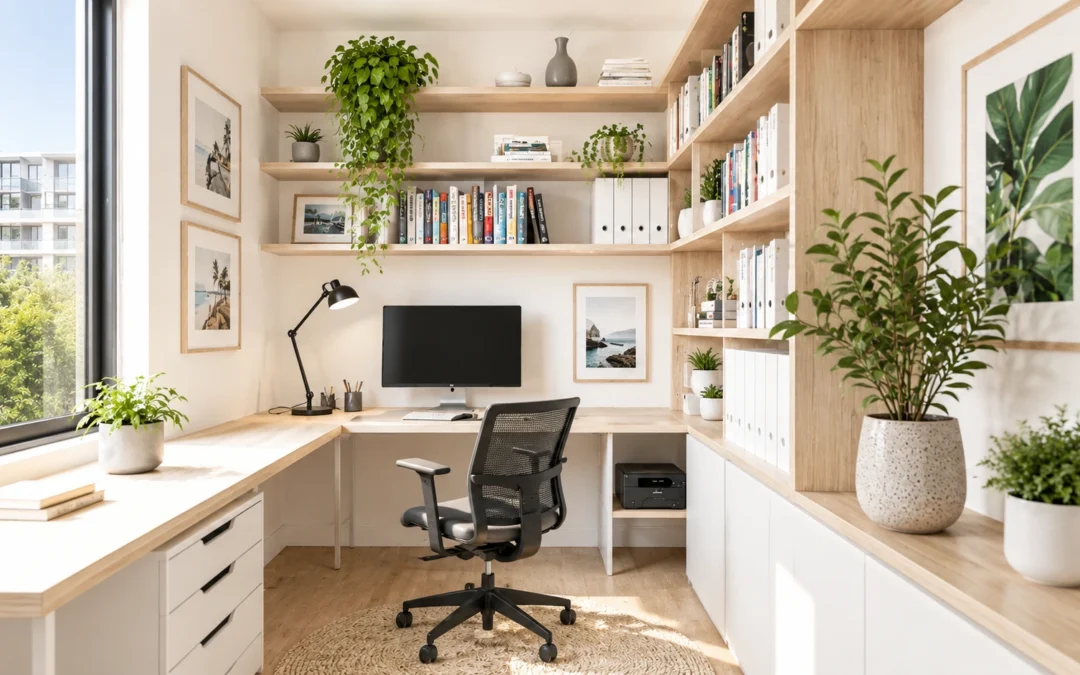
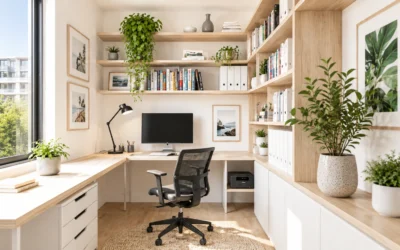
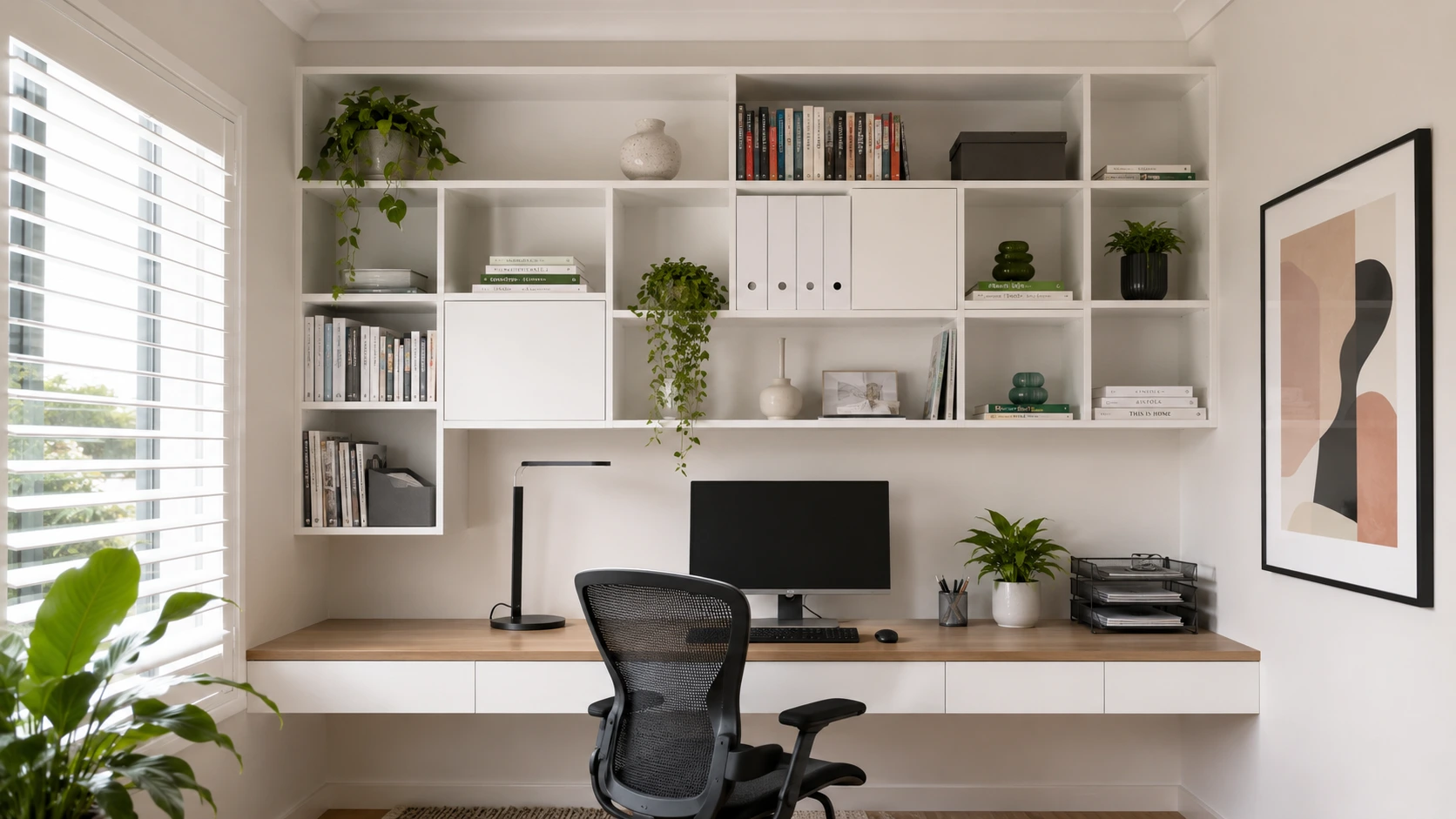
- Home office: Deeper shelves (30 cm or more) suit folders, binders, and tech accessories. Consider an open shelving unit at eye level for frequently used items.
- Children’s bedrooms: Low-profile box shelf units work well at child height. If you are also planning storage solutions for younger family members, the range of kids wardrobes from Almara pairs well with coordinating shelf systems.
- Hallway: Slim wall-mounted shelving units with hooks below suit bags, keys, and everyday items without adding visual bulk to a narrow space.
When floating shelves meet base cabinets in a kitchen or laundry, the result feels deliberate and calm. The key is restraint: a few well-chosen objects, consistent spacing, and a palette that connects back to the room.
Things to Know
- Hollow-core vinyl-wrapped shelves are built to look good in photos, not to carry real weight over time. Check the core material before purchasing.
- MDF and particleboard shelves “creep” under constant load, even when within their stated weight rating.
- Brick and Hebel walls require masonry anchors, which are a different product entirely from standard drywall plugs.
- Shelf colour and finish choices affect how a room reads visually: dark shelves recede, while light shelves expand the perceived space.
- Coordinating your shelf system with your broader cabinetry creates a cohesive, built-in look that adds more perceived value to a home.
The Bottom Line on Wall Shelf Units
Choosing the right wall shelf units comes down to being honest about what you need them to do. If you are storing real weight, such as books, kitchenware, or workshop tools, invest in solid timber or quality MDF and mount into studs. If the shelves are primarily decorative, you have far more material flexibility, but proportion and styling discipline become the priority.
The most practical step you can take right now is to measure your wall, note the stud locations, and contact a professional cabinetmaker for a free consultation.
Ready to Plan Your Wall Shelf Layout?
Book a free design consultation with Almara Cabinets. Their Melbourne-based team will measure your space, discuss your storage needs, and provide a complete quote at no cost. Call (03) 9070 5265 to speak with a specialist today.
Frequently Asked Questions
Q: How much weight can a typical floating wall shelf unit hold?
Most floating shelves support between 9 and 16 kg depending on the material and how they are fixed to the wall.
Solid hardwood shelves mounted into studs can hold significantly more, up to 27 kg for a 76 cm span. Hollow-core shelves should be limited to very light decorative items only.
Q: What is the difference between a wall shelf unit and a TV unit?
A wall shelf unit is a versatile, open storage system designed for display and general storage, while a TV unit is purpose-built around screen placement and media equipment.
Shelf units can be used across multiple rooms and configurations, whereas TV units are generally fixed in function and form.
.
Q: Do I need a professional to install floating wall shelves in a Melbourne home?
For shelves holding more than a few lightweight objects, professional installation is strongly recommended to ensure correct stud fixing and safe load distribution.
Brick and Hebel walls, which are common in Melbourne’s older homes, require specialist fixings that a general DIY approach may not adequately address. You can learn more about the approach Almara takes by visiting their about us page.
Q: What shelf depth is right for books versus decorative items?
For books and practical storage, choose shelves at least 25-30 cm deep. For purely decorative displays, 15-20 cm is usually sufficient.
Deeper shelves allow for two rows of objects, which adds flexibility but can make a room feel heavier if the shelf is too long.
Q: How do I style wall shelf units without them looking cluttered?
Limit display objects to three to five per shelf, vary heights between items, and leave visible breathing space between groups.
According to Better Homes and Gardens Australia’s styling advice, grouping items in odd numbers and mixing textures consistently produces the most balanced result. A neutral colour anchor, such as a stack of books or a ceramic vessel, helps tie a display together.