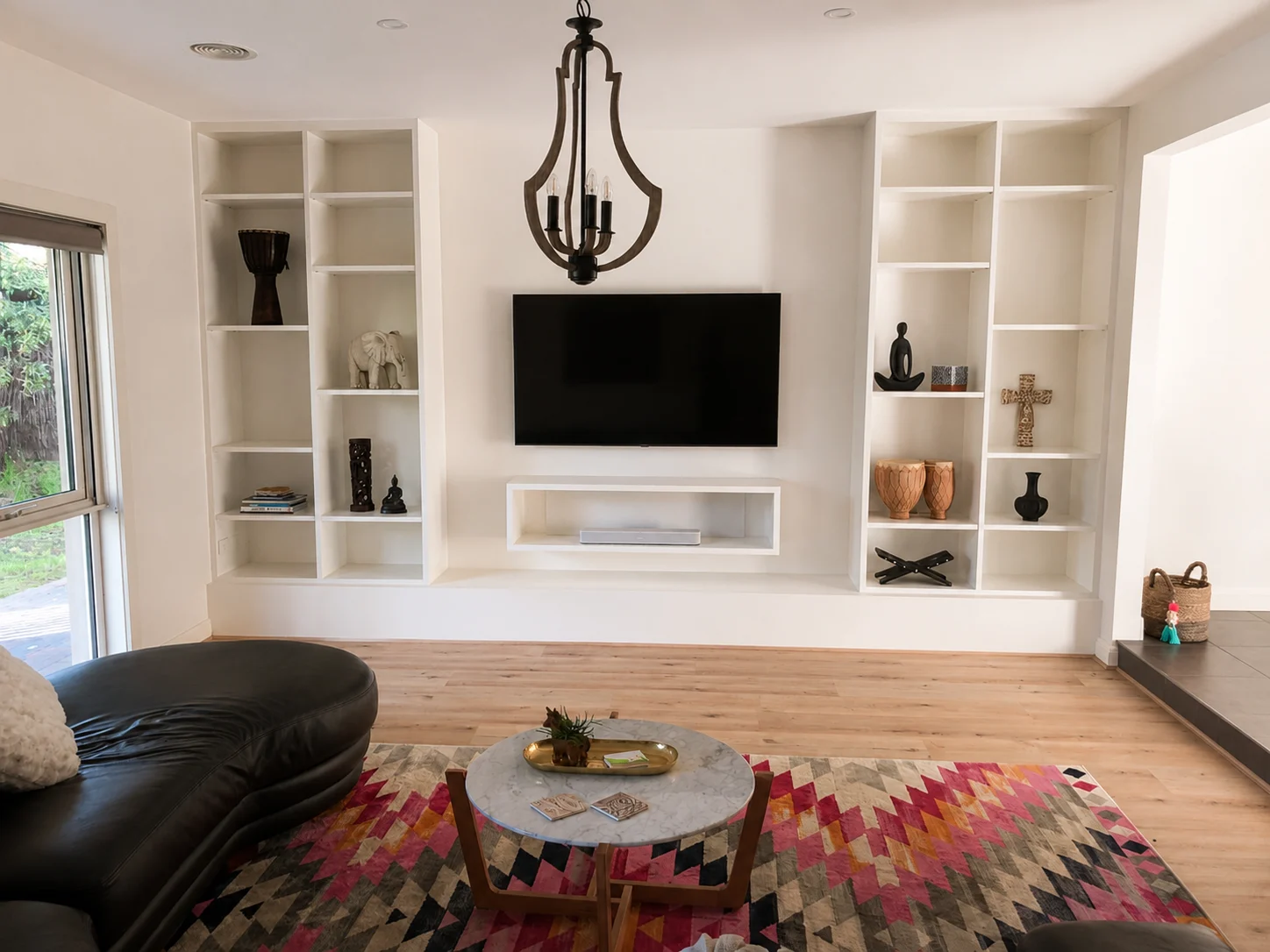
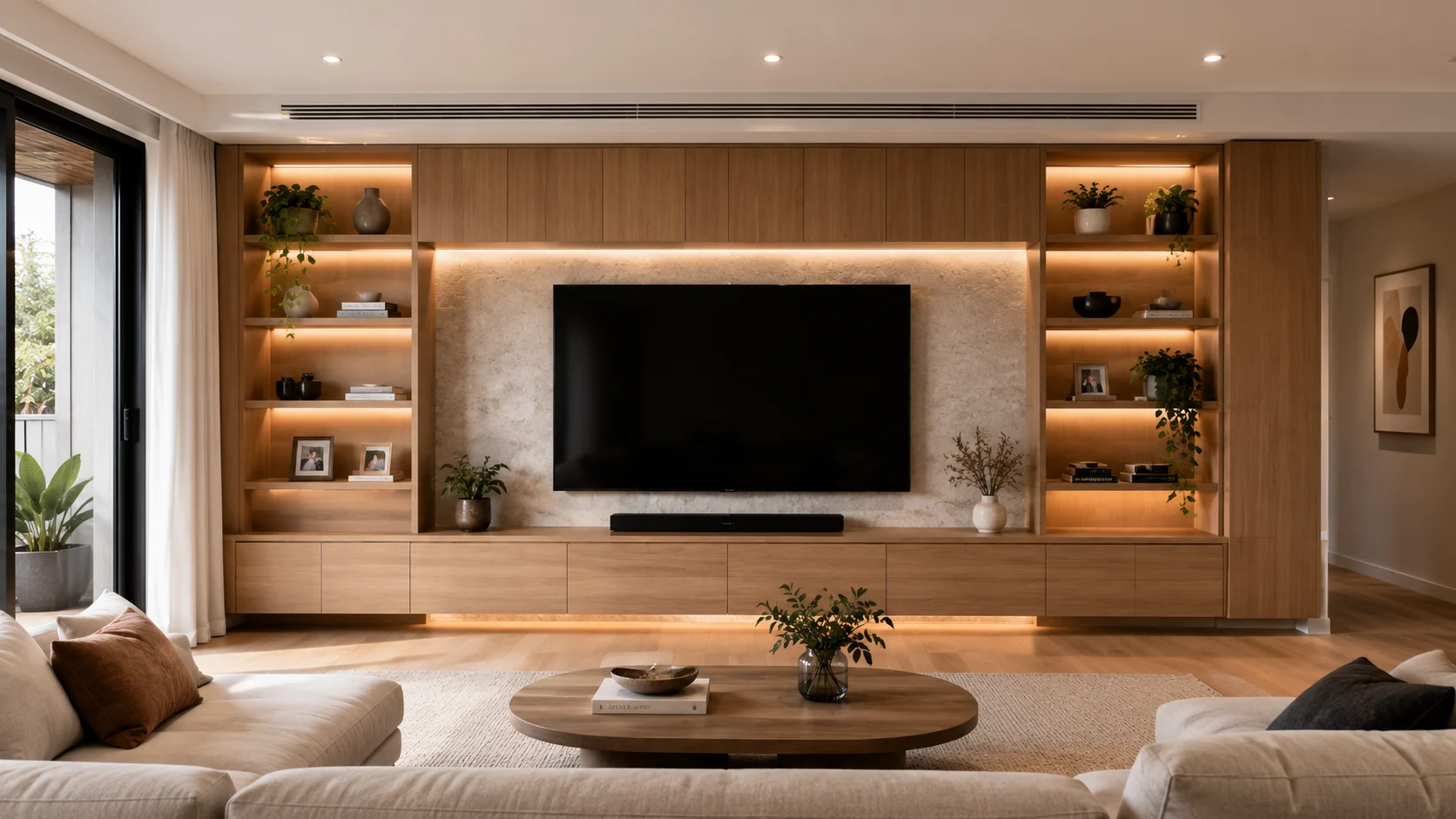
A built-in TV wall unit transforms your living room from a collection of furniture into a cohesive, intentional space. These designs integrate storage, lighting, and style into one continuous wall feature, replacing standalone entertainment units with something far more purposeful.
Key Takeaways
- Built-in TV wall units extend across the full wall width, combining open shelving, closed cabinetry, and integrated lighting into a single design
- The TV screen’s centre point should align with your eye level when seated, typically around 100-110 cm from the floor
- Materials like lacquered MDF, timber veneer, and soft metals define the look and determine the unit’s durability
- Custom joinery gives you precise control over dimensions, finishes, and cable management in ways flat-pack furniture cannot match
- For smaller rooms, floating consoles and wall-mounted shelving create visual lightness without sacrificing storage
- Professional installation from an experienced Melbourne cabinetmaker ensures the unit is structurally sound and finished to specification
Why the TV Wall Has Become the Centrepiece of Modern Living Rooms
The standalone TV cabinet has quietly disappeared from contemporary Australian interiors. In its place, the feature wall has taken over, a full-width built-in system that draws the eye the moment you walk into a room. This shift is not purely aesthetic. It is also a practical response to larger screen sizes (most homes now use 65-85 inch screens), the need for smarter storage, and a desire for spaces that feel considered rather than assembled.
According to Houzz Australia’s 2024 renovation trends report, storage integration and clean-lined cabinetry consistently rank among the top priorities for homeowners renovating living spaces. The built-in TV wall unit sits at the intersection of all three.
15 Modern Built-In TV Wall Unit Designs Worth Considering
1. Full-Width Timber Veneer with Floating Console
A warm Australian blackwood or spotted gum veneer runs the full width of the wall. Open shelving sits above a floating console, creating a grounded but airy composition. The grain pattern becomes the feature.
2. Matte White with Integrated Fireplace
Clean, recessed joinery in matte white frames a linear gas fireplace beneath the screen. Symmetrical cabinet doors on either side keep the design balanced. This layout works exceptionally well in larger living rooms.
3. Dark Charcoal with Brass Accents
Deep charcoal lacquer paired with brushed brass handles creates a sophisticated, hotel-inspired look. Closed lower cabinets hide media equipment while open upper niches display books and art pieces.
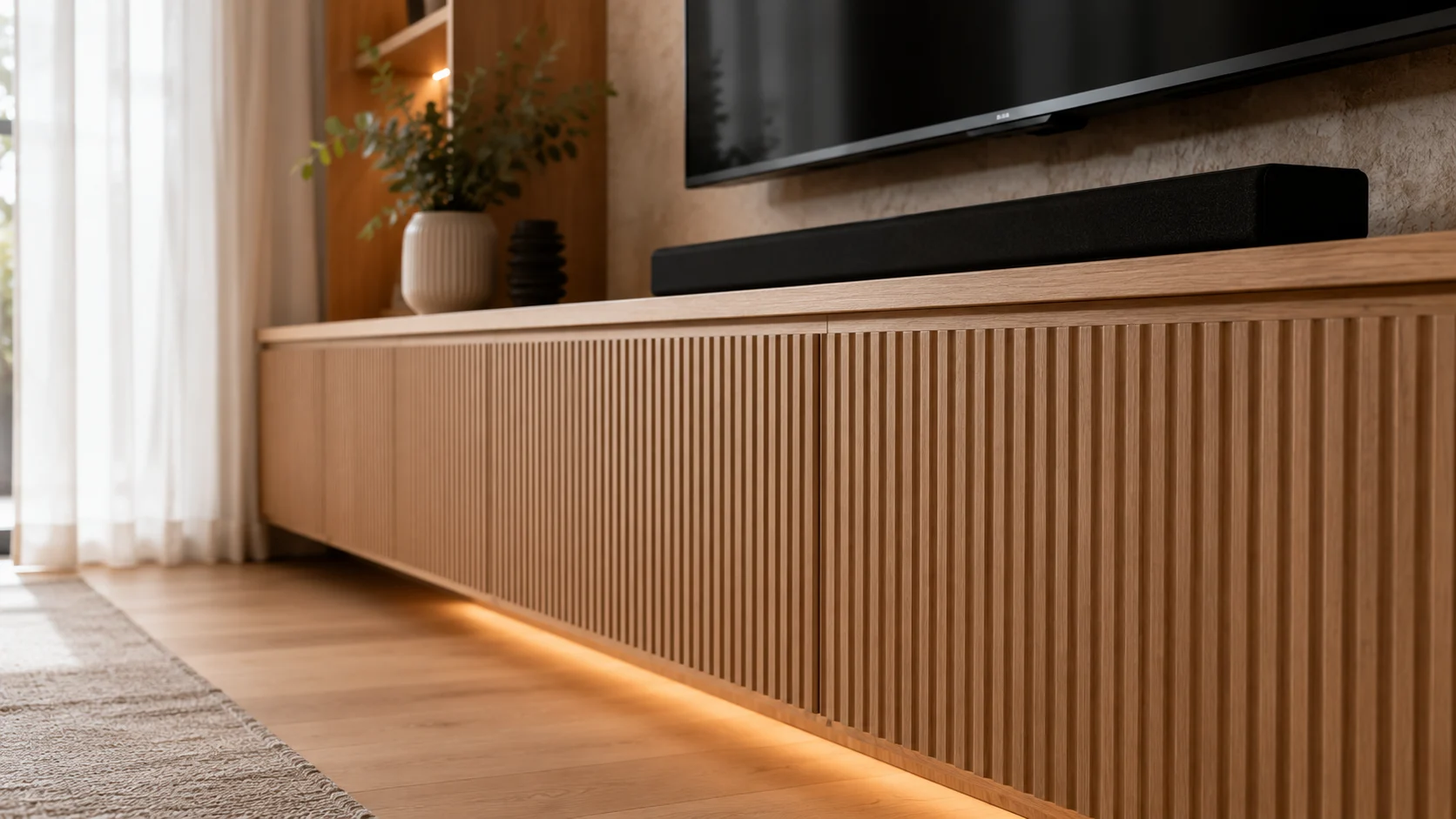
4. Fluted Timber Panel Feature
Fluted vertical timber panels are one of the biggest surface trends in 2026. Applied to the cabinet faces or used as a backdrop behind the screen, they introduce texture without visual noise.
5. Minimalist White Oak with Hidden Storage
A sleek minimalist TV wall unit in white oak with push-to-open doors removes visible hardware entirely. The result is a seamless, gallery-like surface that lets the TV become a piece of art when not in use.
6. Recessed Alcove Design
The TV sits within a deep recessed alcove surrounded by symmetrical shelving and closed cabinetry. LED strip lighting outlines the alcove for a soft, layered glow at night.
7. Monochromatic Black Feature Wall
Matte black joinery against a black-painted wall creates a bold, dramatic statement. This contemporary TV unit design works best in rooms with strong natural light to prevent the space from feeling heavy.
8. Mixed Open and Closed Storage
Alternating open niches with closed cabinet sections adds rhythm and visual interest. Open sections display plants, artwork, and books; closed sections conceal routers, game consoles, and cables.
9. Floor-to-Ceiling Cabinetry
Tall side towers reach the ceiling and frame the central TV panel. This format maximises storage in rooms where floor space is limited. Built-in wall units designed this way can accommodate linen, books, or display collections alongside media storage.
10. Limewash Concrete-Effect Finish
A concrete-effect limewash or textured paint finish applied to the wall behind open-frame joinery creates an industrial-meets-residential aesthetic popular in Melbourne inner-city homes.
11. Study-Media Hybrid Unit
A wall-mounted unit that doubles as a workspace and entertainment hub, ideal for compact homes or bedrooms. A pull-out desk sits below the screen, flanked by shelving and closed storage. For rooms that also serve as children’s spaces, this concept pairs naturally with purpose-built kids wardrobes for a cohesive, functional interior.
12. Japandi-Inspired Natural Materials
Light timber, soft linen fabric cabinet inserts, and a restrained material palette define this style. The designer entertainment wall in this format prioritises calm over clutter.
13. Asymmetric Shelving Composition
Rather than symmetry, this layout plays with varying shelf heights and depths, creating a more relaxed, gallery-like arrangement. Suitable for creative interiors where strict symmetry feels too formal.
14. Curved Cabinet Fronts
Curved joinery details on the lower cabinet doors or side panels add softness. This is a refined detail that distinguishes custom-built units from anything available off the shelf.
15. Two-Tone Finish: Upper vs Lower
Upper open shelving in a light timber tone contrasts with closed lower cabinetry in a deep navy or forest green. The two-tone format grounds the unit visually while keeping the upper section light.
Materials That Define the Look
The material you choose determines the overall character of your sleek built-in TV wall. Here is a practical comparison:
| Material | Finish Options | Durability | Best For |
|---|---|---|---|
| Lacquered MDF | Matte, gloss, satin | High | Contemporary, minimalist |
| Timber Veneer | Natural, stained | High | Warm, organic, Japandi |
| Melamine | Wide colour range | Medium | Budget-conscious projects |
| Solid Timber | Natural, oiled | Very high | Premium, statement builds |
| Painted MDF | Any colour | High | Custom colour matching |
According to Forest and Wood Products Australia, sustainably sourced Australian timber products are increasingly popular in residential joinery, with homeowners prioritising both aesthetics and environmental responsibility.
Getting the Layout and Proportions Right
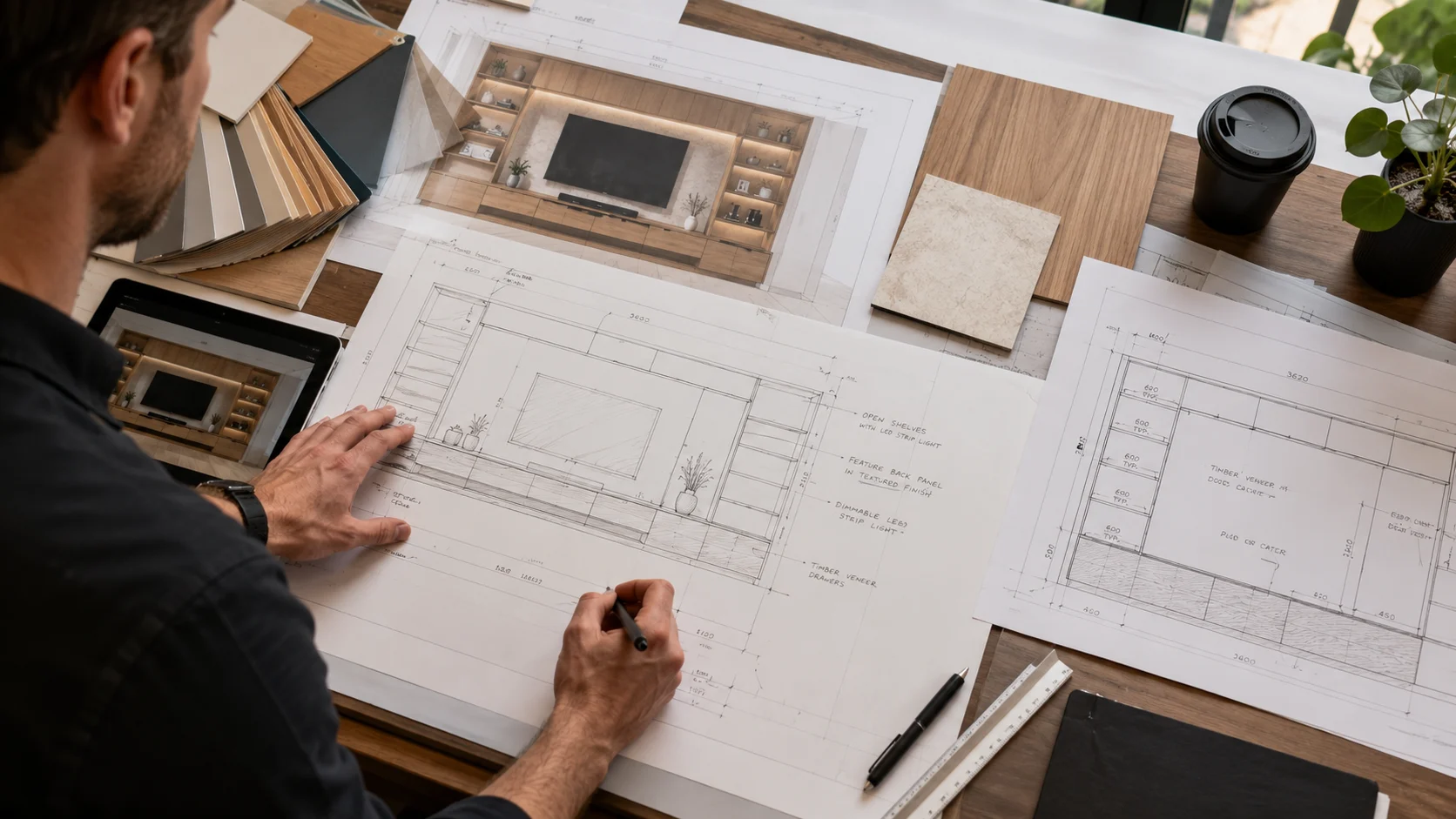
Proportion matters as much as aesthetics. The TV’s centre should sit at approximately seated eye level, generally 100-110 cm from the floor for standard lounge seating. If you mount the screen too high, you strain your neck over time.
Cable management is another consideration that separates a professional installation from a DIY attempt. To understand why custom joinery consistently outperforms flat-pack alternatives on this front, the article on built in tv units why custom joinery beats off the shelf furniture covers the practical differences in detail.
Lighting integration, whether recessed downlights, LED strip backlighting, or picture lights, should be planned before installation begins, not retrofitted afterwards.
The ABC Homes and Gardens section regularly features Australian renovation projects where lighting was the single most transformative element in a room refresh.
Things to Know
- Most Australian living rooms are not perfectly square, so custom-built units account for wall irregularities that flat-pack products cannot accommodate
- LED strip lighting inside niches draws minimal power but significantly lifts the perceived quality of the unit at night
- Open shelving collects dust faster than closed cabinetry, so balance your design based on how much maintenance you are willing to do
- Floating consoles must be anchored into wall studs or a solid substrate, not just plasterboard
- Acoustic panels behind the TV can improve sound quality from built-in speakers and reduce echo in hard-surfaced rooms
The Bottom Line on 15 Modern Built-In TV Wall Unit Designs
Whether you are drawn to the warmth of a fluted timber panel, the drama of a monochromatic black wall, or the versatility of a study-media hybrid, there is a built-in TV wall unit design that fits your space and lifestyle. The key is working with a team that understands both the structural and aesthetic requirements of the project.
With the right materials, proportions, and a professional installation, your TV wall becomes more than a place to mount a screen. It becomes the defining feature of your home’s interior.
Ready to Bring One of These Designs to Life?
Browse the Almara Cabinets to see completed projects and get a sense of what is possible for your home. Almara Cabinets is a Melbourne-based custom joinery specialist with over 30 years of experience and more than 50,000 completed installations.
The team offers a free design consultation, measure, and quote, so you can explore your options without any upfront cost. To learn more about who they are and how they work, visit the about us page. When you are ready to move forward, contact us or call directly on (03) 9070 5265.
Frequently Asked Questions
Q: How much does a custom built-in TV wall unit cost in Melbourne?
Pricing varies significantly based on size, materials, and complexity, but most custom TV wall units in Melbourne range from A$3,500 to A$15,000 or more.
A straightforward floating console with flanking cabinetry sits at the lower end, while full-height, full-width units with integrated lighting and premium finishes move into the higher range. Getting a detailed quote from a professional cabinetmaker is the most reliable way to budget accurately.
Q: How long does installation take?
Most built-in TV wall unit installations are completed within one to three days, depending on the size and complexity of the design.
Cabinet manufacturing typically takes three to six weeks before installation day. Planning your renovation timeline around this lead time ensures you are not waiting on cabinetry after other trades have finished.
.
Q: Can a built-in TV unit work in a rental property?
In most cases, built-in joinery requires landlord approval because it involves fixing structures to walls, which constitutes a permanent alteration.
If you are renting, discuss the plan with your landlord before commissioning the work. Some landlords agree if the tenant covers all costs and restores the wall on departure.
Q: What is the best material for a modern TV wall unit?
Lacquered MDF and timber veneer are the two most popular choices for modern built-in TV wall units in Australian homes.
Lacquered MDF delivers a crisp, contemporary finish in any colour, while timber veneer brings warmth and natural character. Your choice should reflect the broader material palette of your home.
Q: Do I need a builder or a cabinetmaker for this project?
A professional cabinetmaker is the appropriate trade for a built-in TV wall unit, as the work centres on joinery fabrication and installation rather than structural building work.
If your project involves relocating power points, adding lighting circuits, or adjusting wall structure, you will also need a licensed electrician and potentially a plasterer working alongside the cabinetmaker.