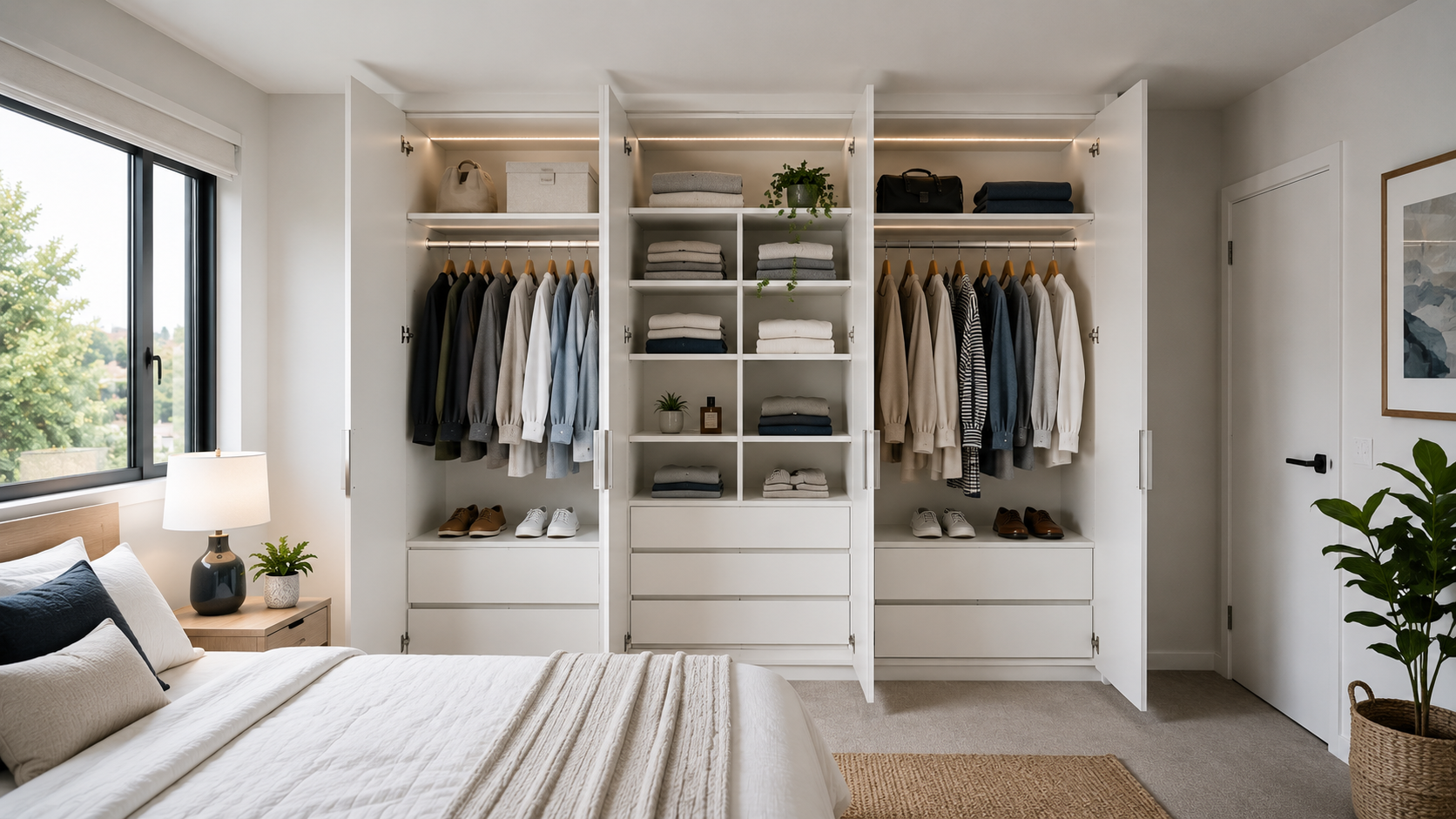
Hinged door wardrobes offer full, unobstructed access to your entire wardrobe interior and suit a wide range of room sizes, styles, and budgets. For Melbourne homeowners weighing up storage options, they remain one of the most practical and visually versatile choices available.
Key Takeaways
- Hinged doors provide complete access to wardrobe contents in a single swing, making daily organisation faster and easier.
- They are generally more affordable than sliding door alternatives, thanks to simpler hardware and straightforward installation.
- Hinged wardrobes require adequate floor clearance in front of them, making room size a critical planning factor.
- Door panels typically max out at around 60 cm wide to avoid placing excessive load on hinges.
- Design options are extensive, from mirrored and laminated panels to routed shutters and decorative handles in brass, leather, or stainless steel.
- Custom configurations can adapt to angled ceilings, under-stair alcoves, and corner placements.
Why Hinged Door Wardrobes Still Hold Their Own
In an era of sleek sliding panels and open-concept walk-in setups, the traditional hinged wardrobe door has not lost its appeal. Quite the opposite. Across Melbourne’s mix of Victorian terraces, mid-century bungalows, and contemporary apartments, hinged wardrobes continue to be specified by designers and homeowners alike, and for good reason.
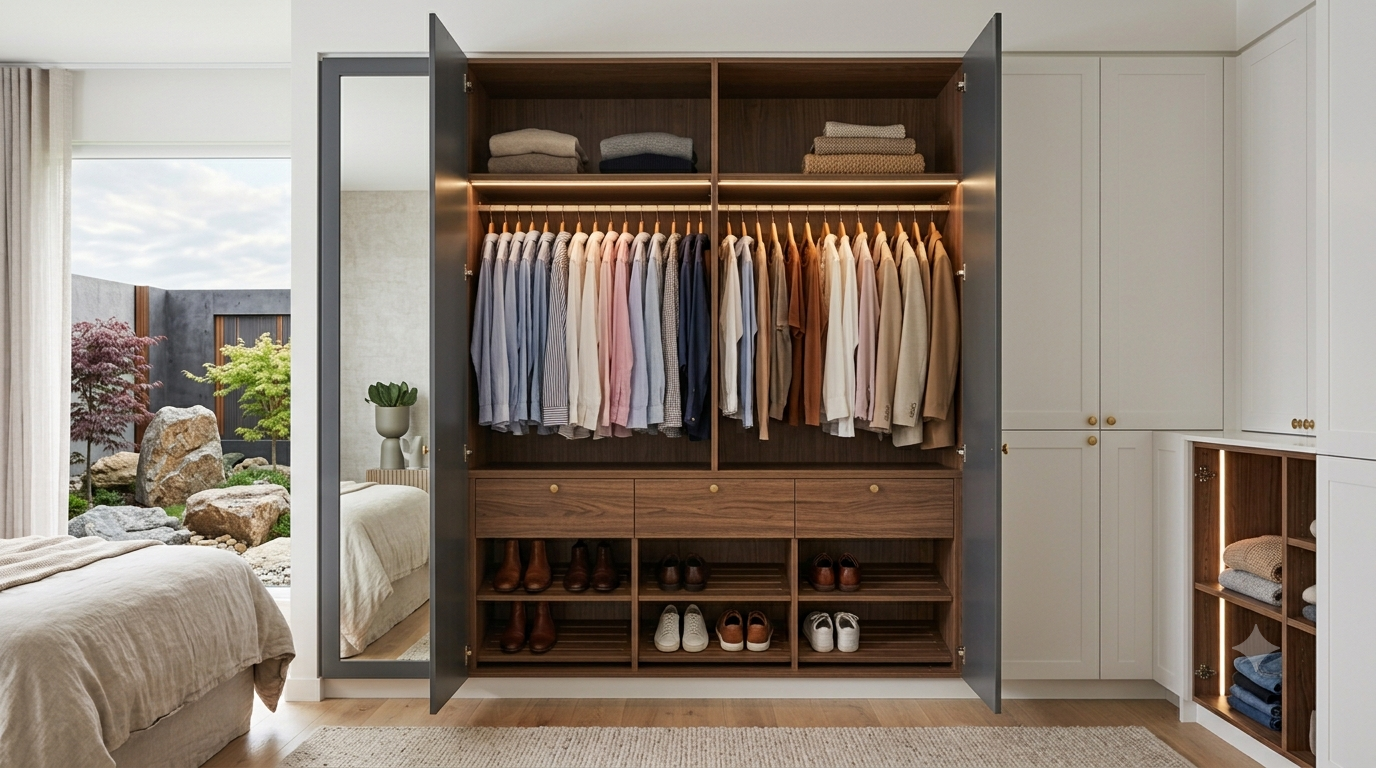
The core advantage is access. When you open a hinged door, you get the full width of that panel cleared instantly. There is no overlapping section hidden behind another door, no awkward shuffling of panels to reach a corner shelf. Everything is visible at once, which makes getting dressed in the morning considerably faster. For anyone managing a large clothing collection or shared storage, that clarity is genuinely useful.
Hinged wardrobes also tend to be less expensive upfront. The hardware is simpler, hinges are widely available and easy to replace, and installation is more straightforward than fitting a quality track system for sliding doors. According to Houzz Australia, wardrobe fit-outs remain one of the most requested renovation projects nationally, and hinged configurations consistently feature among the most popular choices for their cost-effectiveness.
Ventilation is another practical benefit that often goes unmentioned. The small gaps around hinged doors allow air to circulate naturally inside the wardrobe, which helps prevent moisture buildup. In Melbourne, where seasonal humidity can shift quickly, this is worth factoring in, particularly for wardrobes storing delicate fabrics or leather goods.
The Real Trade-Offs You Need to Consider
No storage solution is without compromise, and hinged door wardrobes are no exception. The most significant drawback is the swing clearance they require. Each door needs unobstructed floor space in front of it, typically at least 500 to 600 mm, to open fully without hitting furniture, a bed frame, or a wall. In smaller bedrooms, this can create genuine layout headaches.
If you open multiple hinged doors simultaneously in a compact room, the visual result can feel cluttered and overwhelming. This is less of an issue in larger rooms, but it is a real consideration for apartment living or secondary bedrooms with tight dimensions.
Panel width is also constrained by physics. Standard hinged wardrobe doors are generally kept to around 600 mm (roughly 24 inches) wide. Wider panels place excessive load on hinges over time, leading to sagging and misalignment. If your wardrobe opening is wide, this simply means you will need more individual panels, which is not necessarily a problem but does affect the overall visual rhythm of the design.
For anyone considering bedroom wardrobes in a Melbourne home, it pays to measure your room carefully before committing to a hinged configuration. Knowing your clearance zone is the first step.
Design Ideas That Work in Real Rooms
This is where hinged wardrobes genuinely shine. Because they have been a standard feature in homes for generations, the design vocabulary around them is incredibly rich. You are not locked into one aesthetic.
Mirror panels are among the most popular choices, particularly in smaller rooms. A full-height mirrored hinged door serves double duty as a dressing mirror and visually expands the room. The Sleep Health Foundation Australia notes that bedroom environment, including light and space perception, can influence sleep quality, and a well-designed wardrobe contributes to that sense of calm order.
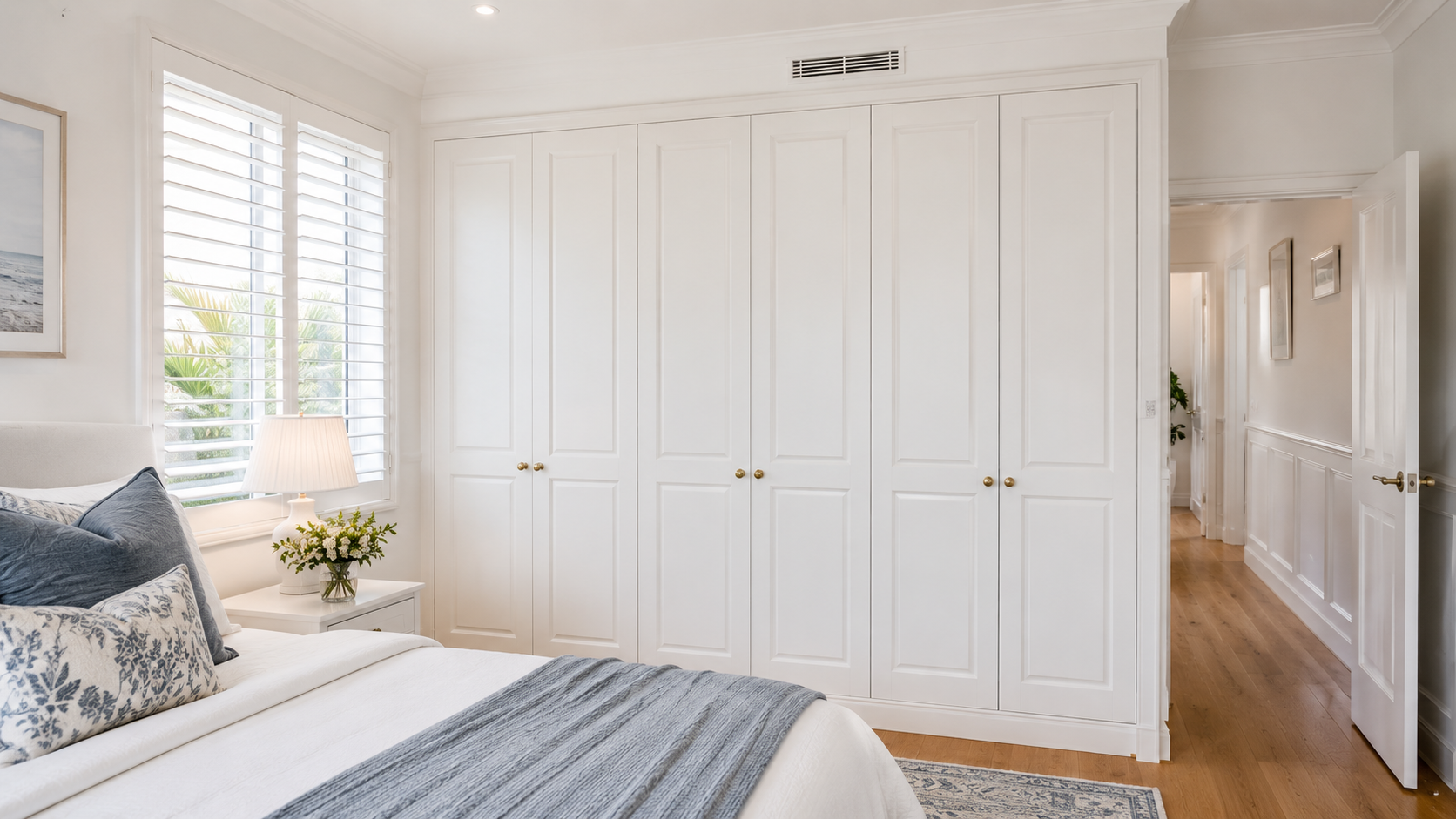
Laminated and routed panels suit contemporary or Hamptons-style interiors, offering a clean surface that can be specified in virtually any colour. For traditional homes, raised panel doors with classic knob hardware in brass or brushed nickel feel entirely at home.
Metal-framed glass panels bring an industrial or Parisian-loft quality to a space, allowing you to see inside the wardrobe without fully opening the doors. This works particularly well in larger master bedrooms.
Handle choice matters more than many people realise. Sleek bar handles in matte black or stainless steel suit minimalist interiors. Leather tab pulls add warmth to Japandi or natural material schemes. Classic porcelain or crystal knobs suit period homes.
Hinged doors can also be cut to fit under angled ceilings or positioned in corners at non-standard angles, making them a flexible choice for attic conversions or heritage homes with irregular architecture. For those considering built in wardrobes, a hinged configuration often makes better use of awkward architectural features than sliding alternatives.
Matching the Right Wardrobe Type to Your Household
The right wardrobe is not just about aesthetics. It is about how your household actually uses the space. For families, kids wardrobes with hinged doors can be particularly practical because children find them intuitive to open and close, unlike sliding systems that require a certain technique. Hinges are also straightforward to repair if a child accidentally swings a door too hard.
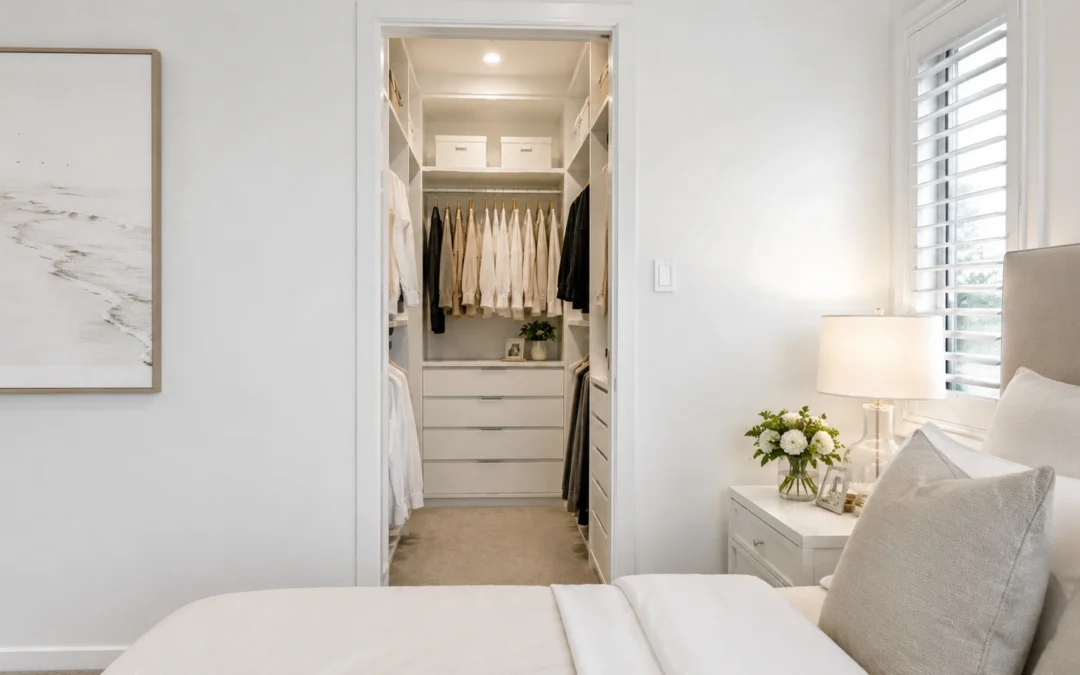
If your home has the floor space for it, walk in robes with hinged entry doors offer a boutique-style experience that is hard to replicate with any other configuration. The door itself becomes a statement piece when it opens into a dedicated dressing room.
For those wanting a fully tailored result, custom wardrobes allow you to specify every detail, from panel profile and material to hinge type, handle finish, and internal layout. This is the most effective way to get a wardrobe that genuinely fits your room dimensions and storage habits rather than compromising on either. The team at works with Melbourne homeowners across a range of budgets and room types to deliver wardrobes that are both functional and well-designed.
Things to Know
- Hinge quality matters significantly. Soft-close hinges add a premium feel and reduce wear over years of daily use.
- The Australian Building Codes Board sets minimum clearance requirements for bedroom access routes, which can affect how much swing space you practically have available.
- Painting or refinishing hinged wardrobe doors is far simpler than with sliding systems, making them easier to update as interior trends shift.
- Under-stair and corner installations are much more achievable with hinged configurations than sliding alternatives.
- If you want the back of a wardrobe door to function as extra storage, hooks or over-door organisers are only compatible with hinged doors.
The Bottom Line on Hinged Door Wardrobes
Hinged door wardrobes deliver full access, strong design flexibility, and a lower cost of entry compared to most alternatives. They are a sound choice for larger rooms, family homes, heritage properties, and anyone who wants a wardrobe that is easy to maintain and straightforward to personalise over time.
If you are planning a wardrobe for your Melbourne home, start by measuring your available clearance, identifying your preferred aesthetic, and thinking honestly about how many people will use the space daily. From there, the right configuration becomes much clearer.
Frequently Asked Questions
Q: How much clearance do I need in front of a hinged wardrobe door?
You need at least 500 to 600 mm of clear floor space in front of a hinged wardrobe door for it to open fully. In practice, more is always better. Melbourne building guidelines recommend clear circulation paths in bedrooms of at least 900 mm wherever possible, which should factor into your planning.
Q: Are hinged door wardrobes more affordable than sliding door wardrobes?
Yes, hinged wardrobes are generally less expensive because their hardware is simpler and installation is more straightforward. Quality sliding track systems add significant cost, and ongoing maintenance of tracks and rollers can also add up over time. Hinges, by contrast, are inexpensive and easy to replace.
Q: Can hinged wardrobes be built into alcoves or awkward spaces?
Yes, hinged wardrobes are actually better suited to irregular spaces than sliding alternatives. Panels can be cut to fit angled ceilings, under-stair recesses, and corner placements at non-standard angles, making them the more flexible option for heritage homes and attic conversions.
Q: What is the maximum width for a single hinged wardrobe door panel?
A single hinged panel should generally not exceed around 600 mm wide to avoid placing too much stress on the hinges. Beyond this width, doors can sag or misalign over time. A wider wardrobe opening is simply divided into more individual panels.
Q: Do hinged wardrobes provide better ventilation than sliding wardrobes?
Yes, the small gaps around hinged doors allow air to circulate naturally inside the wardrobe. This helps prevent moisture and musty odours from developing, which is particularly relevant in Melbourne’s variable humidity conditions. Sliding door systems, which sit in tracks and create a tighter seal, can trap air and moisture more readily.