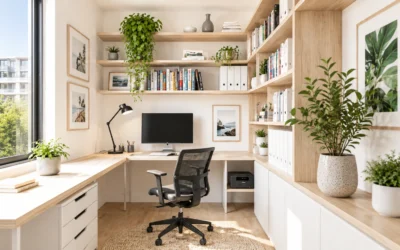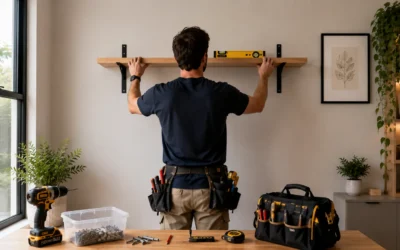
Wall-mounted TV units combine smart storage with a clean, modern aesthetic that frees up valuable floor space in any room. Whether you live in a compact Melbourne apartment or a spacious family home, the right floating TV unit transforms how your living area looks and functions.
Key Takeaways
- Wall-mounting your TV and media unit can free up 20-30% of usable floor space in smaller rooms.
- The best wall-mounted TV units integrate concealed cable management, adjustable shelving, and closed storage to reduce visual clutter.
- Materials matter: engineered wood, MDF with laminate, and timber veneer each offer different durability, price, and aesthetic trade-offs.
- Mounting height is critical: the centre of your screen should sit roughly 100-107 cm from the floor when you are seated.
- Full-width media walls are the dominant 2026 trend, combining open shelving, cabinetry, and lighting into one continuous design.
- Professional design and installation ensures structural safety and a factory-quality finish, particularly on stud and masonry walls common in Australian homes.
Why Australian Homes Are Choosing Wall-Mounted TV Units
Urban living is getting denser. According to the Australian Bureau of Statistics, apartment and medium-density dwelling approvals continue to rise across capital cities, with Melbourne and Sydney leading the trend. Smaller floor plans mean every square metre counts, and that is exactly why demand for wall-mounted solutions has surged.
Global data shows that demand for wall-mounted TV configurations grew by 33% in 2023, driven by space-constrained households. Locally, this mirrors what interior designers and cabinet makers across Melbourne are seeing: buyers want their living rooms to feel open, not crowded by bulky TV consoles sitting on the floor.
Beyond the space benefit, there is a strong aesthetic case. A floating TV unit creates a clean horizontal line across your wall. It draws the eye, anchors the room, and when done well, it looks like the television belongs there rather than being an afterthought parked in the corner.
There is also a practical safety consideration for Australian families with . A wall-fixed media unit removes the risk of a freestanding cabinet tipping forward. For households with young children, this matters considerably.
Styles of Wall-Mounted TV Units: Which One Suits Your Space?
Choosing the right style comes down to your room dimensions, your storage needs, and your overall interior direction. Here is a breakdown of the most popular options available in the Australian market.
Minimalist Floating Panels
These are low-profile TV units with a single shelf or panel flush against the wall. They suit apartments and open-plan spaces where visual lightness is the priority. Typically finished in matte white, concrete grey, or timber veneer, they pair well with Scandi and contemporary interiors. Storage is limited, so they work best when paired with a separate media cabinet lower on the wall.
Full-Width Media Walls
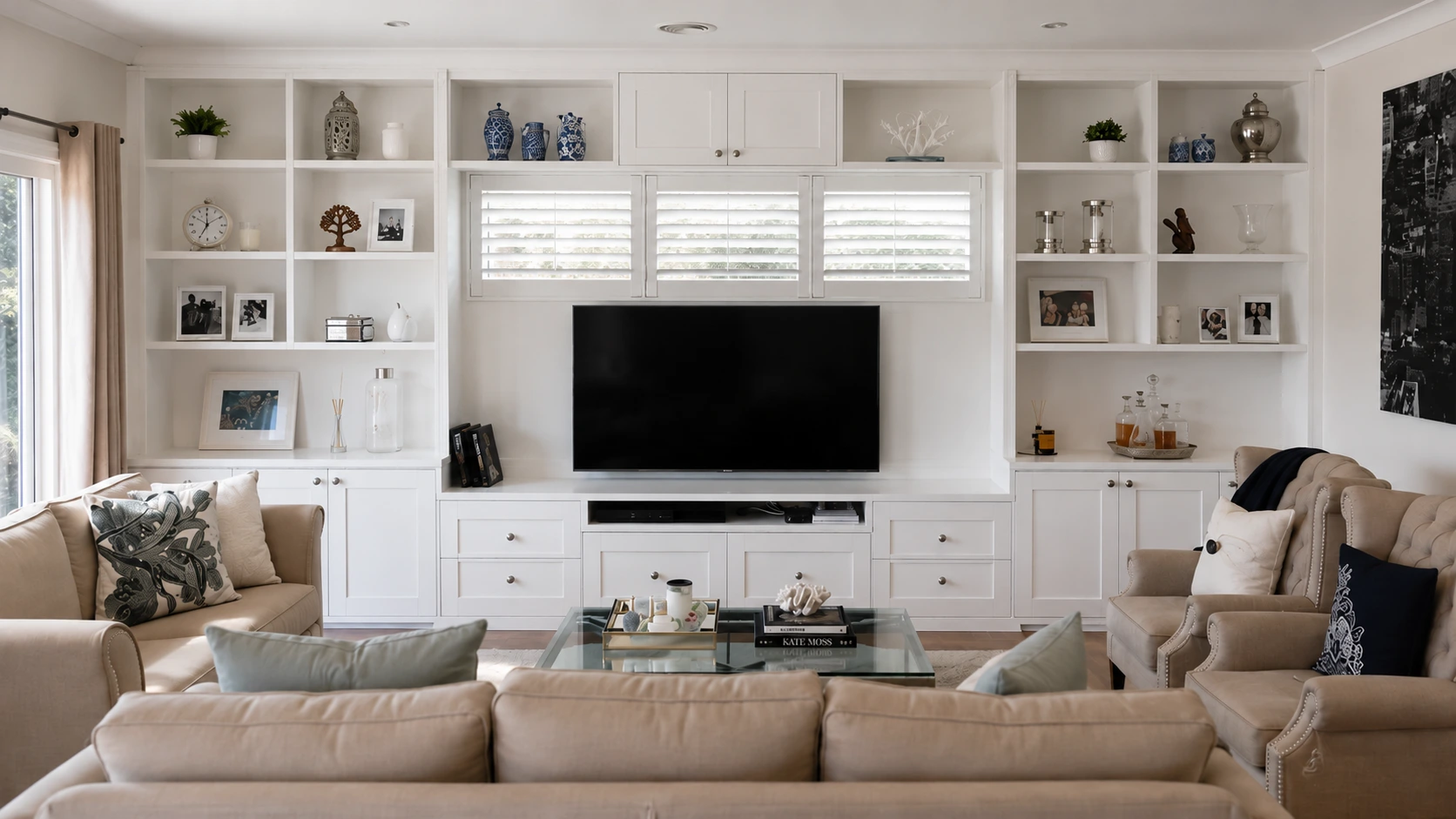
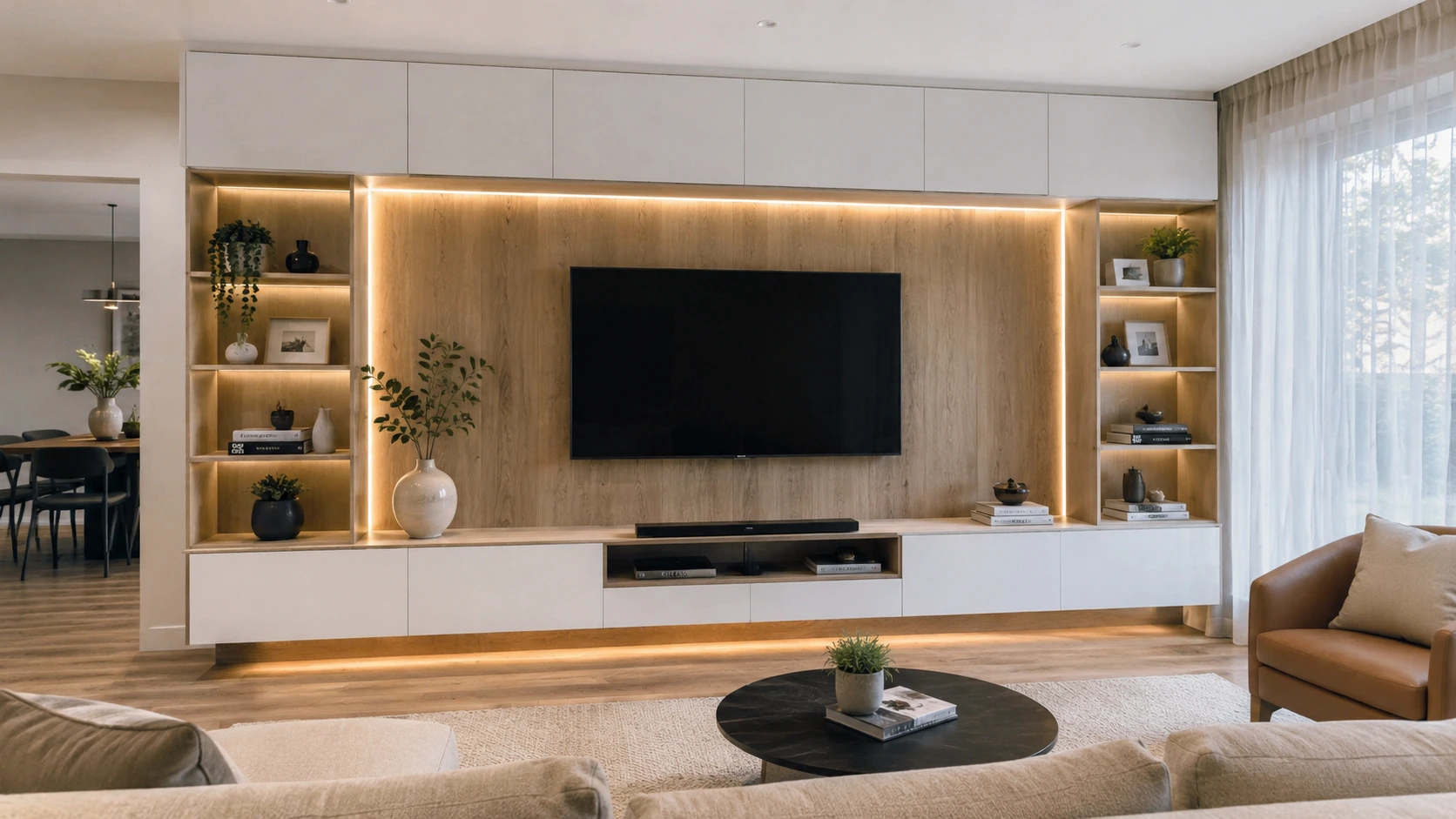
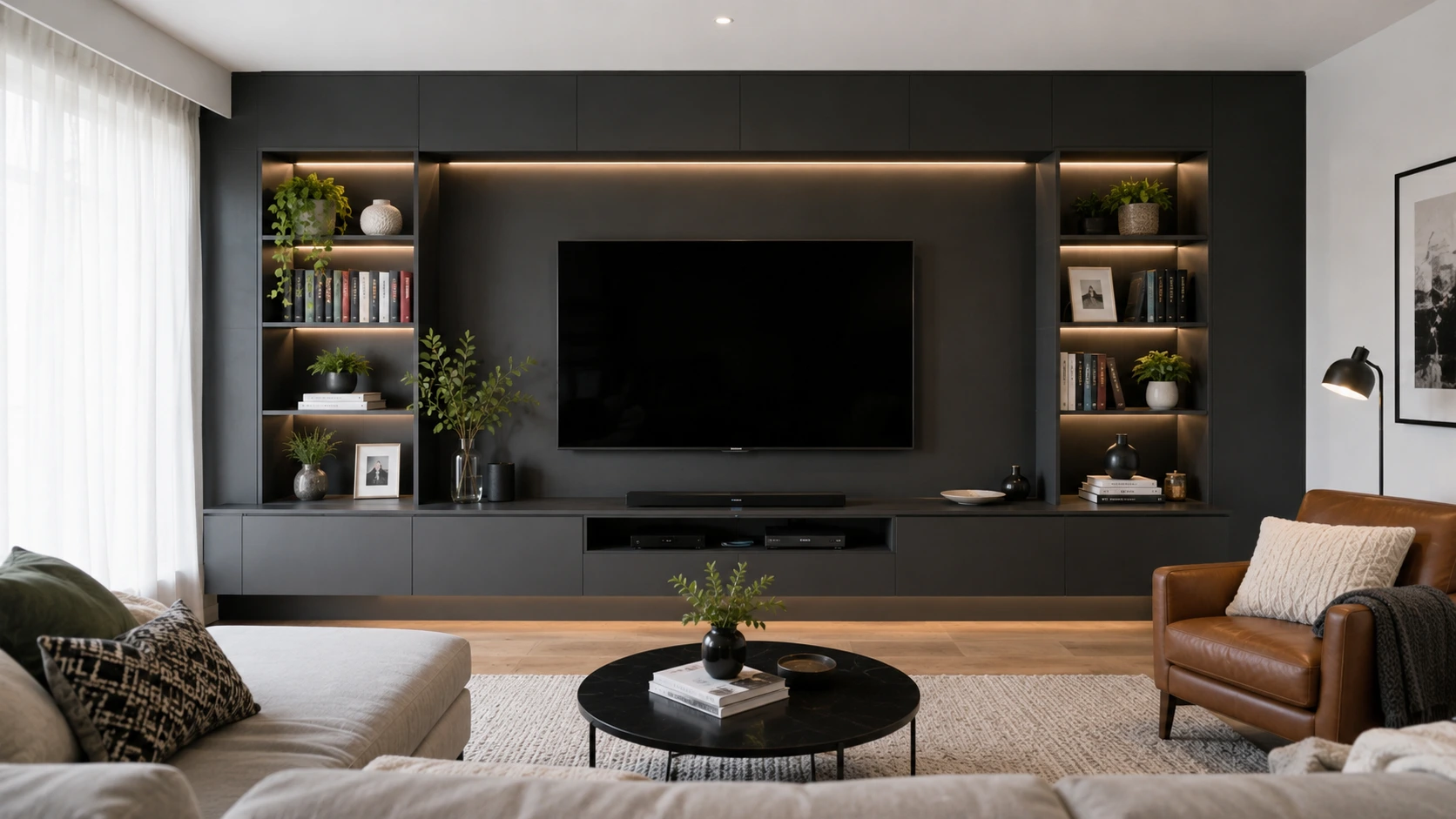
The dominant trend for 2026. A media wall spans the entire feature wall from side to side, incorporating a combination of closed cabinetry, open shelving, integrated lighting, and a central mounting bay for the TV. According to design research from Houzz, an open-floor approach can enhance a room’s perceived size by up to 25%, and a full-width unit amplifies this effect by giving the space a deliberate, designed feel.
These units are particularly popular in Melbourne’s new-build townhouses where the living room is long but narrow. A full-width media wall adds depth and structure without encroaching on the floor.
Industrial-Style Wall Units
Raw materials, exposed metal frames, and open shelving define this style. Reclaimed timber combined with black powder-coated steel brackets creates a striking contrast. Industrial floating TV units suit loft conversions, older terrace renovations, and any interior that leans toward texture and character over polish.
Corner Wall-Mounted Units
Often overlooked, corner units are practical solutions for rooms where the main wall is occupied by windows or a fireplace. A well-designed corner floating TV unit redirects the room’s focus and uses otherwise dead space productively.
Comparison Table: Wall-Mounted TV Unit Styles
| Style | Best Room Size | Storage Capacity | Price Range (AUD) | Complexity to Install |
|---|---|---|---|---|
| Minimalist Floating Panel | Small to medium | Low | A$400-A$1,200 | Low |
| Full-Width Media Wall | Medium to large | High | A$2,500-A$8,000+ | High |
| Industrial Open Shelf | Any | Medium | A$800-A$2,500 | Medium |
| Corner Unit | Compact or awkward layouts | Medium | A$600-A$2,000 | Medium |
| Custom Built-In | Any | Very high | A$3,000-A$12,000+ | Very high |
Materials and Finishes: What Lasts and What Just Looks Good
The material you choose affects both the longevity and the look of your wall-mounted TV cabinet. Here are the main options compared.
MDF with laminate or polyurethane: The most common choice in Australian fitted furniture. MDF is stable, takes paint and lacquer exceptionally well, and resists warping better than solid timber in climate-controlled rooms. Polyurethane finishes offer a hard, wipe-clean surface that stands up to everyday use.
Timber veneer over MDF: Gives you the warmth and grain of real timber at a lower price point and with better dimensional stability than solid wood. Blackbutt, American oak, and spotted gum veneers are popular in Australian interiors.
Solid timber: Premium and tactile, but more prone to movement in rooms with changing humidity. Best suited to climate-controlled spaces. Costs significantly more than engineered options.
Bamboo and eco-composites: A growing segment driven by sustainability-conscious buyers. Bamboo is harder than most hardwoods, grows quickly, and is increasingly available through Australian cabinet suppliers. The Forest Stewardship Council Australia certifies sustainably sourced timber products if this matters to your purchase decision.
Glass and metal accents: Often used alongside timber or MDF to add visual interest. Smoked glass panel doors on a hanging TV console look sharp but require regular cleaning to stay that way.
Storage Solutions Built Into Your Wall Unit
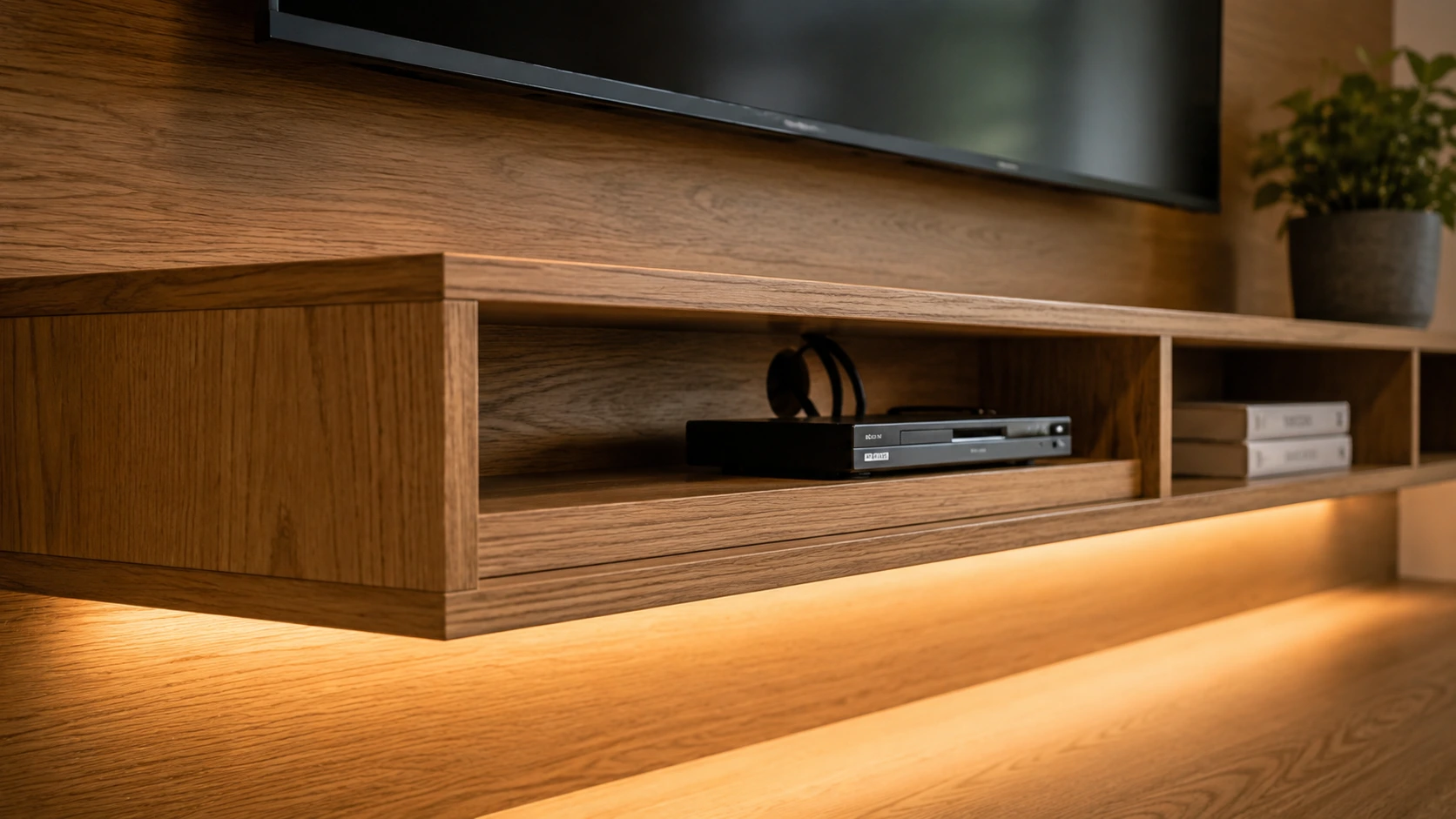
A wall-mounted TV unit with no thought given to storage quickly becomes cluttered. The most functional designs balance open and closed storage in a ratio that suits how you actually live.
- Closed cabinetry with push-to-open doors: Ideal for hiding set-top boxes, gaming consoles, routers, and media equipment. No visible handles keep the aesthetic clean.
- Open shelving bays: Use these for books, plants, decorative objects, and speakers. The key is discipline: open shelves look intentional when styled but messy when they become dumping grounds.
- Integrated cable management: This is non-negotiable for a professional result. Routed cable channels through the wall cavity or along a concealed raceway eliminate the tangle of cords that undermines an otherwise clean design. Many professional cabinet makers build this into the unit from the start.
- Adjustable shelf pins: Allow you to reconfigure storage heights as your equipment and lifestyle change. Far more practical than fixed shelves in a long-term installation.
For families looking at comprehensive storage beyond the living room, it is worth exploring wall units that extend the same design language across multiple rooms, creating a cohesive interior throughout the home.
Mounting Height, Structural Requirements, and What Can Go Wrong
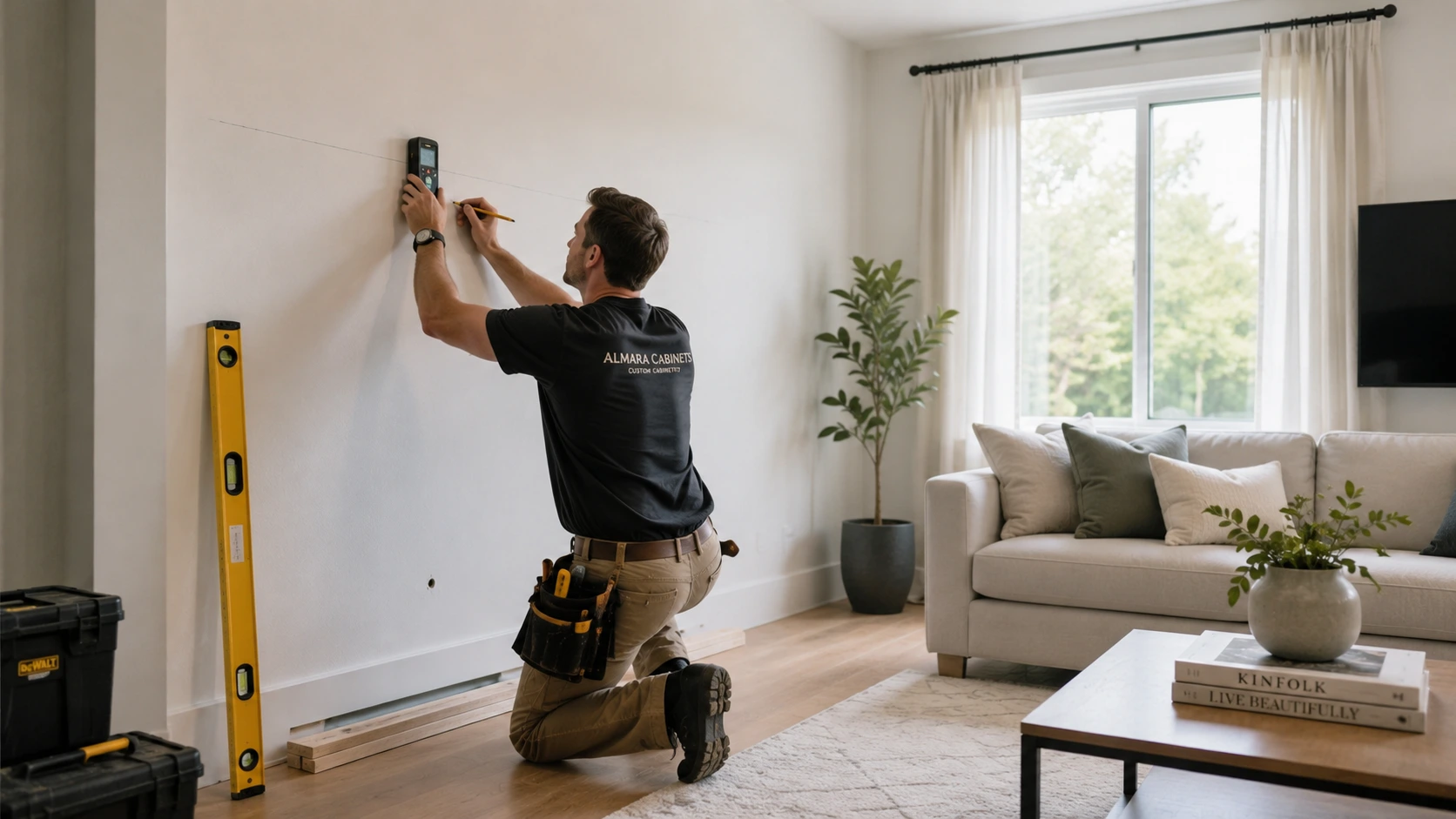
The most common mistake with wall-mounted TV units is getting the height wrong. Interior designers and ergonomic guidelines consistently recommend positioning the centre of the screen at approximately 100-107 cm from the floor when seated, which corresponds to eye level from a standard sofa. Mounting too high causes neck strain over long viewing sessions.
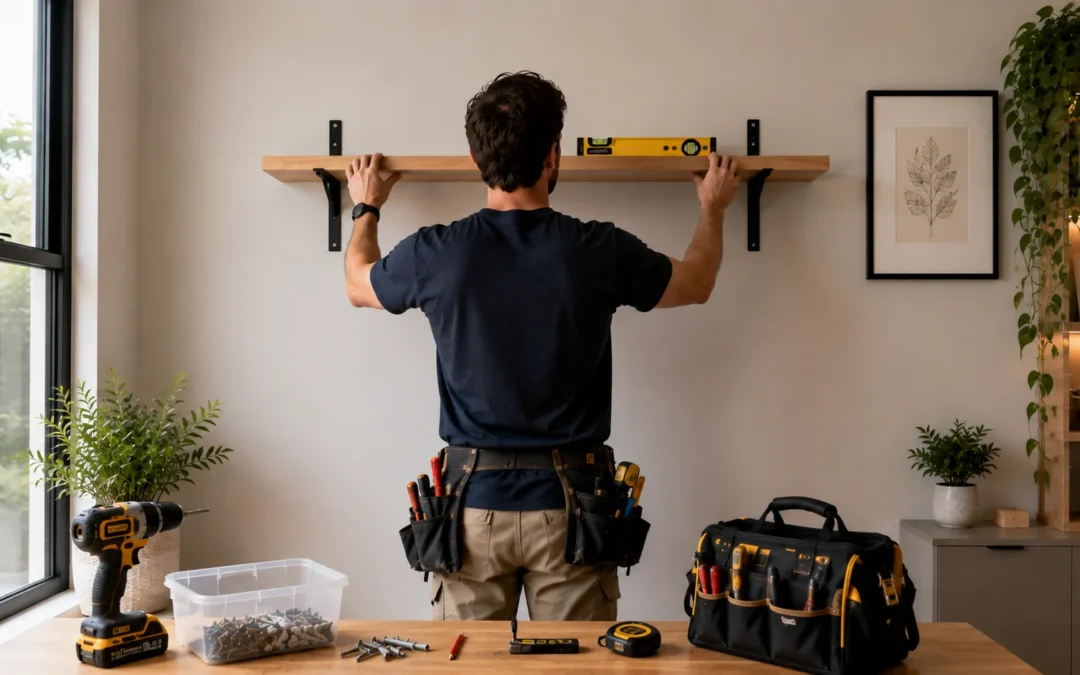
Structurally, Australian homes present a range of wall types. Timber stud frames, steel stud frames, double-brick, and concrete all require different fixing methods. The Building Code of Australia sets minimum standards for load-bearing fixings, and a custom cabinet maker or licensed builder will assess your wall type before installation.
Key structural considerations include:
- Stud location and spacing (typically 450 mm or 600 mm centres in Australian framing)
- Wall cavity depth if you plan to recess any cabling or mounting hardware
- Load capacity of the chosen mount for your TV size and weight
- Whether additional blocking needs to be installed inside the wall cavity before the unit goes up
Getting this wrong means a unit that pulls away from the wall over time, or worse, a TV that falls. Always use a qualified installer.
Smart Home Integration and Technology Considerations
Over 60% of wall-mounted TV unit buyers now factor smart home integration into their purchase decision. This includes built-in cable routing that accommodates HDMI 2.1, power outlets positioned directly behind the TV mount, and provision for streaming device placement inside closed cabinetry.
Full-motion TV mounts are preferred by more than 50% of buyers, allowing the screen to tilt and swivel without compromising the flush look of the installation. Motorised mounts, while a premium option, are seeing strong consumer preference growth globally at over 41% preference rate.
If you have a smart home setup already, consult with your cabinet maker about conduit pathways during the design phase. Retrofitting cable channels after installation is expensive and disruptive.
For inspiration on integrated storage solutions beyond the TV wall, the team at Almara Cabinets in Melbourne showcases a range of custom-designed living and bedroom configurations that demonstrate how a whole-home approach works in practice.
Things to Know
- Wall type determines everything. A brick or double-brick wall needs masonry anchors, not standard wall plugs. Always assess the wall type before purchasing hardware.
- Ventilation matters. Closed cabinetry around AV equipment needs ventilation clearance. Heat buildup shortens the lifespan of amplifiers, receivers, and streaming devices.
- Weight limits vary widely. A standard wall bracket may be rated for 50 kg. A custom timber unit spanning 3.6 metres weighs considerably more. Structural engineering advice may be needed for very large installations.
- Eco-friendly options are now mainstream. Bamboo and FSC-certified engineered wood are readily available through Australian cabinet makers and carry no premium over conventional materials.
- Colour psychology applies. Dark units recede and make a large TV feel more intentional. White units expand the visual space of a smaller room.
- Kids’ rooms need different considerations. If you are planning a wall-mounted unit in a child’s bedroom or play space, look at kids wardrobes and fitted furniture that prioritises rounded edges, soft-close mechanisms, and fixed wall anchoring.
The Bottom Line on Wall-Mounted TV Units
A well-designed wall-mounted TV unit does more than store your media equipment. It reshapes how a room feels, creates intentional space, and gives your living area a finished, considered look that freestanding furniture rarely achieves. The key is choosing the right style for your room dimensions, investing in quality materials, and ensuring the installation is handled by someone who understands Australian wall construction.
Ready to Design Your Wall-Mounted TV Unit?
Almara Cabinets has been designing and installing custom cabinetry across Melbourne for over 30 years, with more than 50,000 completed installations. Their team offers a free design consultation, measure, and quote so you can see exactly what is possible in your space before committing to anything.
Call them directly on (03) 9070 5265 or contact us to book your consultation. If you want to understand the full scope of their work before reaching out, the about us page gives you a clear picture of their experience and approach.
Frequently Asked Questions
Q: How high should a wall-mounted TV unit be installed?
The centre of your TV screen should sit at approximately 100-107 cm from the floor when measured from your seated eye level.
This typically places the bottom of the screen at around 75-85 cm, depending on your TV’s screen size. Mounting too high is the most common DIY error and leads to neck discomfort during extended viewing sessions.
Q: What is the difference between a floating TV unit and a built-in media wall?
A floating TV unit is a single shelf or cabinet mounted to the wall, while a built-in media wall spans the full width of a feature wall and integrates cabinetry, shelving, and lighting.
Floating units are more affordable and easier to install, but built-in media walls offer significantly more storage and a higher-end finish. The right choice depends on your budget and how central the TV area is to your living space.
.
Q: Can a wall-mounted TV unit be installed on any wall type?
Most wall types can accommodate a wall-mounted TV unit, but the fixing method varies significantly between timber stud, steel stud, brick, and concrete walls.
Masonry walls require masonry anchors and drilling equipment, while stud walls need fixings into the studs themselves. A professional installer will assess your wall before beginning work. Attempting the wrong fixing method is a structural and safety risk.
Q: What materials are best for a wall-mounted TV unit in a high-humidity room like near a kitchen?
Polyurethane-finished MDF or moisture-resistant MDF are the most practical choices for wall-mounted units in rooms with higher humidity or temperature fluctuations.
Solid timber can swell and contract with humidity changes, causing doors to warp and drawers to stick over time. Laminate finishes over moisture-resistant board offer a durable and cost-effective alternative.
Q: How do I hide cables on a wall-mounted TV unit?
The cleanest solution is to route cables through a conduit inside the wall cavity, which requires planning at the installation stage.
Surface-mounted cable raceways in a matching colour are an effective retrofit option if in-wall routing is not possible. Most custom cabinet makers will incorporate a dedicated cable channel into the unit design itself, keeping all leads behind the unit and out of sight.