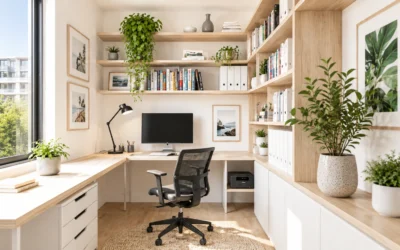
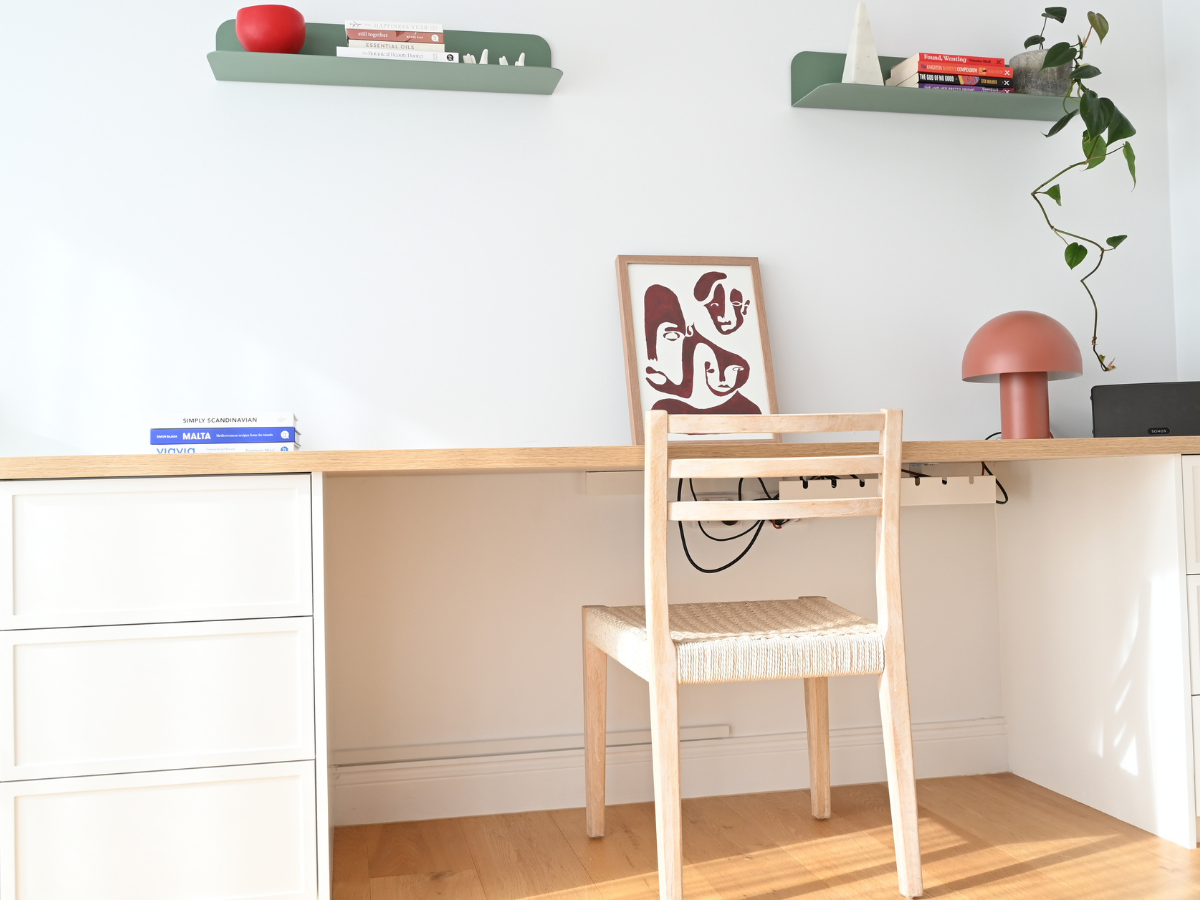
A built-in desk is one of the most effective ways to create a dedicated, functional workspace that feels permanent, polished, and perfectly suited to your home. Whether you are working with a spare bedroom, a nook under the stairs, or an unused corner, the right fitted design can turn any awkward space into a high-performing home office.
Key Takeaways
- Built-in desks maximise every centimetre of your available space, including corners, alcoves, and closets.
- Custom joinery delivers a better fit, finish, and storage outcome than flat-pack alternatives.
- Natural light, ergonomic height, and integrated cable management are non-negotiable for a productive setup.
- Material and finish choices dramatically affect both the feel of the room and the longevity of your desk.
- Professional design consultation helps you avoid costly layout mistakes before a single screw is turned.
- A well-designed built-in desk adds measurable value to your home, not just your workday.
Why Built-In Desks Are Dominating Home Office Design Right Now
Remote and hybrid work has reshaped how Australians use their homes. According to the Australian Bureau of Statistics, millions of Australians now work from home at least part of the week, making a dedicated, comfortable workspace more important than ever.
Unlike freestanding furniture, a built-in desk is designed around your specific room dimensions, your workflow, and your storage needs. There are no gaps between units, no wobbly flat-pack frames, and no wasted corners. The result is a workspace that looks intentional rather than improvised.
If you want to understand why so many homeowners are choosing this path over flat-pack alternatives, reading about the differences in built in desk vs flat pack why custom joinery wins for home offices is a strong starting point.
20 Built-In Desk Ideas Worth Stealing
Here are 20 design directions that cover different rooms, budgets, and aesthetics:
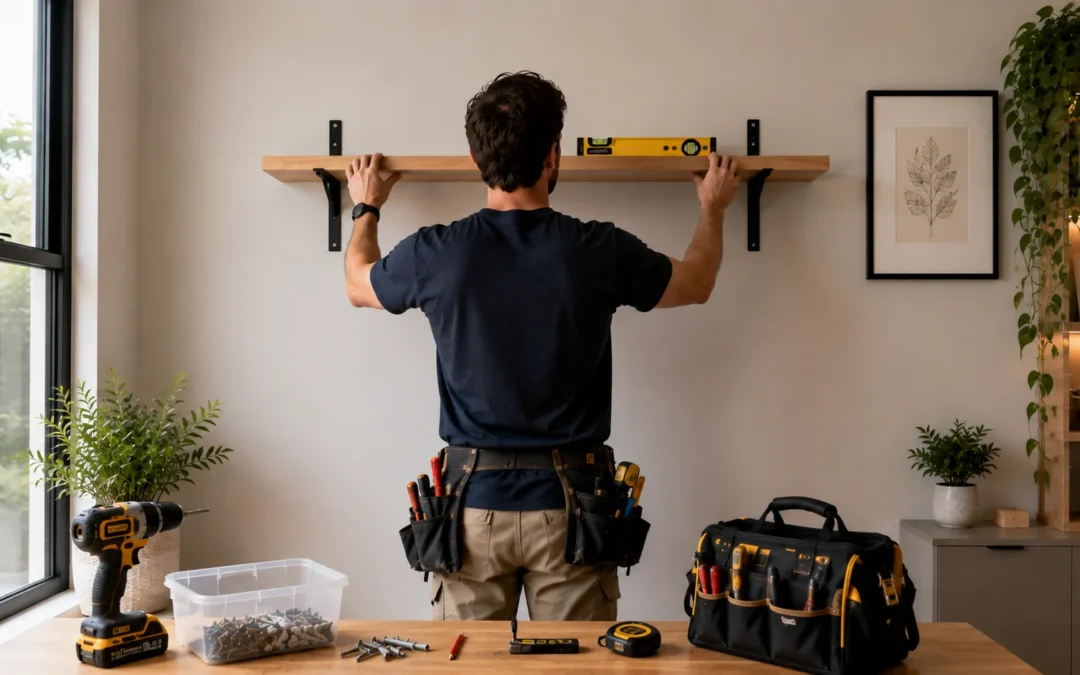
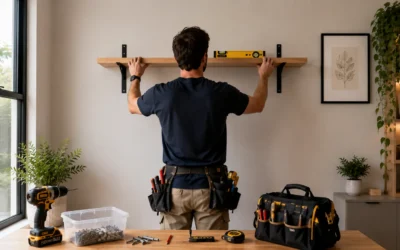
- Floating wall desk with hidden brackets for a minimalist feel
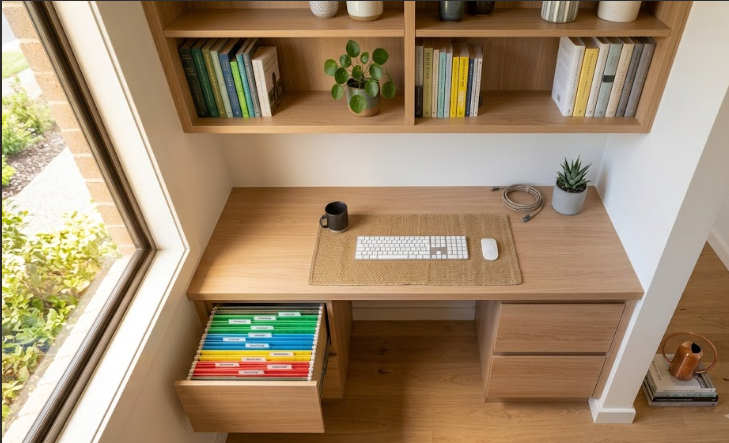
- Full-length window desk that captures natural light across a wide surface
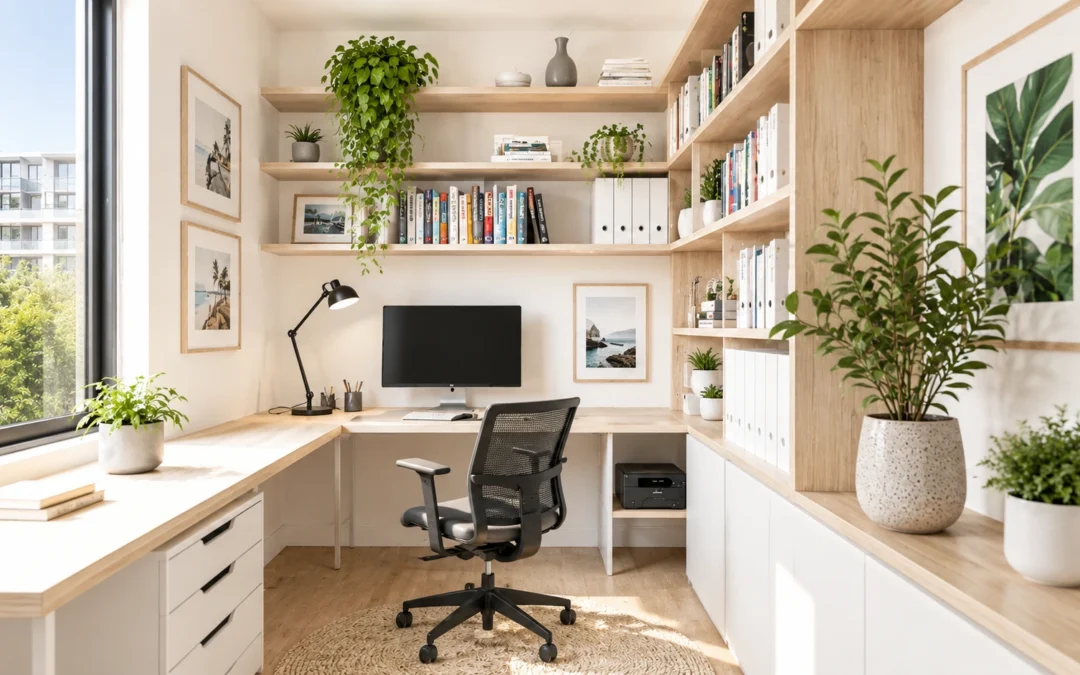
- L-shaped corner desk that wraps two walls for dual-monitor setups
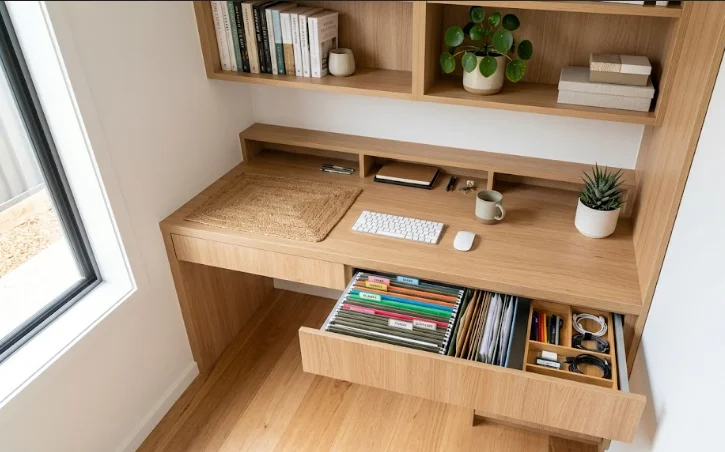
- Alcove desk tucked beneath a staircase with built-in drawer storage underneath
- Closet conversion desk with bi-fold doors to conceal the workspace after hours
- Built-in bookcase desk pairing a deep work surface with floor-to-ceiling shelving
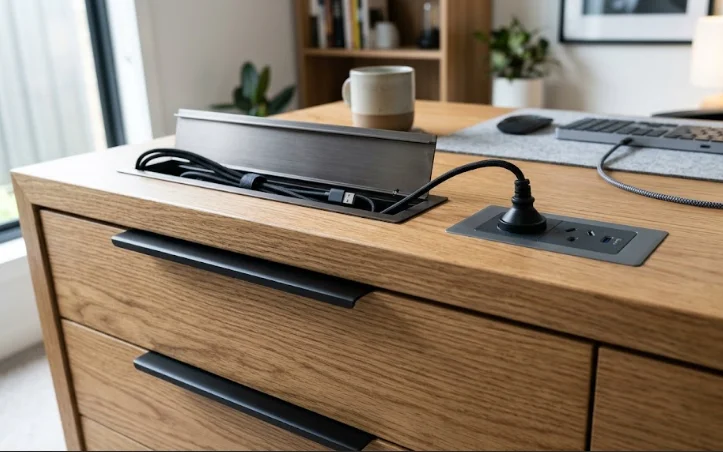
- Timber veneer desk with integrated cable trays and a recessed power strip
- Painted MDF desk in a moody dark tone, such as charcoal or navy, for a bold study aesthetic
- Handleless cabinetry desk with push-to-open drawers for a seamless finish
- Standing height adjustable desk built into a custom cabinet run
- Kids’ study nook with a lower surface, pin board back panel, and upper shelf
- Dual workstation desk for two people sharing a home office
- Bench-style desk along one wall with open lower shelves for file boxes and plants
- Japandi-inspired desk in natural oak with minimal hardware and warm lighting
- Industrial-style desk with black steel framing and raw timber top
- Glass-front cabinet above desk for displaying books and accessories
- Built-in desk inside a butler’s pantry or laundry, doubling as an admin station
- Curved desk corner for ergonomic reach without sharp edges
- Murphy bed with a fold-down desk for a guest room that functions as an office
- Recessed desk in a bedroom wall, framed by joinery to define the workspace
Browsing the gallery at Almara Cabinets gives you real-world examples of these styles installed across Melbourne homes, which helps translate these ideas from concept to reality.
How to Choose the Right Layout and Materials
Choosing the right built-in desk design comes down to three questions: how much space do you have, how do you work, and what finish suits your home?
Space and layout considerations:
- Measure the room carefully before committing to a layout. A corner desk suits rooms wider than 3 metres, while a single-wall run works well in narrow spaces.
- Consider traffic flow. Your chair needs at least 90 cm of clearance behind it for comfortable movement.
- If natural light is available, position the desk to face or run alongside the window rather than with the window directly behind your screen.
Material breakdown:
| Material | Best For | Durability | Price Range (AUD) |
|---|---|---|---|
| Painted MDF | Modern, coloured finishes | Moderate | A$800 to A$2,500 |
| Timber veneer | Warm, natural aesthetic | High | A$1,500 to A$4,000 |
| Laminate | Budget-friendly, easy clean | Moderate to high | A$600 to A$2,000 |
| Solid timber | Premium, statement pieces | Very high | A$3,000 to A$8,000+ |
| Polyurethane | Sleek, gloss or matte finish | High | A$1,200 to A$3,500 |
Ergonomics matter regardless of material. The healthdirect.gov.au guidance on ergonomic workstations recommends a desk height of approximately 72-76 cm for seated work, with the monitor placed at eye level to reduce neck strain. Factor this into your brief before the cabinetmaker measures up.
The team at Almara Cabinets has completed over 30,000 installations across Melbourne over more than 30 years, which means they have seen every room configuration imaginable. That depth of experience matters when you are navigating awkward ceiling heights, skirting boards, or off-square walls.
Storage Integration That Makes or Breaks a Home Office
The difference between a good built-in desk and a great one is almost always storage. A surface alone is not enough. You need thoughtful, accessible places for documents, stationery, technology accessories, and the general clutter of daily work.
Effective storage options to discuss with your designer include:
- Deep drawers for filing, with soft-close runners
- Overhead cabinets with doors for concealing equipment and supplies
- Open shelving for books, plants, and items you reach for often
- A dedicated monitor riser shelf built directly into the joinery
- Lockable cabinets if you share the home with children
A well-integrated storage plan means you are not adding free-standing shelves or desktop organisers as an afterthought. Everything has a place, and the result looks considered rather than cluttered.
For a broader look at the range of desk configurations available, the desks section on the Almara website covers styles, finishes, and layout options in detail.
The ABC News coverage of Australia’s remote work trends has consistently shown that the quality of home offices directly affects worker well-being and productivity, reinforcing why investing in a proper setup pays dividends beyond aesthetics.
Things to Know
- Built-in desks typically require a council-free installation in Victoria, but always confirm with your local council if the work involves structural changes.
- Cable management is often overlooked in the planning stage and is difficult to retrofit once cabinetry is installed.
- Desk depth should be at least 60 cm for comfortable dual-monitor setups, ideally 70 to 75 cm.
- Light-coloured finishes make small rooms feel larger, while darker tones add depth and drama to bigger spaces.
- Soft-close drawer mechanisms are worth the small additional cost for daily usability and long-term hardware life.
The Bottom Line on Built-In Desk Ideas
Built-in desk ideas are most useful when they move beyond inspiration and connect to your specific space, budget, and daily routine. The 20 styles above cover a wide range of aesthetics and room types, but the best outcome always comes from working with an experienced team who can translate those ideas into a design that actually fits your home.
Almara Cabinets has spent over 30 years building fitted home offices, studies, and workspaces across Melbourne. If you are ready to move from Pinterest boards to a finished room, reach out for a free measure and quote and take the first concrete step toward a workspace you will genuinely enjoy using every day.
Frequently Asked Questions
Q: How much does a built-in desk cost in Melbourne?
A built-in desk in Melbourne typically costs between A$1,200 and A$6,000 or more, depending on size, materials, and complexity.
A simple single-wall floating desk in laminate sits at the lower end of the range, while a full-length timber veneer setup with integrated cabinetry and storage can reach A$5,000 to A$8,000. Getting a detailed quote from a local cabinetmaker ensures you understand exactly what is included.
Q: Can a built-in desk be installed in a small bedroom?
Yes, a built-in desk can work exceptionally well in a small bedroom, particularly when designed as a floating or alcove unit.
Keeping the desk shallow at around 45 to 55 cm and wall-mounting it without a base cabinet frees up floor space. Pairing it with overhead storage rather than side units also preserves the sense of openness.
.
Q: How long does it take to have a built-in desk made and installed?
Most custom built-in desks take between four and eight weeks from design approval to installation.
The timeline includes design finalisation, material ordering, cabinet manufacturing, and the installation day itself. More complex projects with multiple units or specialty materials may take longer.
Q: Are built-in desks worth the investment compared to flat-pack options?
Built-in desks deliver a better fit, more durable finish, and greater storage capacity than flat-pack alternatives, making them a worthwhile long-term investment.
They also add value to your property in a way that freestanding furniture does not. Custom joinery is tailored to your exact room dimensions, which eliminates wasted space and gives a cohesive, high-end result.
Q: What is the best built-in desk style for a shared home office?
An L-shaped or dual-workstation built-in desk is the most practical choice for two people sharing a home office.
An L-shape allows each person to occupy one arm of the desk with their own monitor, storage, and elbow room. A shared bench run with a central divider shelf is another option that works well in longer, narrower rooms.