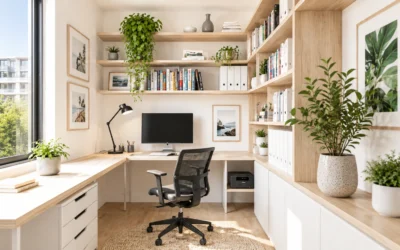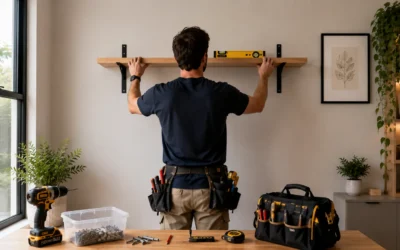
Floating bookshelves are wall-mounted shelving units with no visible legs or side supports, creating the illusion that shelves hover mid-air. They save floor space, suit virtually any room size, and can be styled to match everything from a coastal Queenslander to a sleek inner-city apartment.
Key Takeaways
- True floating shelves hide all brackets inside the shelf body, keeping walls clean and uncluttered.
- Weight capacity depends heavily on installation method — studs and masonry outperform drywall anchors every time.
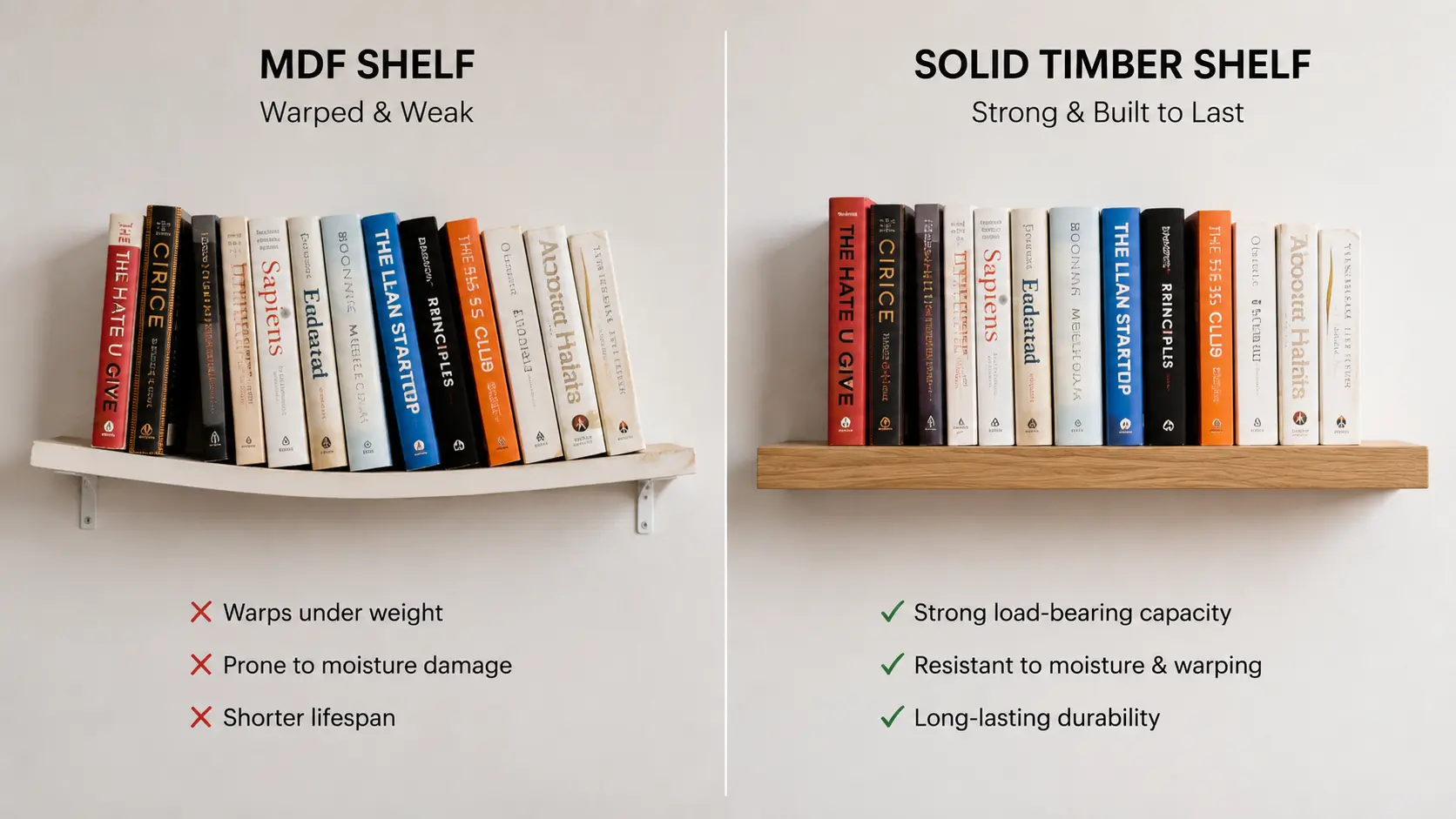
- MDF and particleboard shelves look great at first but warp quickly under the weight of real book collections.
- White oak and live edge timber are the dominant material choices for 2026 interiors across Australia.
- Custom-built floating bookshelves cost more upfront but eliminate the size, depth, and finish compromises that come with off-the-shelf options.
- Almara Cabinets has completed over 30,000 installations across Melbourne, bringing more than 30 years of experience to every project.
What Makes a Shelf Actually “Float”
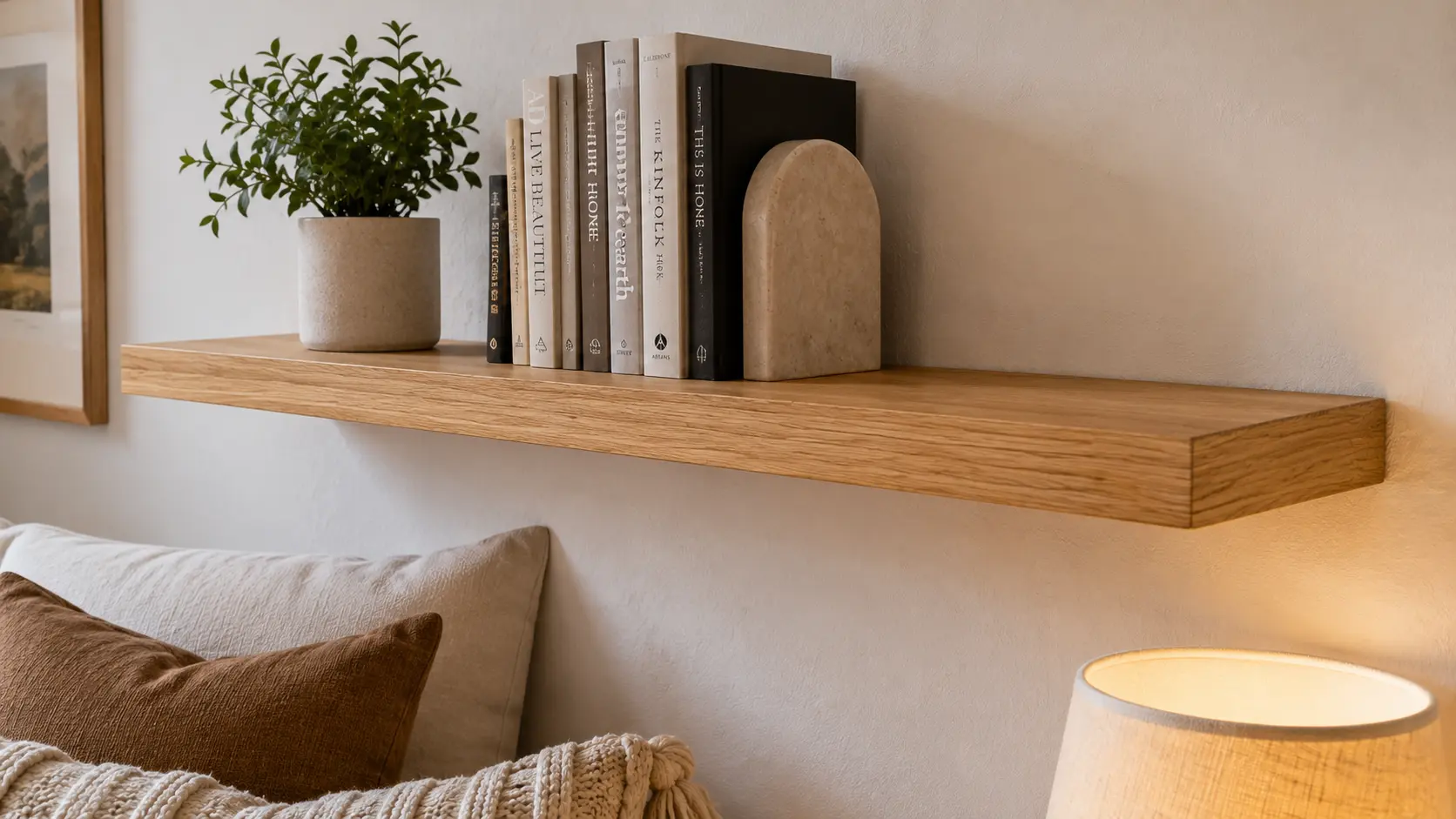
The term gets thrown around loosely in furniture marketing, so it is worth understanding what separates a true floating shelf from a regular wall-mounted bookshelf. A genuine floating shelf uses a concealed bracket, typically a steel rod or a recessed metal frame, that slides into a hollow channel drilled into the back of the shelf. From the front, you see only timber, stone, or resin: no screws, no hardware, nothing.
Lower-cost versions use visible L-brackets or corbels underneath. These work fine structurally, but they do not produce that clean, minimal aesthetic most people are chasing. If invisible hardware is your goal, always confirm the shelf uses a fully concealed bracket system before purchasing.
This distinction also matters for weight. A properly engineered invisible shelf mounted into wall studs or masonry can hold considerably more than a shelf resting on surface-mounted brackets screwed into plasterboard. According to Shelfology’s guide to floating shelves, a shelf anchored correctly into studs can support 110 to 130 kilograms or more per shelf when the load is distributed evenly.
The Main Styles of Floating Bookshelves
Not every floating shelf suits every room or collection. Here is a breakdown of the most popular configurations.
Hanging Corner Shelves
Corner floating shelves make use of dead space that standard furniture ignores. They work especially well in smaller rooms, home offices, and bedrooms where every square centimetre counts. A triangular or L-shaped corner shelf can hold plants, framed photos, or a rotating selection of paperbacks without eating into your floor plan.
Large Wall-Spanning Shelves
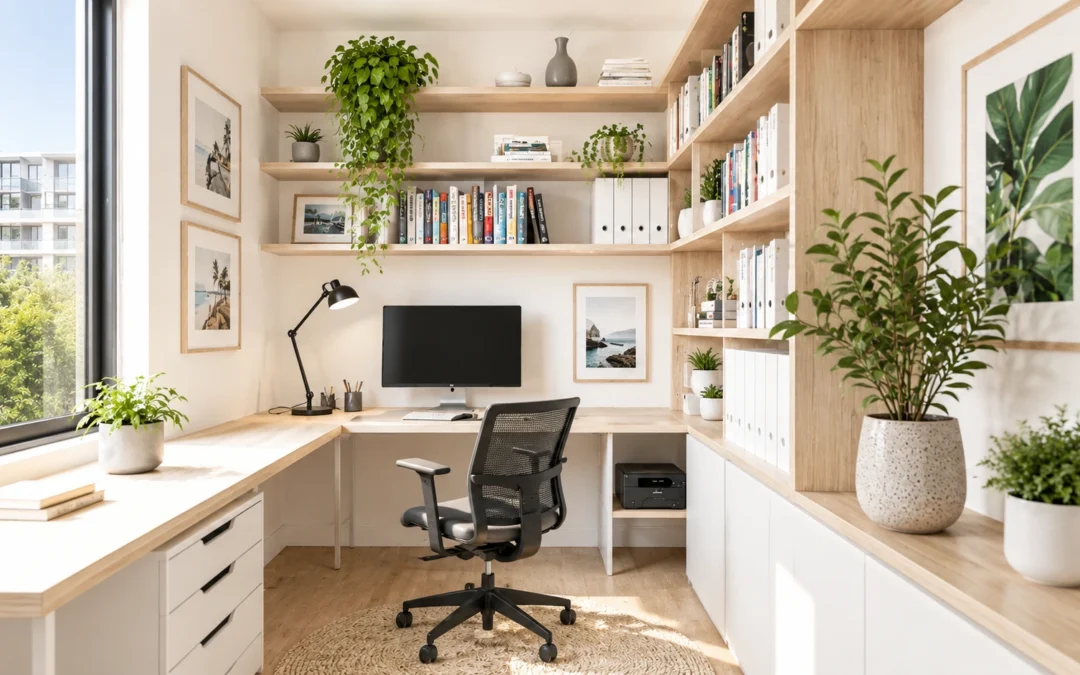
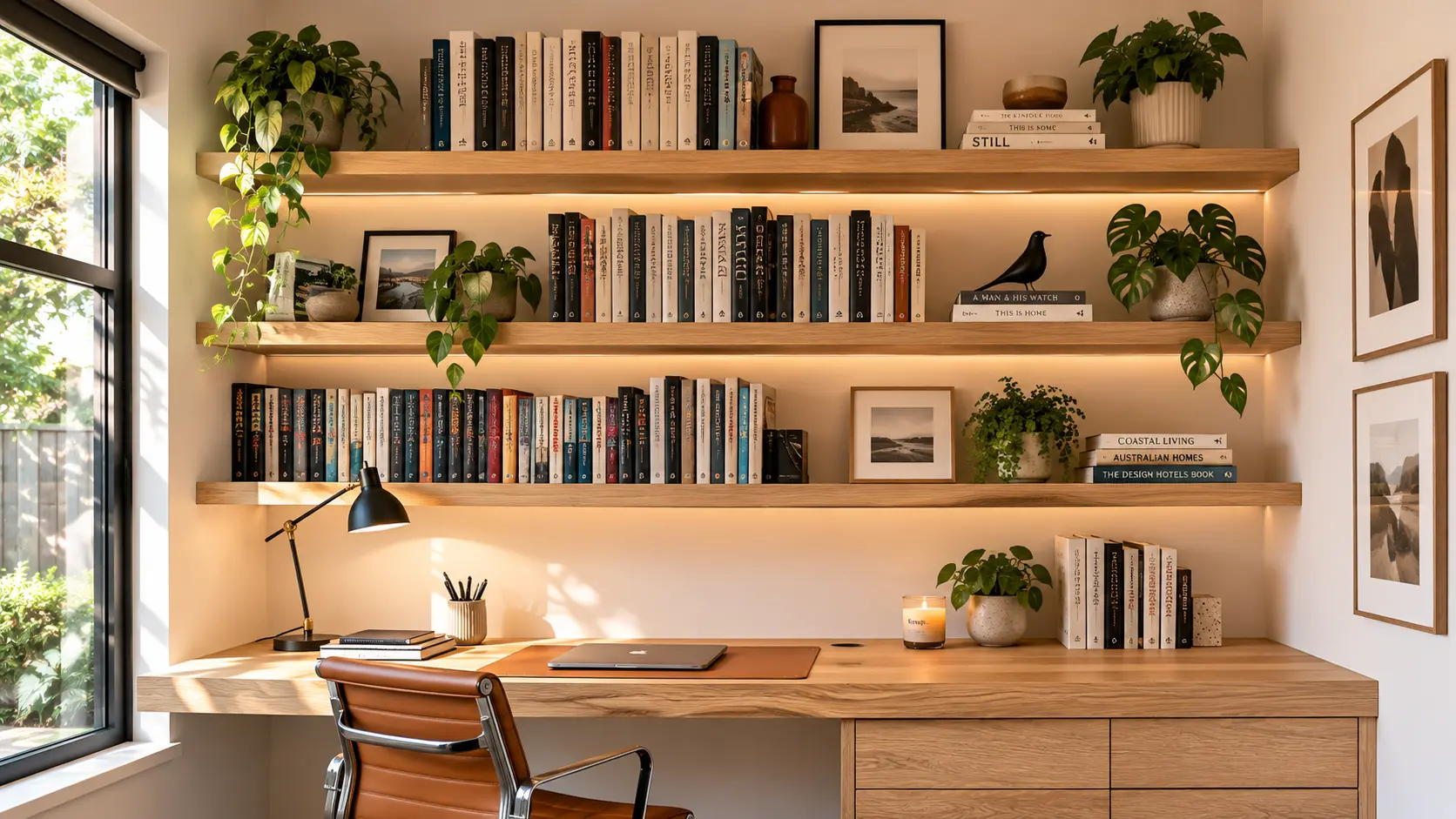
If you have a serious book collection or want to create a statement wall, full-width shelving runs are the answer. These span an entire wall, often floor to ceiling, and work best when designed as a system rather than individual pieces. A minimalist bookcase in this format, built with consistent spacing and hidden hardware, becomes the visual anchor of an entire room.
Square and Cube Floating Units
Square modular shelves have had a strong following for years and show no sign of fading. They let you mix open display sections with closed boxes or baskets, giving you flexibility between showing off your aesthetic and hiding the clutter. They suit living rooms, kids’ rooms, and hallways particularly well.
Single Statement Shelves
Sometimes one well-placed shelf does more than a wall of them. A single deep floating shelf above a desk, fireplace, or bed can hold everything you need while keeping the room feeling open. Depth matters here: brackets extending 35 centimetres or more give you room for hardcovers, decorative objects, and speakers without things feeling cramped.
Materials Matter More Than Most Buyers Realise
One of the most consistent complaints about floating bookshelves purchased online is that they look perfect in photos but sag or warp within months of being loaded with actual books. The culprit is almost always the core material.
| Material | Appearance | Strength Under Load | Longevity | Best For |
|---|---|---|---|---|
| Solid timber | Natural, warm grain | Excellent | 20+ years | Full book collections, statement pieces |
| White oak veneer over solid core | Premium look | Good to excellent | 10-15 years | Modern interiors, mid-range budgets |
| MDF with veneer | Smooth, uniform | Poor to fair | 2-5 years | Light décor only |
| Particleboard | Budget finish | Poor | 1-3 years | Temporary or very light use |
| Metal (steel/iron) | Industrial, minimal | Excellent | 20+ years | Modern or industrial-style rooms |
| Live edge timber | Rustic, organic | Excellent | 20+ years | Feature walls, premium interiors |
Solid timber and high-quality white oak are the materials worth investing in if you plan to load your bookshelves with books. As noted in Ash Deco’s 2026 floating shelf buying guide, the 2026 trend is firmly toward rich, natural wood tones rather than painted finishes, with white oak becoming the default choice for modern Australian interiors.
Live edge shelves and epoxy resin designs are also surging in popularity. These bring a sculptural quality to a room that mass-produced options simply cannot replicate.
Weight Limits and Why Installation Is Everything
Weight capacity is not just a function of the shelf material or the bracket rating. It is a product of how and where the brackets are fixed to the wall.
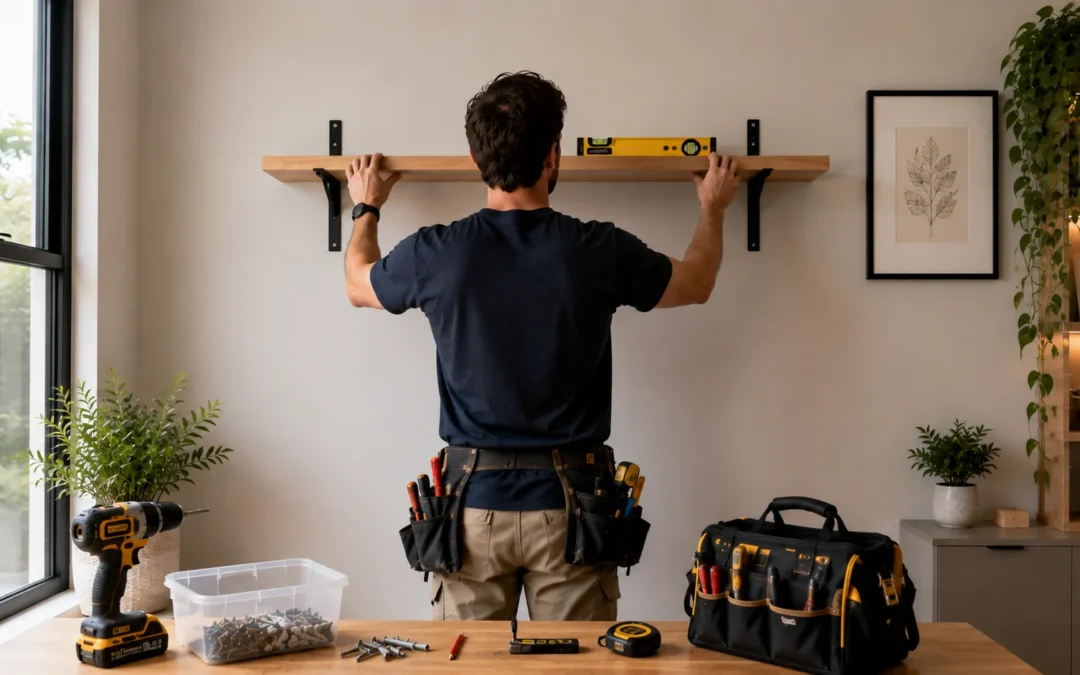
Here is the key rule: mounting into plasterboard alone, without hitting a stud or masonry behind it, dramatically reduces how much load a shelf can carry safely. Even a heavy-duty floating shelf bracket rated at a high load becomes unreliable when anchored only in hollow drywall.
For safe, long-term installation:
- Locate wall studs using a stud finder before drilling.
- Use a minimum of two bracket rods per shelf, spaced evenly.
- For masonry walls (common in older Australian homes), use appropriate masonry anchors rated for the intended load.
- Longer shelves (over 90 centimetres) should use three or more anchor points.
- Never exceed 80 percent of the manufacturer’s stated weight limit as a practical buffer.
If you are working with an unusual wall type, a large heavy collection, or a heritage property with unconventional construction, getting professional installation advice is the right move.
2026 Design Trends Australian Homeowners Are Embracing
Australian interior design has moved decisively away from white-on-white minimalism toward warmer, more textured spaces. Floating bookshelves are part of that shift.
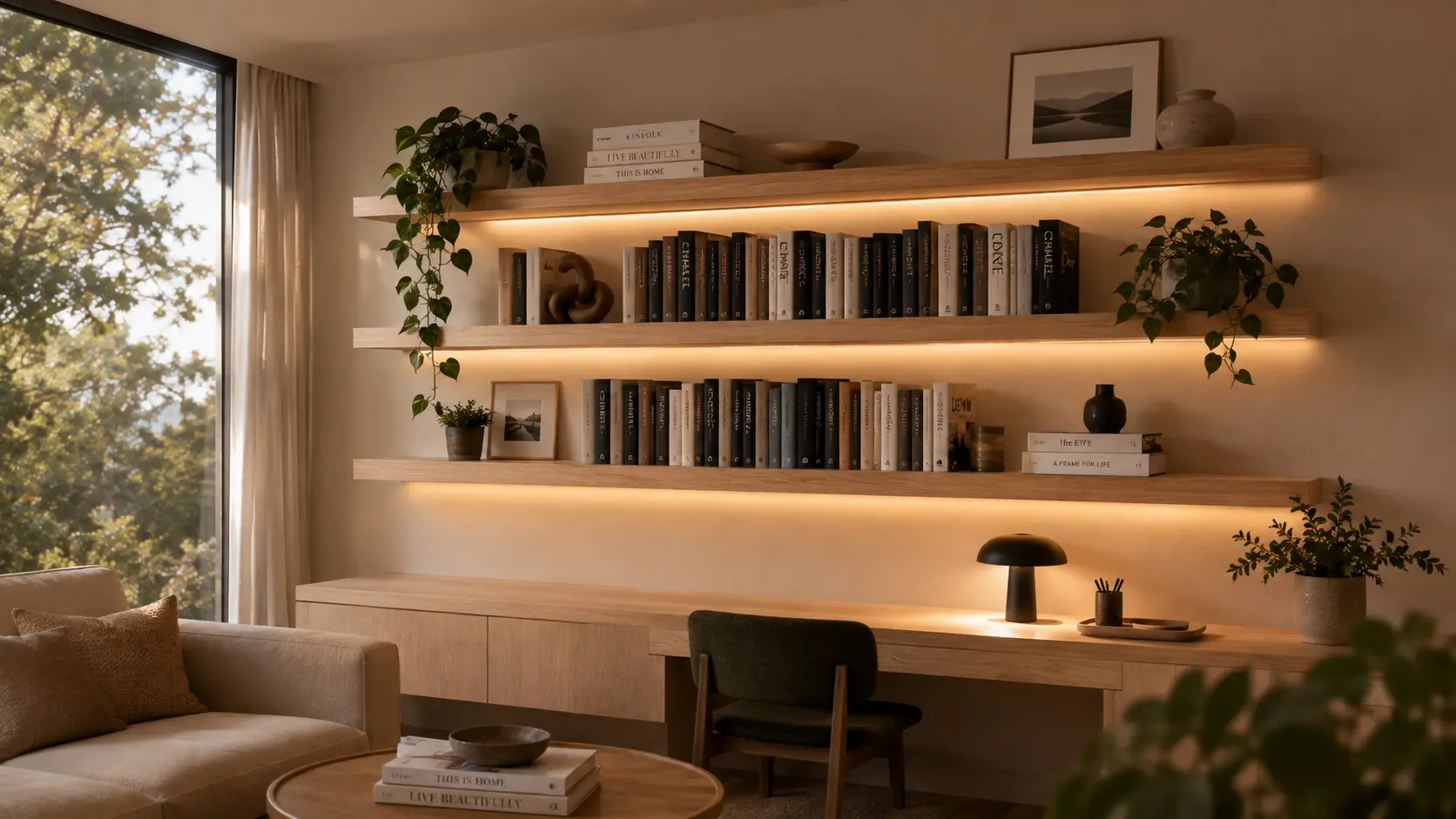
The “bookshelf wealth” aesthetic, which has gained traction through social media, positions a well-curated shelf as a marker of taste and personality rather than just storage. Books, ceramics, trailing plants, and art objects are arranged with intention, often colour-coded or grouped thematically.
Specific trends worth noting for 2026:
- White oak has replaced painted timber as the go-to finish for contemporary Australian homes.
- Live edge floating shelves with natural bark details are popular in coastal and rural-style interiors.
- Invisible hardware is now the expectation, not a premium feature.
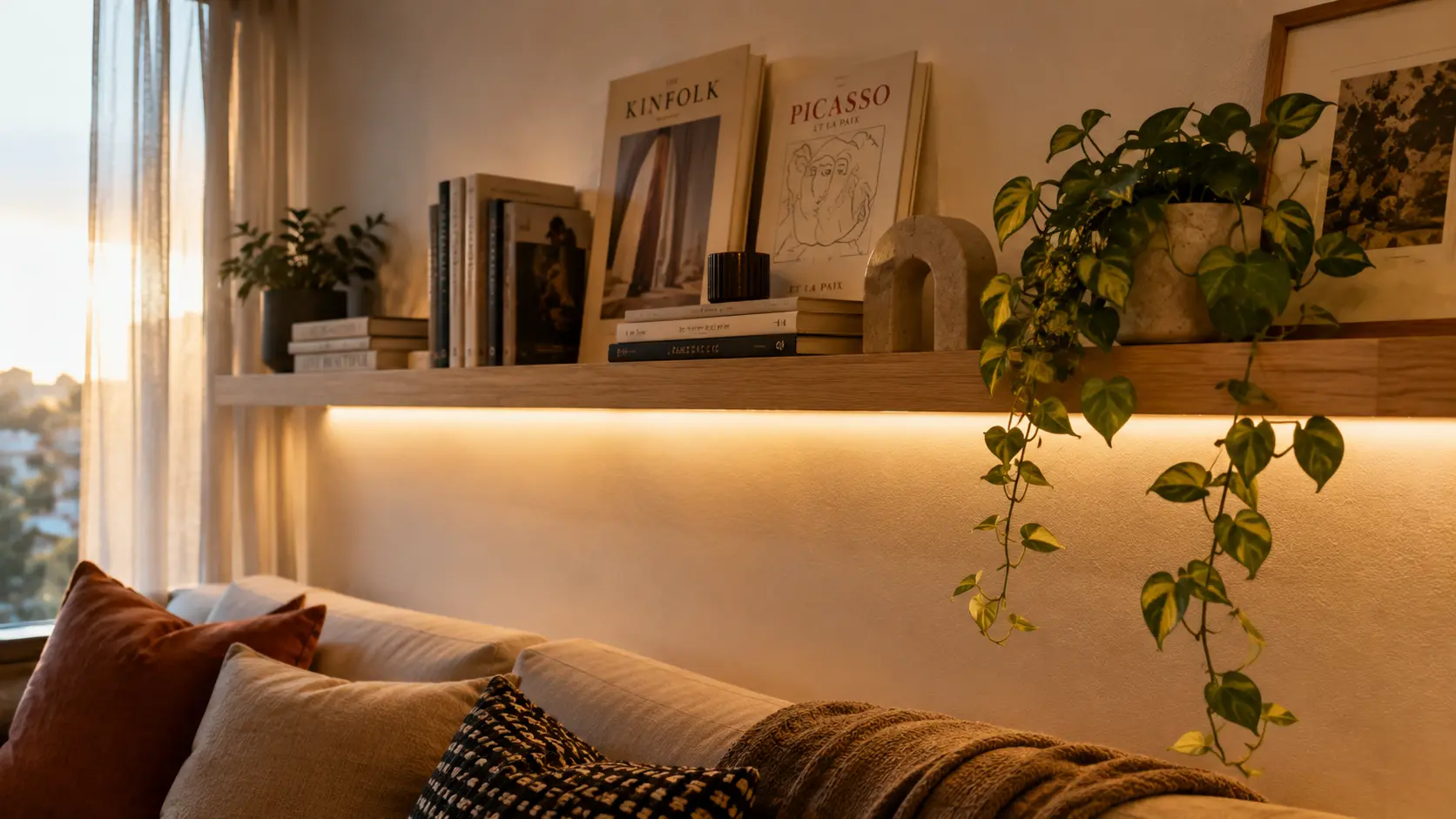
- Integrated lighting, such as LED strips underneath shelves, adds mood and makes collections feel curated rather than stored.
- Sustainable and locally sourced timber is increasingly requested by buyers who want their choices to align with environmental values.
For design inspiration that reflects what is currently working in Melbourne homes, the Almara Cabinets inspiration gallery showcases real installations across a range of styles and spaces.
Custom vs. Off-the-Shelf: How to Decide
This is the question most buyers wrestle with, and the answer usually comes down to three factors: budget, wall dimensions, and how long you plan to stay in the space.
Off-the-shelf floating shelves are the right choice when:
- You are renting and need something removable and affordable.
- Your walls are standard dimensions, and the room does not have unusual angles or alcoves.
- You want light display shelving for décor rather than a working library.
- Your budget is tight, and longevity is not the primary concern.
Custom floating bookshelves are the better investment when:
- You have a specific wall recess, bay, or awkward dimension that standard sizes will not fill cleanly.
- You want solid timber in a specific species, stain, or grain direction.
- You need full floor-to-ceiling coverage with a built-in appearance.
- You are renovating and want the shelving to add real value to the property.
For Melbourne homeowners considering a custom build, bookshelves by Almara Cabinets offer locally crafted options that are designed, built, and installed by a team with over 30 years of experience. With more than 30,000 installations across Melbourne, they understand the wall types, ceiling heights, and design expectations that are specific to Australian homes.
For a broader overview of what a locally built, custom bookshelf project looks like from design to installation, Almara Cabinets provides full consultations with no obligation.
Things to Know
- Floating shelves require wall studs or masonry for safe, heavy-duty installation. Drywall anchors alone are not reliable for book collections.
- MDF and particleboard shelves are suitable for light display items only. They are not engineered for sustained book weight.
- White oak is the dominant finish for 2026 and pairs well with both warm and cool interior palettes.
- Live edge timber shelves are hand-finished, so no two pieces are identical. Expect slight variations in shape and grain.
- Weight ratings on packaged shelves typically refer to ideal installation conditions. Real-world capacity depends on your wall type and how well studs are located.
- Shelf depth is often overlooked. Standard depths of 20 to 25 centimetres suit most books, but you may want 30 to 35 centimetres for display items, speakers, or oversized coffee table books.
The Bottom Line on Floating Bookshelves
Choosing the right floating bookshelves comes down to understanding what the shelf will carry, what your walls can support, and how long you want the result to last. For casual display and light décor, a quality off-the-shelf option in white oak veneer does the job. For a real library, a feature wall, or a permanent renovation, custom-built shelving in solid timber is the only approach that delivers both the look and the longevity you are after.
Start by measuring your wall space accurately, identifying your stud positions, and deciding on a material based on your actual load needs rather than aesthetics alone. Then speak to a professional who has seen the full range of what Australian wall types and interior styles demand. That conversation might surprise you with what is possible within your budget.
Frequently Asked Questions
Q: How much weight can a floating bookshelf safely hold?
A properly installed floating shelf anchored into wall studs can safely hold between 50 and 60 kilograms per bracket point.
When multiple rods are used and each hits a solid stud, the total per-shelf capacity can reach 110 kilograms or more. However, it is always wise to keep actual loads below 80 percent of the rated maximum for long-term safety and to avoid stress on the wall fixings.
Q: What is the difference between a floating shelf and a wall-mounted bookshelf?
A floating shelf uses fully concealed hardware, while a standard wall-mounted bookshelf typically has visible brackets, frames, or supports.
Both attach to the wall, but floating shelves achieve a cleaner, more seamless look because the bracket system is hidden inside the shelf body. The terms are sometimes used interchangeably in retail, so always check the bracket style before purchasing.
.
Q: Can floating bookshelves be installed on any wall type?
Most wall types can support floating shelves, but the installation method differs significantly between plasterboard, brick, and concrete walls.
Brick and concrete walls found in many Melbourne homes, particularly older terrace houses and flats, actually provide excellent anchor points for heavy shelving. Plasterboard walls require stud location and appropriate fixings to achieve safe load ratings.
Q: Is white oak a good choice for floating bookshelves in Australian homes?
Yes, white oak is durable, stable in Australian humidity conditions, and has become the most popular timber choice for modern interiors in 2026.
It takes stains well, holds a clean machined edge, and pairs naturally with both warm and neutral palettes. It is widely used by Melbourne cabinet makers and is available in both solid and veneer formats. According to Tribesigns’ bookshelf trend report, white oak is leading design preferences heading into 2026.
Q: How do I know whether to buy off-the-shelf or go custom with my floating bookshelves?
Go custom if your walls have non-standard dimensions, you want solid timber, or you need floor-to-ceiling coverage with a built-in finish.
Off-the-shelf options work well for renters, smaller rooms, or when you just need light display shelving. For permanent homes and serious book collections, a custom build delivers better structural performance, a more refined appearance, and a much longer service life.