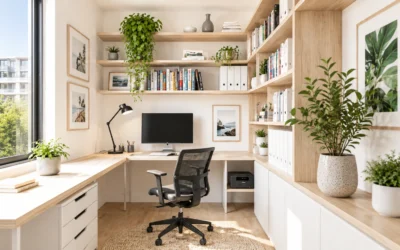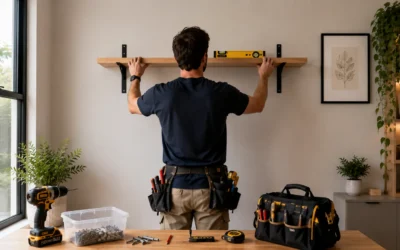
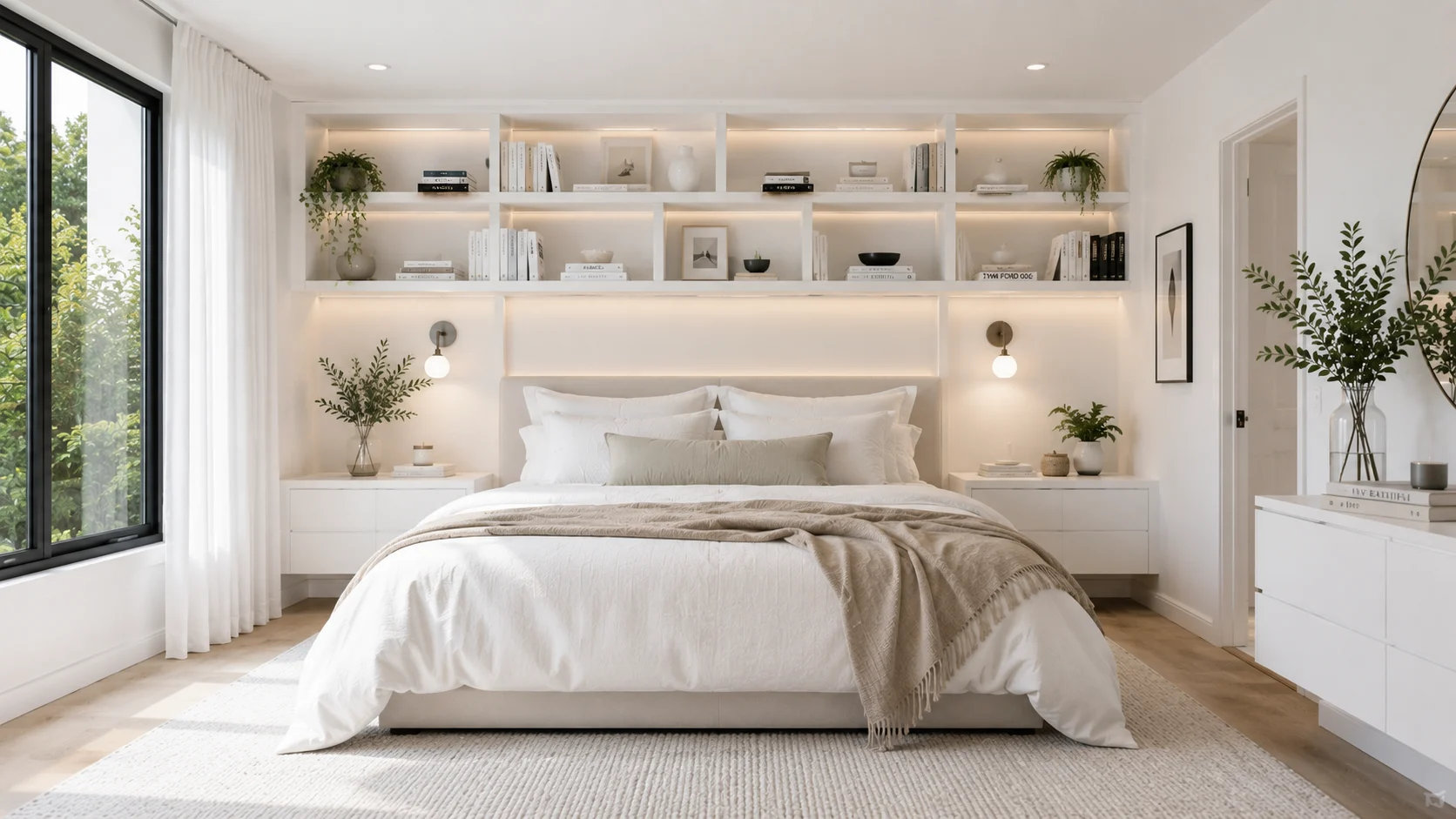
Bedroom bookshelves are one of the most versatile upgrades you can make to your sleeping space, serving both storage and style at once. Whether you are stacking paperbacks beside your pillow or carving out a full reading nook, the right shelving transforms a plain bedroom into a personal retreat.
Key Takeaways
- A headboard bookcase doubles as storage and a design feature without eating into floor space.
- Reading nooks work in surprisingly small corners with the right chair, shelf, and lighting combination.
- Shallow shelves near the bed keep visual weight low while still keeping your current reads within arm’s reach.
- Built-in bedroom shelving adds lasting value and can be fully customised to match your room’s proportions.
- Sustainable timber and multifunctional designs are the two biggest material trends shaping bedroom shelving in 2026.
- Separating your reading zone from your bed actively supports better sleep habits.
Why Bedroom Shelving Is Having a Major Moment Right Now
Something has shifted in how Australians think about their bedrooms. The room is no longer just a place to sleep. It is a sanctuary, a reading room, and a reflection of who you are. Pinterest’s Spring 2026 Trend Report recorded a 455% jump in searches for “comfy reading chair small spaces,” and searches for “bookshelf decor” rose 35% on Etsy. The “bookshelf wealth” hashtag crossed 1.7 million views on TikTok, confirming that styled shelving is a genuine cultural moment, not a passing fad.
What is driving this? Partly, people want their books close rather than tucked away in a formal study. Partly, it is about intentional design. Bedroom reading nook ideas for 2026 on The Coolist describe the shift perfectly: evenings are slowing down, and the bedroom is where that slower pace begins. Built-in shelving, warm sconces, and a cushioned chair are doing a lot of heavy lifting in that transformation.
Headboard Bookcases: The Smartest Use of Space Behind Your Bed
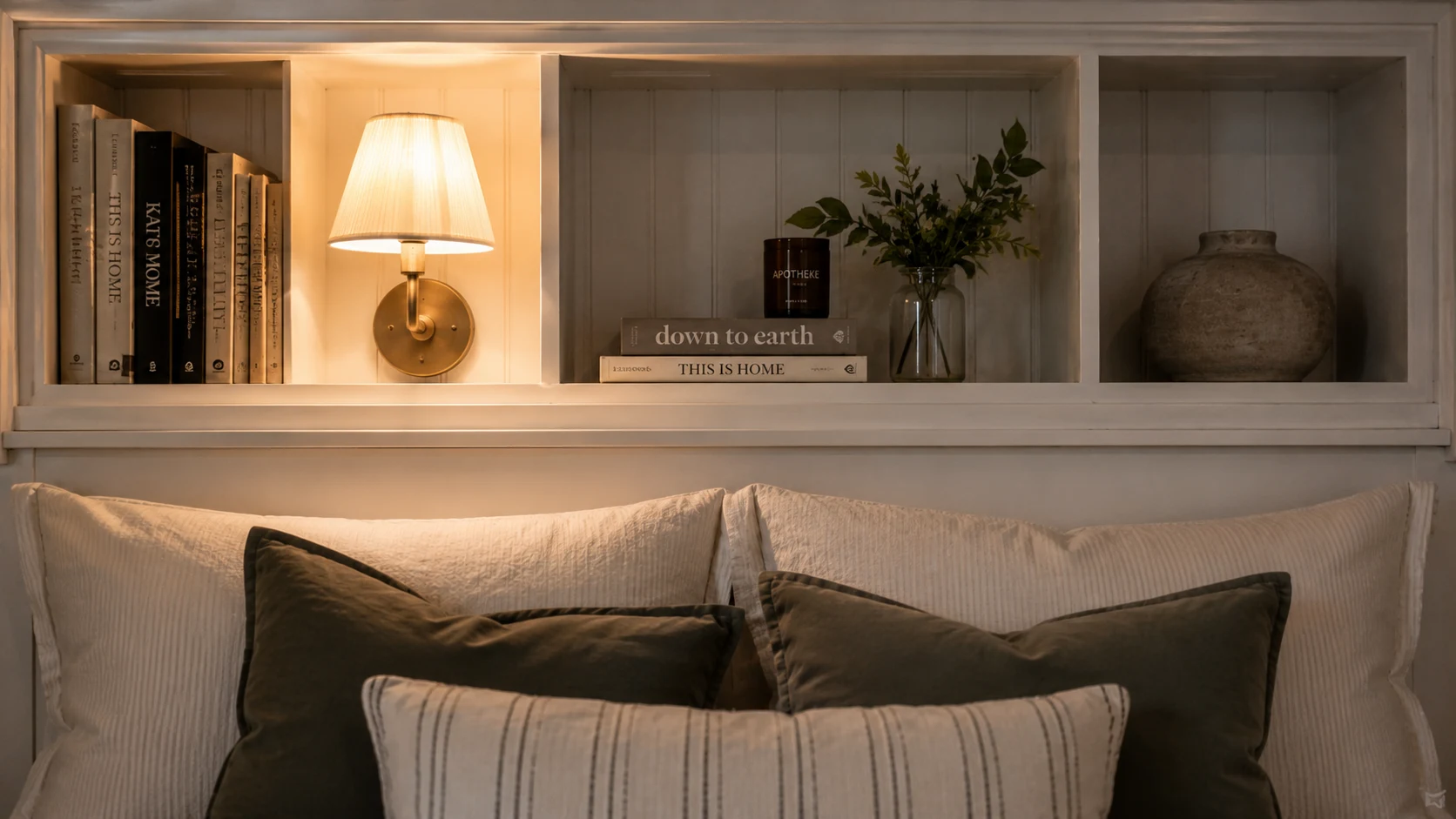
If you are short on wall space, the area directly behind your bed is prime shelving territory. A headboard bookcase integrates shelving into the headboard itself, typically rising 60 to 120 centimetres above the mattress and including small compartments for books, a lamp, a glass of water, and whatever else you reach for at night.
The smartest layouts keep shelves shallow near the bed to avoid visual heaviness. A depth of around 20 to 25 centimetres is ideal. You get easy access without the shelf looming over you while you sleep. For a truly seamless result, built-in versions painted to match the wall colour disappear into the architecture while still doing the practical work of bedroom storage furniture.
Bedroom bookshelf designs for 2026 from The Coolist show how layered approaches mixing shelves, sconces, and upholstered panels create a polished, magazine-worthy look. If you want to see how this translates into real-life Australian installs, the Almara Cabinets gallery is worth browsing for inspiration.
| Configuration | Best For | Approx. Shelf Depth | Visual Weight |
|---|---|---|---|
| Headboard bookcase | Small bedrooms, night readers | 20-25 cm | Low |
| Alcove built-ins | Period homes with recesses | 25-30 cm | Low to medium |
| Floor-to-ceiling wall shelf | Large master bedrooms | 30-35 cm | High |
| Corner reading nook shelf | Unused bedroom corners | 20-28 cm | Low |
| Freestanding unit | Renters or flexible layouts | 25-35 cm | Medium |
Reading Nook Shelf Ideas That Actually Fit a Bedroom
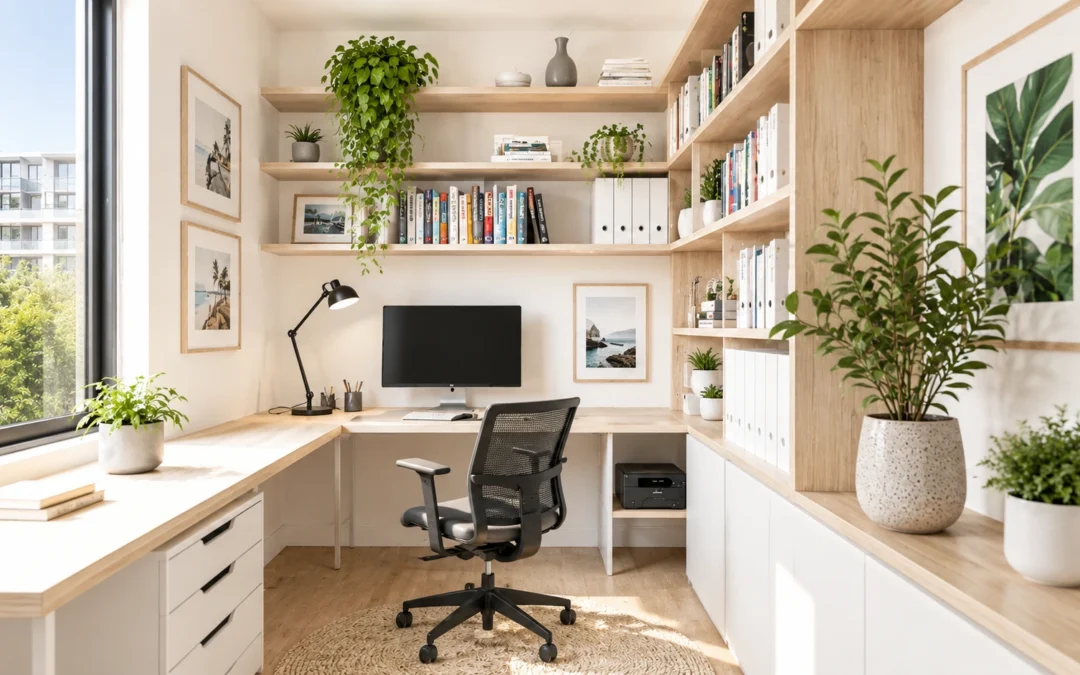
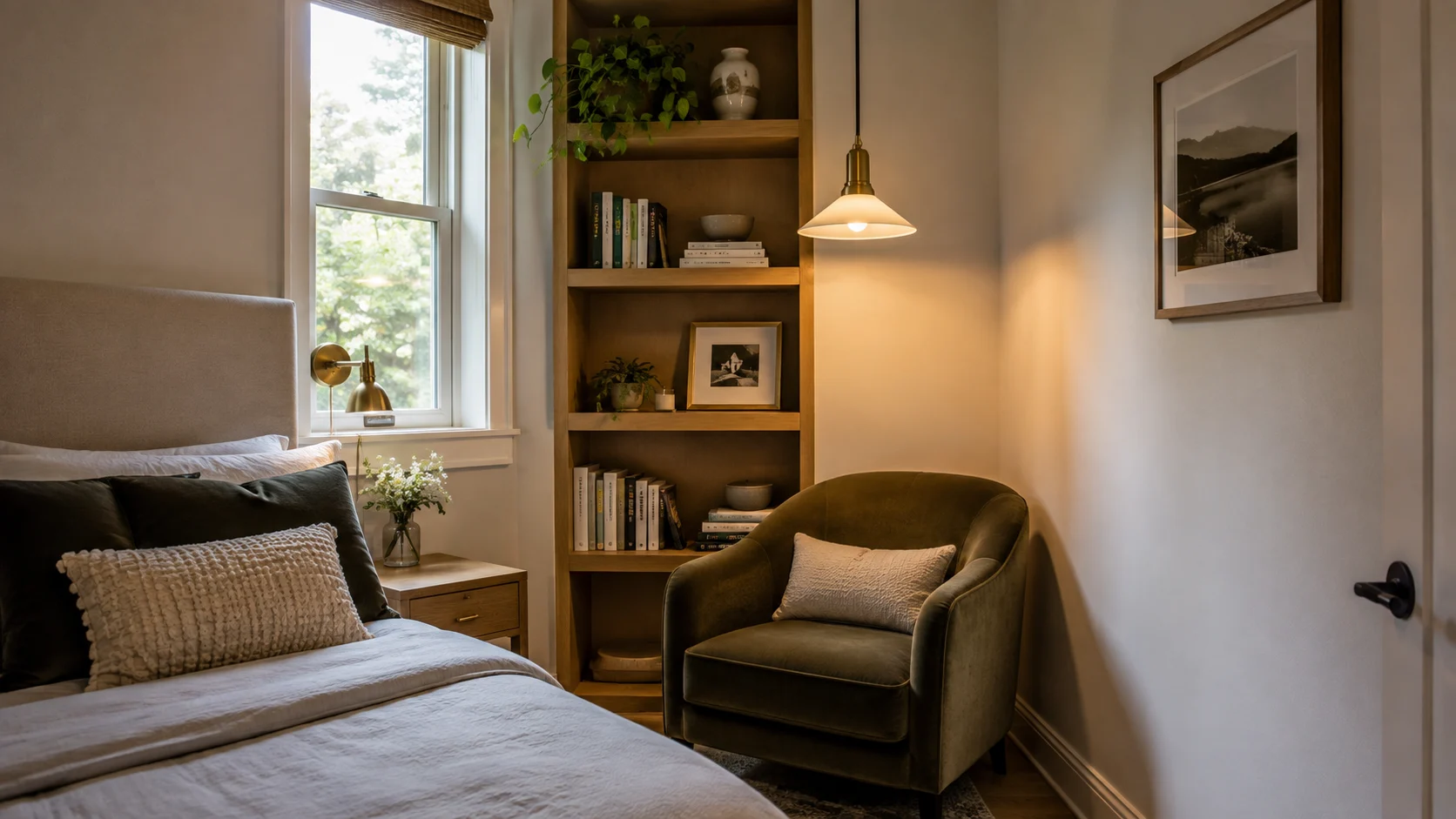
A reading nook does not require a bay window or a spare room. A slim chair, a compact reading nook shelf, and focused lighting can transform a neglected corner into a cosy retreat you will actually use. The key is choosing the right spot: an underused corner, the wall beside a window, or the space flanking a doorway.
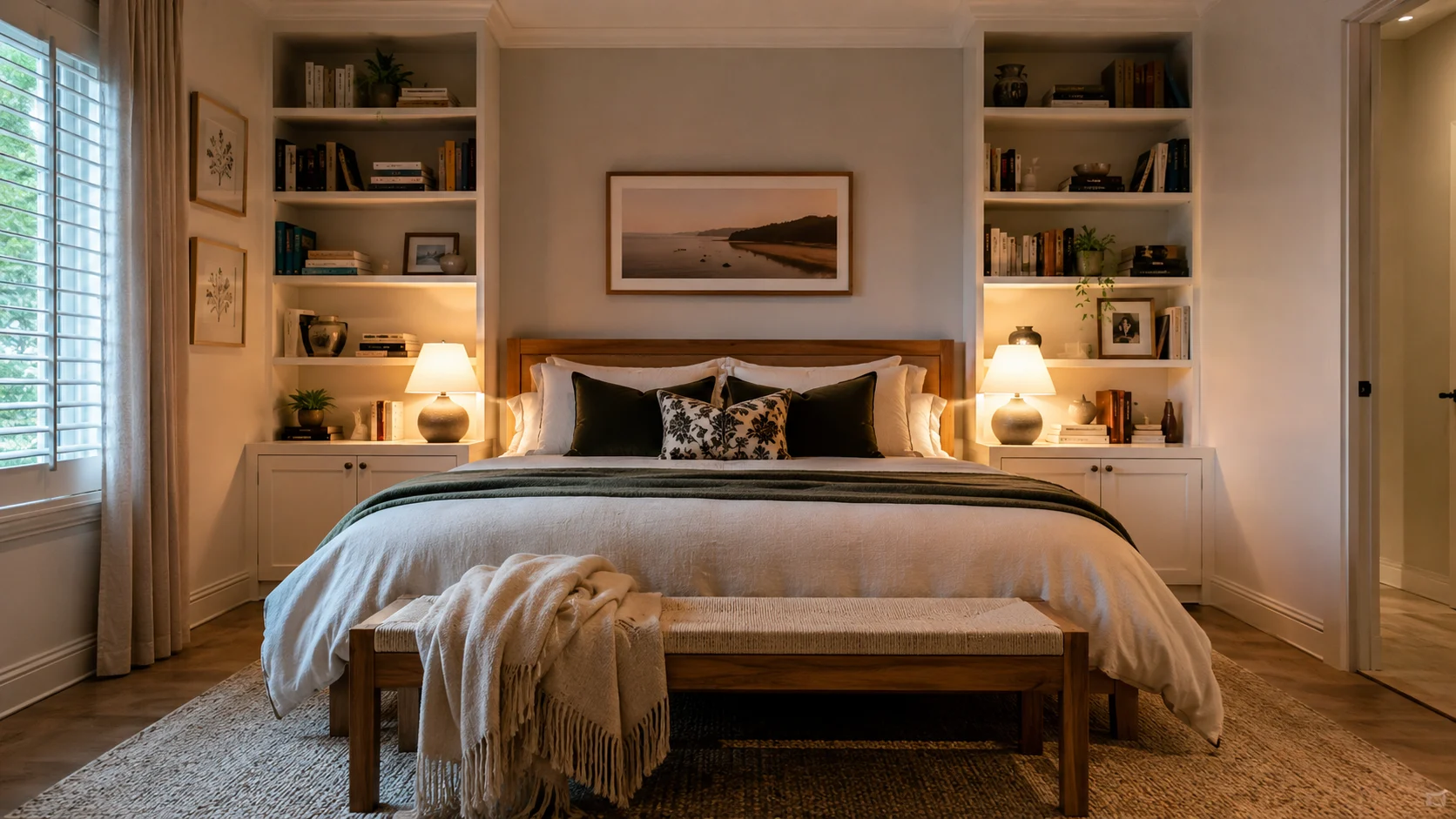
Wall-to-wall bookshelves that wrap around a doorway and reveal a tucked-away reading seat are a particularly clever option. Warm pendant lighting, a layered rug, and a single cushioned chair create a private escape without closing off the room. According to Homes and Gardens’ bedroom bookshelf ideas, positioning built-in alcove shelves from midway to ceiling allows bedside chests to sit neatly against the lower wall section, keeping the layout practical as well as beautiful.
Sleep experts and designers agree that having a dedicated reading zone separate from your bed actively supports better sleep. When your mattress is no longer the place where you scroll, read, and watch TV, your brain starts associating it with rest instead. That distinction matters enormously for sleep quality, as healthdirect.gov.au’s sleep hygiene advice confirms.
Choosing Materials and Finishes That Last
Wooden bookshelves dominate search interest for good reason. Timber feels warm, ages well, and works across both contemporary and traditional Australian home styles. Searches for wooden bookshelves peaked at a Google Trends index of 78 in August 2025, likely tied to spring renovation momentum in the southern hemisphere.
Beyond timber, key trends for 2026 include rising demand for sustainable materials, multifunctional designs that work as room dividers or desk integrations, and high-end customisation. Casalory’s home library ideas for 2026 highlight how shelves styled with objects, plants, and artwork move beyond pure storage into genuine interior design.
When choosing finishes, consider:
- Painted MDF for a seamless built-in look that blends with walls.
- Timber veneer for warmth and grain detail without the full cost of solid wood.
- Open shelving for a light, airy feel in smaller rooms.
- Closed lower cabinets paired with open upper shelves for a balanced mix of display and hidden storage.
For tailored options in Melbourne, the team behind bookshelves can walk you through every finish and configuration available. Custom-built units mean every centimetre of your bedroom works harder.
Things to Know
- Avoid shelves deeper than 30 centimetres directly beside your bed; they create visual bulk and can feel claustrophobic in smaller rooms.
- Alcove shelves beside a bed are most functional when the lower section is left clear for a bedside chest or lamp, with shelving starting at around 90 centimetres from the floor.
- Lighting matters as much as the shelving itself; a small LED strip under each shelf makes evening reading far easier on your eyes.
- Built-in bedroom bookshelves generally add more perceived value to a property than freestanding units because they read as part of the architecture.
- Sustainable and recycled timber options are increasingly available through Melbourne cabinet makers and often cost less than you might expect.
The Bottom Line on Bedroom Bookshelves Ideas
Bedroom bookshelves are no longer a nice-to-have. They are one of the most purposeful upgrades you can make to your home, combining everyday function with genuine design impact. Whether you are drawn to a sleek headboard bookcase, a full alcove wall, or a cosy reading nook tucked into a forgotten corner, there is a configuration that will suit your space and your lifestyle.
Start by identifying the wall or corner in your bedroom with the most untapped potential, then think about how you want to use the space every day. From there, a custom solution built specifically for your room will always outperform a generic flat-pack. Book a consultation with Almara Cabinets and get expert advice matched to your exact space.
Frequently Asked Questions
Q: What is the ideal shelf depth for a bedroom bookcase beside the bed?
Around 20 to 25 centimetres is ideal for bedside shelving.
This depth keeps books and small objects accessible without the shelf projecting too far into the room. Deeper shelves can feel imposing in a sleeping space and are better suited to a reading nook or dedicated library wall.
Q: Can a headboard bookcase work in a small bedroom?
Yes, and it is often one of the best choices for compact rooms.
By using the wall directly behind the bed, you add significant storage without sacrificing any floor space. Keeping the finish light and the shelf depth shallow helps the unit blend in rather than dominate.
.
Q: How do I create a reading nook in a bedroom without a dedicated alcove?
A corner arrangement with a built-in or freestanding shelf, a cushioned chair, and a focused light source is enough.
You do not need architectural features like a bay window. Even a 90 by 90 centimetre corner can become a functional reading zone with the right pieces. Reading corner ideas for 2026 from Milorien show just how much is achievable in tight spaces.
Q: Are built-in bedroom bookshelves more expensive than freestanding options?
Built-in units cost more upfront but offer better fit, finish, and long-term value.
Custom built-ins are designed to the exact dimensions of your room, eliminating gaps and awkward proportions. They also tend to feel like part of the house rather than furniture, which increases the perceived quality of the space.
Q: What wood finish works best for bedroom bookshelves in an Australian home?
Painted MDF and timber veneer are both popular and practical choices for Australian bedrooms.
Painted MDF creates a clean, seamless look that suits contemporary interiors. Timber veneer adds warmth and natural grain texture, working well in coastal, Scandi, or classic Australian styles. Both are durable and available through Melbourne cabinet makers.